July 2026
Every article published in July 2026. 20 articles · Back to full archive

Civil Nuclear

Civil Nuclear
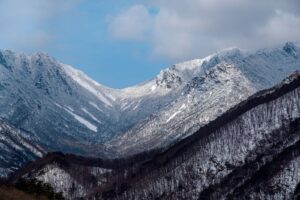
How did a honeycomb coal briquette help a war-damaged country regrow mountains stripped for firewood decades before nuclear power transformed its grid?

Civil Nuclear
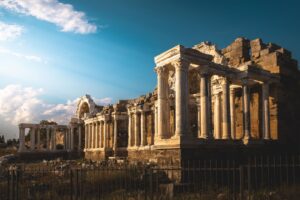
How does a two-thousand-year-old harbour concrete, poured by engineers of a Mediterranean empire, keep growing stronger in seawater while modern Portland cement crumbles in the same conditions within decades?

Civil Nuclear
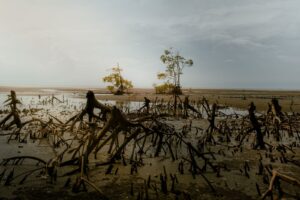
How does one hectare of salt-soaked coastal forest store three to five times as much carbon as a tropical forest inland, and why did one delta nation begin planting it 25 years before a cyclone killed about 138,000 people?

Civil Nuclear
In 1977, engineers at the Shippingport reactor in Pennsylvania started up a thorium-fuelled core that produced slightly more fissile uranium-233 than it consumed over five years of operation, quietly proving that a light-water reactor could breed its own fuel without a single sodium-cooled fast reactor in sight

Civil Nuclear
How does a single tree in the mountains of Utah cover roughly 106 acres, weigh about 6,000 tonnes, and share one root system across tens of thousands of trunks that look like separate individuals?

Civil Nuclear
In 1961, a routine restart at the SL-1 reactor in Idaho ended when an operator withdrew the central control rod about 20 inches by hand, triggering a steam explosion that lifted the entire 26,000-pound vessel off the floor in about four milliseconds and killed all three men on duty

Civil Nuclear
A single uranium-235 nucleus splitting releases about 200 million electron volts, roughly 50 million times the energy of burning one carbon atom, which is why a fuel assembly the size of a car can power a city for eighteen months

Civil Nuclear
In 1954, a small water-cooled, graphite-moderated reactor at Obninsk outside Moscow fed five megawatts of electricity into the Soviet grid, becoming the first nuclear power station to supply a conventional transmission network, and it operated for nearly 48 years

Civil Nuclear
What happened when biologists released fourteen wolves into a 2.2-million-acre national park after a seventy-year absence, and why are ecologists still arguing about whether the rivers really changed course because of it?

Civil Nuclear
A single uranium fuel pellet the size of a fingertip holds roughly the energy of one tonne of coal, 149 gallons of oil, or 17,000 cubic feet of natural gas, and a typical reactor core contains about 10 million of them stacked into 12-foot zirconium rods.

Civil Nuclear
In 1946, physicist Louis Slotin was demonstrating a criticality experiment at Los Alamos when the screwdriver holding two beryllium hemispheres apart slipped, the plutonium core flashed blue, and Slotin shielded his colleagues with his body knowing he had just absorbed a fatal dose

Civil Nuclear
Why can draining one hectare of tropical peat swamp release more carbon over decades than one forest fire, and why did one Southeast Asian nation build thousands of dams inside its own canals?

Civil Nuclear
In 1994, a park ranger abseiling into a gorge northwest of Sydney found trees with bubbling-chocolate bark and fern-like leaves — living survivors of a lineage traced through Cretaceous fossils

Civil Nuclear
In December 1942, beneath the abandoned squash court under Chicago's Stagg Field, Enrico Fermi's team pulled the cadmium control rods from a stack of graphite bricks and uranium slugs and watched the world's first self-sustaining nuclear chain reaction hold steady for 28 minutes before Fermi ordered the emergency rod called zip dropped back in and the pile went silent

Civil Nuclear