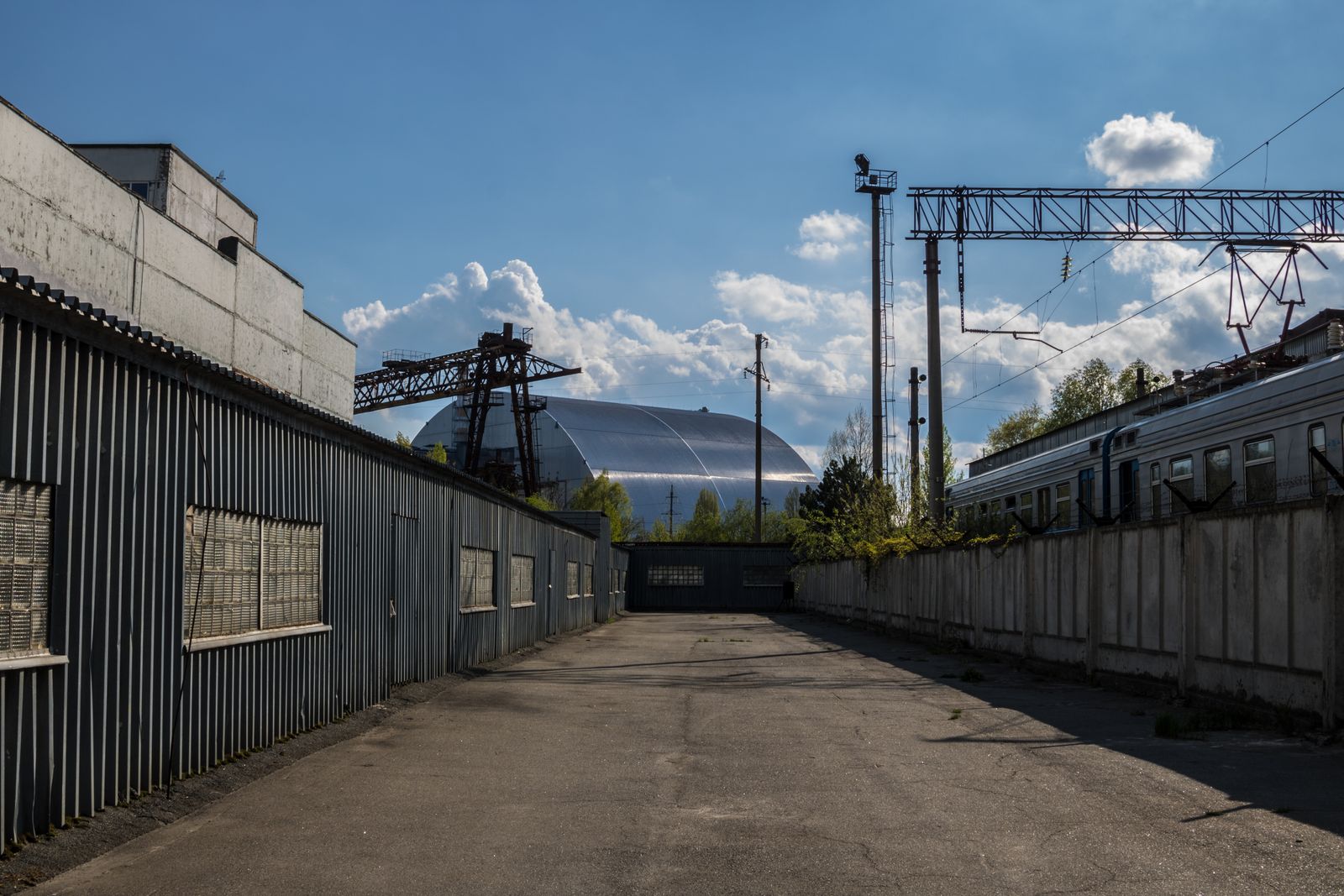
On June 27, 1954, the AM-1 reactor at Obninsk began supplying five megawatts of electricity to the Soviet grid. Its name was short for Atom Mirny, or “peaceful atom.” The achievement mattered for a precise reason: Obninsk was the first power reactor to send electricity across a conventional transmission grid.
That did not make it the first reactor to generate electricity, and AM-1 was not a pressurised-water reactor. EBR-I in Idaho had already produced usable electricity in 1951, while the Soviet machine used ordinary water as its coolant and graphite as its moderator. Obninsk’s claim to fame was the external grid connection, not the first movement of electrons produced by nuclear fission.
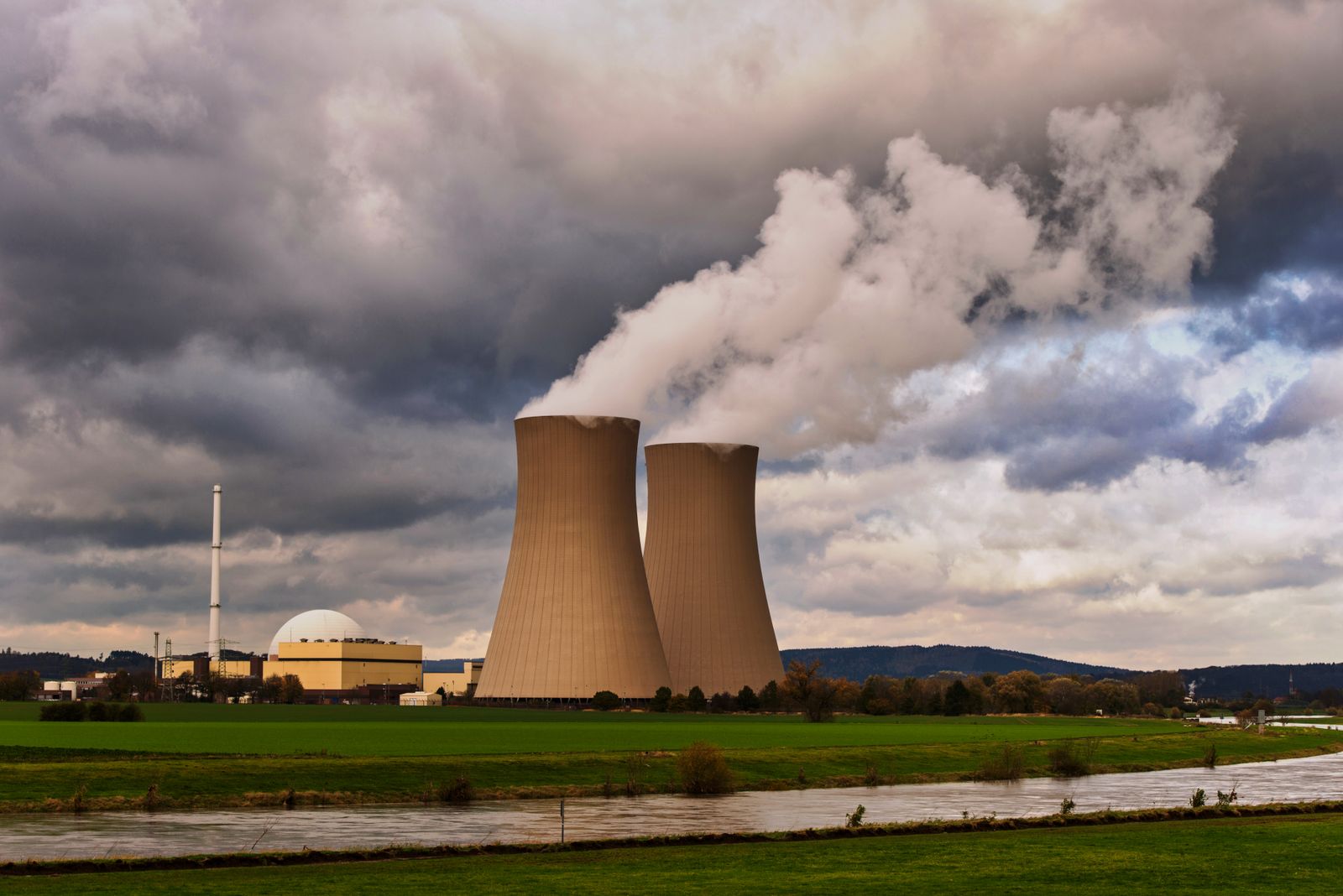
A reactor in a closed science town
Obninsk lay about 100 kilometres southwest of Moscow and was then a closed research settlement built around the Institute of Physics and Power Engineering. The institute had been established in 1946 to develop nuclear technology, and the power project drew directly on expertise assembled during the Soviet atomic programme.
The AM-1 reactor was water-cooled and graphite-moderated, with a design output of 30 megawatts of thermal power and five megawatts of electricity. It was a pressure-channel reactor, not the pressurised-water design developed for naval propulsion and later adopted across much of the civilian nuclear industry. Roughly one-sixth of its thermal output emerged as electricity, with the rest remaining as heat.
Igor Kurchatov served as research director, while Nikolay Dollezhal was chief designer. Their team was not starting with a blank sheet: the Soviet Union had already developed graphite-channel reactors for plutonium production, and AM-1 adapted that technical family to make steam and electricity. The civilian purpose was new, even though much of the underlying expertise had emerged inside a military programme.
Before Obninsk, reactors served experiments and weapons programmes
Enrico Fermi’s Chicago Pile-1 achieved the first controlled, self-sustaining nuclear chain reaction in December 1942 as part of the Manhattan Project. The Hanford B Reactor was built to make plutonium, while Britain’s Windscale piles served the British weapons programme. Early reactor history was dominated by experiments and military production rather than sustained electricity delivery.
On December 20, 1951, EBR-I became the first power plant to produce usable electricity through atomic fission. It initially lit four 200-watt light bulbs and later generated enough electricity for its own facility, but it did not supply an outside transmission grid. That is why EBR-I and Obninsk can both be described as “first” without contradiction.
The naval route was developing in parallel. The USS Nautilus, powered by a pressurised-water reactor, first travelled under nuclear power in January 1955, several months after Obninsk began supplying the grid. Framing Obninsk as a civilian alternative to nuclear-powered warships therefore reverses the chronology, because no nuclear-powered warship had yet gone to sea when AM-1 started operating.
Britain’s Calder Hall followed in 1956 as the first full-scale nuclear station to deliver substantial power to a grid. Shippingport began operating in the United States in 1957 and is commonly described as the first commercial nuclear power station. Obninsk occupies the space between EBR-I’s experimental electricity and those larger civil stations.
What five megawatts proved
Five megawatts was modest even in 1954 and is tiny beside a modern power reactor. The plant’s importance was not the number itself but the complete chain it demonstrated: reactor heat, steam, turbine, generator and transmission connection. Obninsk functioned as a working power system rather than a laboratory demonstration that happened to illuminate a few bulbs.
Its electricity-producing role was brief compared with the reactor’s total life. Historical accounts report that AM-1 produced electricity until 1959, after which it was used extensively for reactor research, fuel and materials work, operator training and isotope production. Those activities became the reactor’s lasting contribution after five megawatts had ceased to be significant to the wider grid.
AM-1 was shut down on April 29, 2002, just short of 48 years after it began operating. Its longevity should not be interpreted as nearly 48 years of substantial grid generation, because most of its later decades belonged to research, training and isotope work.
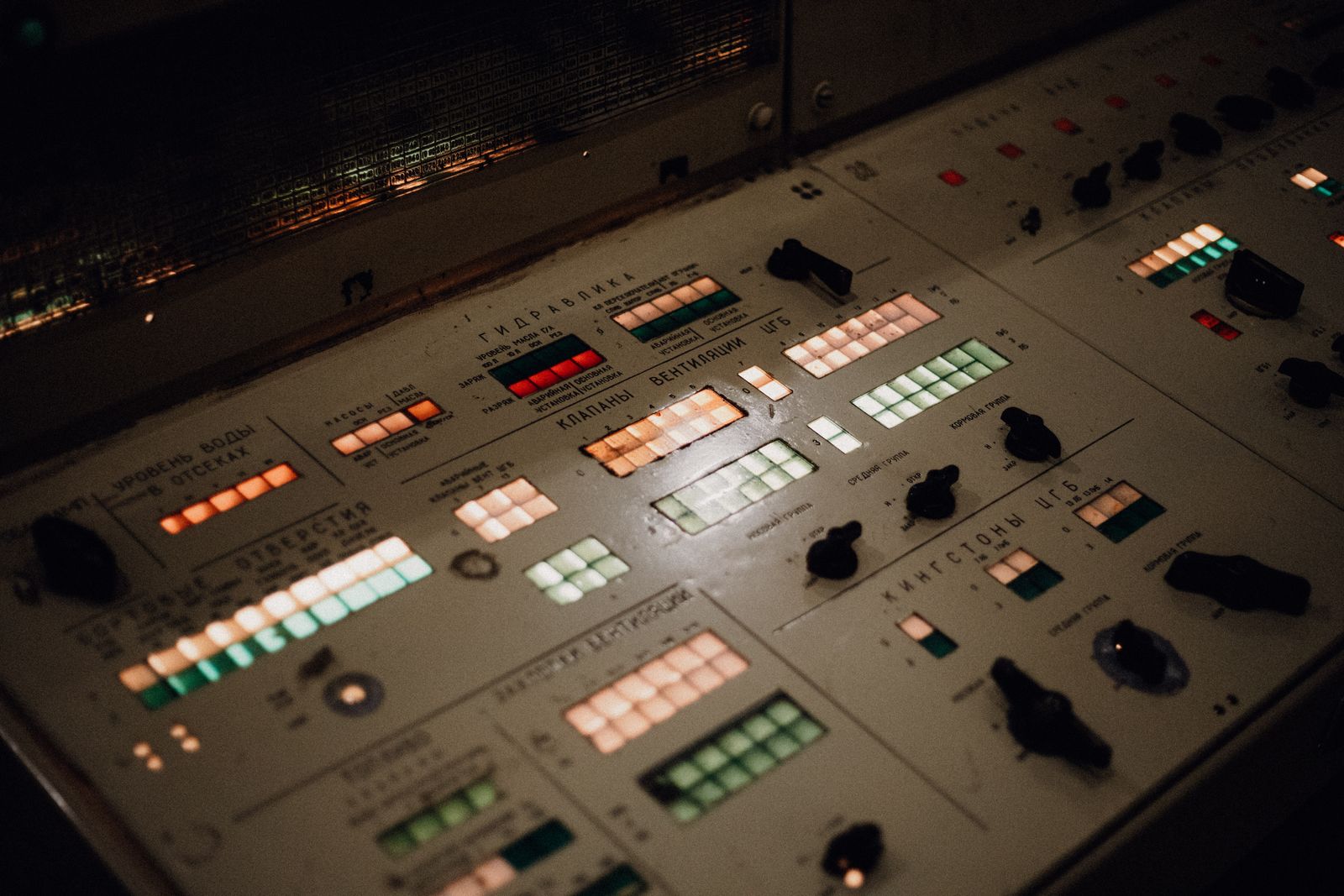
The peaceful atom was also Cold War politics
Obninsk started operating roughly six months after Dwight D. Eisenhower delivered his “Atoms for Peace” speech to the United Nations General Assembly on December 8, 1953. The Soviet project was already under way by then, so it was not created in response to the speech. Its timing nevertheless turned the plant into an immediate Cold War counterpoint to Eisenhower’s vision.
Both superpowers wanted to show that atomic science could produce a public benefit as well as military force. Obninsk gave the Soviet Union a physical example: a reactor connected to the same kind of electrical network used by towns, factories and other ordinary consumers. Its modest output mattered less politically than the fact that current was flowing at all.
The distinction between peaceful and military nuclear technology is real, but not absolute. Both rely on nuclear reactions and overlapping scientific expertise, while fuel enrichment, reactor design, material flows, operating purpose and safeguards determine what a facility can do. It is more accurate to describe Obninsk as a civil adaptation of technology developed inside weapons programmes than to suggest that identical bomb fuel was simply redirected into a power station.
The graphite-channel inheritance
AM-1 did not lead directly to the pressurised-water reactors that came to dominate many national fleets. It belonged to a Soviet water-cooled, graphite-moderated pressure-channel line that continued through the AMB units at Beloyarsk and later the RBMK. The World Nuclear Association identifies the 30-megawatt-thermal Obninsk reactor as one of the RBMK’s technical precursors.
That connection requires careful wording. The RBMK built decades later was vastly larger and possessed specific design defects, including control-rod problems and a strongly positive void coefficient under dangerous operating conditions, that contributed to the 1986 Chernobyl disaster. The later reactor’s design, its operating state, the decisions made during the test and the Soviet safety system all formed part of that catastrophe.
It is therefore misleading to say that engineers simply had 32 years to notice one unchanged defect inherited from AM-1. Obninsk established a broad graphite-channel lineage, but Chernobyl involved characteristics of the later RBMK design. The pressurised-water family, including Soviet and Russian VVER reactors, ultimately became the more influential route for civilian projects outside that lineage.
The town stayed nuclear
Obninsk did not become only a memorial site after AM-1 closed. It retained research institutes, technical training programmes and an international role in nuclear education. The Obninsk NEW 2026 forum brought together more than 700 participants from 85 countries, with support from Rosatom, the Kaluga regional government and the National Research Nuclear University MEPhI.
Azim Akhmedkhadjaev, director of Uzbekistan’s Atomic Energy Agency, was among the officials who attended the forum. His presence reflected a concrete project rather than a distant ambition: Uzbekistan and Russia launched construction of the first unit of an integrated nuclear power plant in June 2026. The project is being developed in Jizzakh Region, not in Tashkent.
A government description says the site will combine two 1,000-megawatt reactors with two smaller 55-megawatt units. Even without treating every announced capacity or completion date as guaranteed, the comparison with AM-1 is striking. A plant planned around roughly 2,100 megawatts belongs to an industry that began its grid history with five.
The longer nuclear timeline
Obninsk was first in human engineering, not in nature. At Oklo in Gabon, at least 17 natural reactors operated about two billion years ago when uranium-rich deposits and groundwater created conditions for self-sustaining nuclear reactions. That geological episode broadens the timeline without changing Obninsk’s place in the history of engineered electricity.
The categories remain important. EBR-I was first to produce usable electricity from fission, Obninsk was first to supply a conventional transmission grid, Calder Hall was the first full-scale nuclear station and Shippingport became the first commercial nuclear station in the United States. Obninsk’s position remains secure once each milestone is stated precisely.
What survived
The old AM-1 reactor building remains at Obninsk. After shutdown, its fuel was removed and the facility became a museum and a monument to nuclear science and engineering. Its physical scale is modest, but the historical threshold it crossed was not.
AM-1 did not prove that nuclear power would be cheap, safe or politically uncomplicated, and it did not settle the argument over the peaceful atom. It proved something narrower and more durable: a reactor could send sustained electricity through the same kind of network used by ordinary consumers. Five megawatts was enough to turn an experimental technology into the beginning of an electricity industry.