
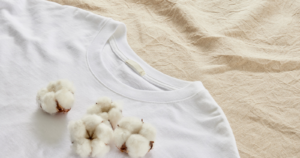
Water World
Producing a single cotton T-shirt takes roughly 2,700 litres of water, about what one person drinks in two and a half years
The water hidden in your closet is depleting aquifers faster than you realize.

The water hidden in your closet is depleting aquifers faster than you realize.
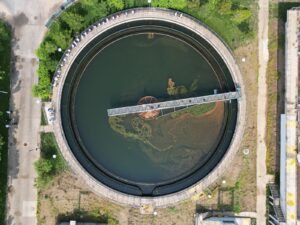
Singapore's Public Utilities Board says reclaimed sewage now meets up to 40 per cent of national water demand, with a target of 55 per cent by 2060 — here's how the membranes, the politics and a 1962 treaty with an expiry date got them there.
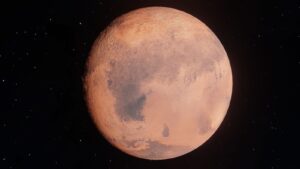
Freshwater tardigrades survive vacuum, near-absolute-zero cold, and lethal radiation, but a Penn State team found that dry simulated Mars regolith stopped them cold within 48 hours — while a rinse of water restored them. Perchlorate salts are the leading suspect.

The famous story of edible honey from Tutankhamun's tomb is mostly folklore — but the chemistry that makes honey nearly immortal is real, and a 2025 Yale study suggests the actual residues in Tut's alabaster jars may have been something far stranger: opium.
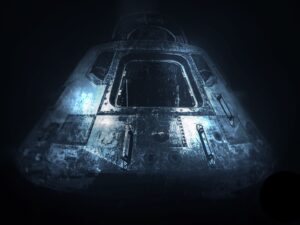
For forty-five years the Soviet Union told the world Laika had survived days aboard Sputnik 2. In October 2002, at the World Space Congress in Houston, scientist Dimitri Malashenkov finally released the telemetry that showed she had died within hours of launch when the cabin overheated past 40 degrees Celsius.
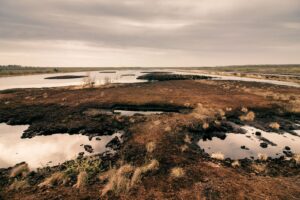
A European court's landmark ruling exposed how illegal irrigation wells drained one of the continent's most biodiverse wetlands to feed a booming berry industry, forcing Spain to finally reckon with the cost of looking the other way.
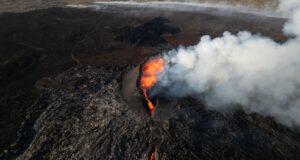
Mars has no plate tectonics, so its largest volcano has spent billions of years piling lava on the same spot instead of drifting off its heat source the way Hawaii does.
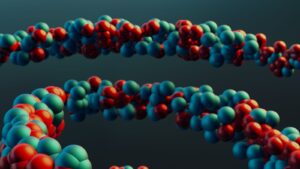
In October 2020, Emmanuelle Charpentier and Jennifer Doudna became the first all-female team to share the Nobel Prize in Chemistry, honored for turning a bacterial defense against viruses into CRISPR-Cas9 — programmable molecular scissors that can cut the DNA of any organism on Earth.

The most dangerous career trap isn't incompetence—it's being too good at what you do.
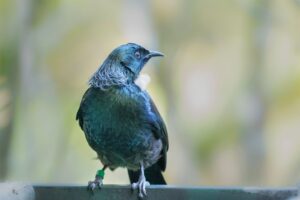
When conservationists cleared rats, stoats and possums from small offshore islands off New Zealand, ground-nesting birds thought to be functionally extinct began breeding within a few seasons — because the pressure keeping them out simply stopped.
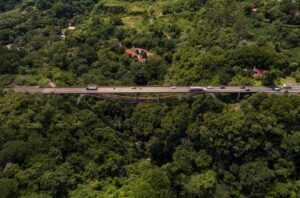
Costa Rica's forest cover collapsed to 21 percent by 1987, then rebounded to about 59 percent by the early 2020s. A 1996 forestry law and a 1997 payment program funded largely by a fuel-tax slice — administered by FONAFIFO — paid landowners to keep trees standing.

The drawer full of birthday cards and ticket stubs isn't clutter. Research on memory and nostalgia suggests it's a deliberate act of self-preservation against a mind that edits the past without permission.

Tritium — the rare hydrogen isotope fusion reactors need — costs about $30,000 per gram, glows faintly blue as it decays, and exists globally in quantities of just 25 kilograms. Fusion machines like ITER will have to breed their own from lithium blankets to make the numbers work.
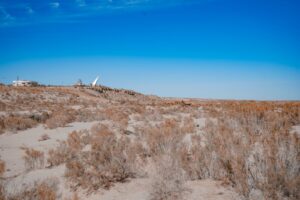
How a Canadian research reactor meant for peaceful science became the linchpin of India's secret nuclear weapons program.
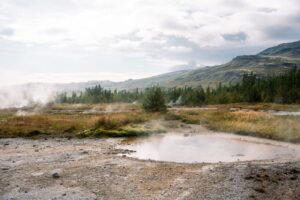
Iceland lost nearly all its birch forest within three centuries of Norse settlement. A century of soil conservation, imported Alaskan conifers acting as nurse trees, and a warming climate is now rebuilding woodland on volcanic sand that agronomists once wrote off as dead.
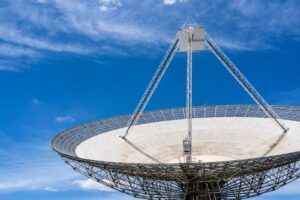
Voyager 1 still transmits from 15.8 billion miles away on the power of a hallway bulb — here is exactly how its plutonium generators, 69-kilobyte computers, and 22-hour signal delay actually work.