
A single gram of tritium — an amount you could balance on a fingernail — carries a price tag of roughly 30,000 US dollars and emits a faint glow in the dark as its unstable nuclei decay. The entire global stockpile sits at somewhere around 25 kilograms, and by some tallies closer to 20. That is the total. Not per country. Not per laboratory. The world’s supply of the hydrogen isotope that fusion reactors need to burn.
The number matters because the machines being built to deliver commercial fusion power — ITER in southern France, STEP in the UK, and a growing field of private ventures — will each consume tritium at rates that would drain that entire planetary stockpile in a matter of years if nothing else changed. Something else has to change. The reactors will have to make their own fuel, inside their own walls, out of lithium.

What tritium actually is
Tritium is hydrogen with two extra neutrons. Ordinary hydrogen has one proton and no neutron. Deuterium has one of each. Tritium has one proton and two neutrons, which makes it unstable. It decays by beta emission with a half-life of about 12 years, throwing off a low-energy electron and turning into helium-3. The electron is what causes the glow when tritium is sealed in a phosphor-coated tube. Watch dials, gun sights, and emergency exit signs have used this trick for decades.
Tritium is naturally produced in the upper atmosphere when cosmic rays hit nitrogen, but only in trace amounts — a few kilograms of tritium exist across the entire planet from natural processes at any given moment. Everything else on the ledger is man-made.
Why it costs so much
Tritium has to be bred. The dominant civilian source is the fleet of Canadian CANDU heavy-water reactors, which produce it as a byproduct because the deuterium in their moderator occasionally captures a neutron and becomes tritium. World output is measured in kilograms per year — small enough that the entire commercial market is priced by the gram.
The BBC Science Focus valuation puts tritium at around $29,000 per gram. A recent estimate given by Los Alamos physicist Terence Tarnowsky, reported by Good Morning America, places the commercial value at roughly $15 million per pound — a figure that works out to about $33,000 per gram. Different accounting, similar answer. Call it thirty thousand dollars for a fingertip’s worth.
The 25-kilogram global stockpile figure comes from public estimates by fusion researchers and the same Los Alamos briefing, which pegs the total planetary inventory at 55 pounds, plus or minus 31. That’s a wide error bar — because most tritium holdings are held by governments and not fully disclosed — but the ceiling is unambiguous. There is not much of it.
How much a fusion reactor eats
ITER, the international experimental tokamak under construction at Cadarache in Provence, is designed to run its deuterium-tritium campaigns at the end of a long staged research programme rather than at first plasma. Across that full experimental campaign, ITER is expected to consume tritium at levels that represent a meaningful fraction of what exists.
A commercial power plant would be worse. Tarnowsky’s own estimates, reported by The Register, put a 1-gigawatt thermal deuterium-tritium plant at more than 55 kilograms of tritium per year — more than twice everything currently on the planet. Scale that to two gigawatts and the requirement rises to about 112 kilograms annually, per Interesting Engineering’s account of the same work. Roughly four and a half times the global stockpile. Every year. Per plant.
The arithmetic breaks immediately. A single CANDU reactor yields only around 0.1 kilograms of tritium a year; every CANDU in the world put together comes to about 2.7 kilograms. You cannot fuel a fusion economy from Canadian heavy water. There is not enough of it, and there never will be.
The lithium blanket solution
The only way the numbers close is for fusion reactors to breed their own tritium in situ. The mechanism is elegant: line the inside of the reactor vessel with a blanket containing lithium. When the D-T fusion reaction in the plasma releases a high-energy neutron, that neutron flies outward and strikes a lithium nucleus in the blanket. Lithium-6 absorbs the neutron and splits into helium-4 and tritium. Lithium-7 can do the same at higher neutron energies, also producing tritium plus another neutron.
The tritium is then extracted from the blanket, purified, and fed back into the plasma. Each fusion event that consumes one tritium atom produces one neutron, and if the blanket geometry and neutron economy are right, that neutron produces slightly more than one new tritium atom. The ratio has a name: the tritium breeding ratio, or TBR. It has to be greater than one for the reactor to be self-sufficient. Engineering designs target a TBR above unity to account for losses, decay, and the tritium needed to start up the next reactor.
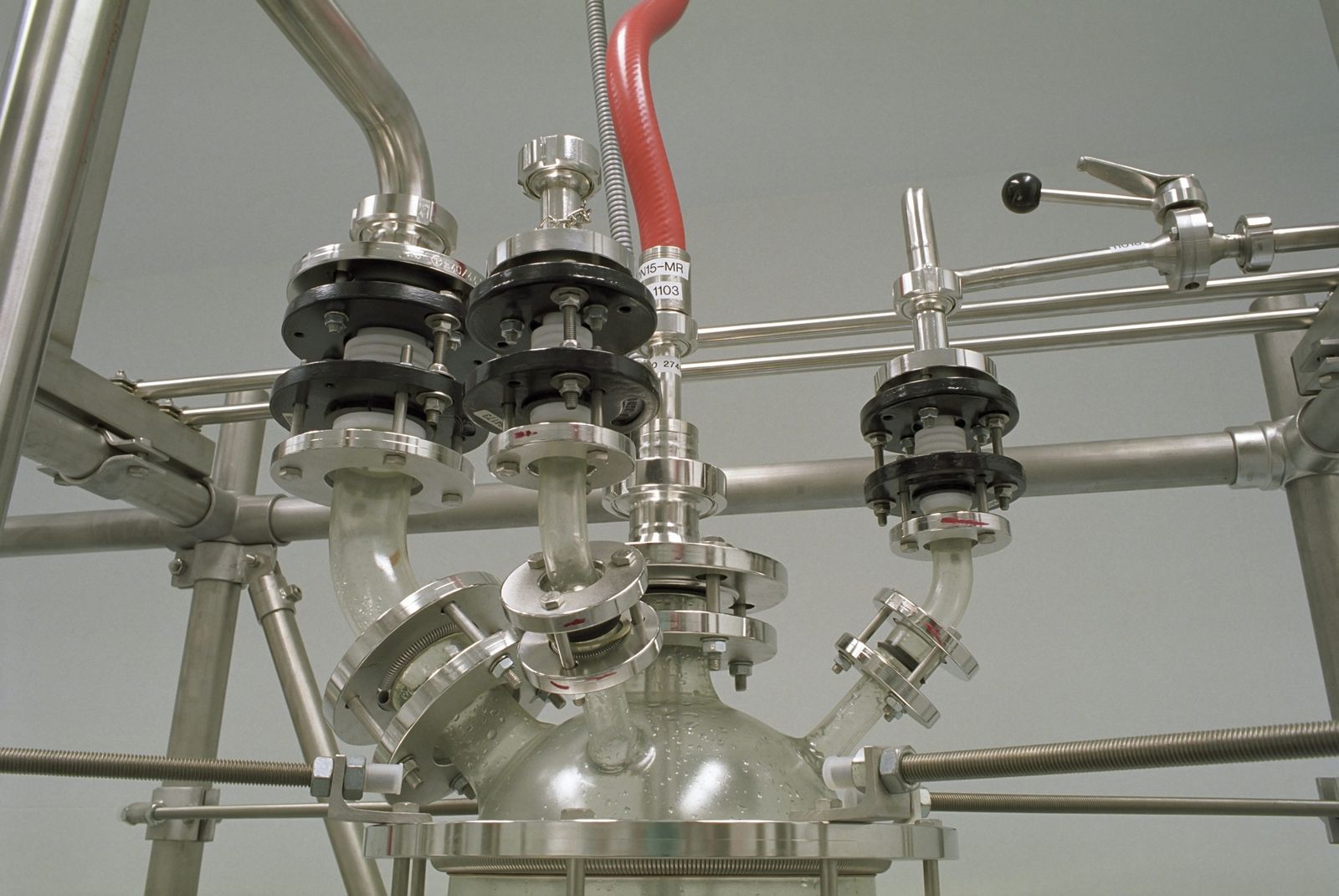
ITER will test several breeding-blanket concepts as Test Blanket Modules — small experimental sections of the wall using different chemistries. Some use solid ceramic pebbles of lithium ceramics like lithium titanate or lithium orthosilicate cooled by helium. Others use liquid lithium-lead eutectic. The full production blanket won’t fly until DEMO, the next-generation machine planned to follow ITER.
The startup problem
Even with breeding, there is a chicken-and-egg problem. You cannot start a tritium-breeding reactor without tritium. You need an initial charge to light the plasma the first time. The initial fuel has to come from somewhere, and the somewhere is the same thin Canadian pipeline.
This is why the tritium supply question is not academic. It is one of the two or three problems that decide whether commercial fusion happens on a 20-year timeline or a 60-year one. The WEST tokamak at Cadarache held a plasma for 22 minutes in February 2025, beating the previous Chinese record — but WEST runs on hydrogen and deuterium, not tritium. Almost every current fusion device does. The tritium-burning campaigns are rare, brief, and jealously rationed.
Making tritium from nuclear waste
A different route is being explored at Los Alamos. Tarnowsky’s team has simulated an accelerator-driven system that would use a proton beam to bombard spent nuclear fuel — of which the United States has thousands of tonnes sitting in dry casks and cooling pools — and produce tritium as a byproduct while transmuting long-lived actinides into shorter-lived isotopes.
The simulations suggest such a system could yield roughly 4.4 pounds of tritium per year — comparable to the total annual output from the Canadian CANDU fleet — while running on about a gigawatt of thermal power. The accelerator can be switched off and does not rely on a self-sustaining chain reaction, which is the safety argument for the design.
Whether the economics work is another question. Tarnowsky has said a full cost model is still to come.
The strange history of tritium
Tritium’s expense is a modern artefact. During the Cold War, the United States produced tritium in vast quantities for thermonuclear weapons at the Savannah River Site in South Carolina, where heavy-water reactors ran specifically to breed it. Those reactors have since been shut down. The US now produces weapons tritium using civilian power reactor infrastructure — a controversial arrangement that has drawn scrutiny for blurring the line between civilian and military nuclear fuel cycles.
The cost per gram in that classified programme is not published. But the civilian market — the one that supplies research labs, exit signs, and eventually fusion experiments — depends almost entirely on Canada.
Comparing the economics
To put the price in perspective: gold traded at roughly $140 per gram in early August 2026. Plutonium-239, the fissile isotope used in weapons and some reactors, is commonly estimated at around $4,000 per gram. Tritium is several times that again. Helium-3, tritium’s own decay product, sits higher still — the same BBC Science Focus survey values it at about $96,000 per gram today, with a projected valuation approaching $3 million per gram if it can ever be mined from the lunar surface.
The energy density argument is what makes the number tolerable. A single uranium fuel pellet holds roughly the energy of a tonne of coal. A gram of tritium burned with deuterium releases energy at a density far exceeding that pellet. The fuel, in other words, was never going to be the expensive part of a fusion plant. The catch is always the extraction, and the machine, and the neutron-battered wall around the plasma.
Tritium in your everyday life
Small amounts of tritium end up in surprising places. Self-powered exit signs in aircraft and public buildings contain tritium gas tubes coated with phosphor, producing that faint blue-green glow for about 10 to 20 years with no batteries or wiring. Some wristwatches use the same trick for luminous dials. Rifle sights use it for low-light aiming. The 50-year betavoltaic batteries now being built for pacemakers and other low-power devices use similar physics with different isotopes — nickel-63 rather than tritium.
All of that consumer use adds up to a small fraction of annual world production — a rounding error against the thousands of kilograms a mature fusion industry would need.
What the reactors have to do
For ITER’s successors to work as advertised, three things have to happen. The tritium breeding ratio has to exceed one under real reactor conditions, not just in simulation. The extraction chemistry has to pull tritium out of hot lithium blankets fast enough to matter, without letting the isotope escape into the environment. And the startup inventory problem has to be solved — either by stockpiling tritium in advance from CANDU-style sources, by building accelerator-driven producers of the kind Los Alamos is modelling, or by developing alternative fusion fuels that don’t need tritium at all, such as the proton-boron-11 reactions being pursued by several private companies.
None of these is easy. All of them are being actively worked on. The glow inside those small glass tubes is, in a very literal sense, the entire fuel supply for a technology the world has been chasing for 70 years.
Inside the walls now being assembled at Cadarache, decades from now, a gram at a time, an isotope worth more per unit weight than most gemstones will be bred from lithium, burned into helium, and accounted for on instruments to the nearest microgram. There isn’t enough of it in the world yet. There will have to be.