On 18 May 1974, a plutonium implosion device buried beneath the Thar Desert near Pokhran shook the sand of Rajasthan and sent a coded message back to Prime Minister Indira Gandhi in Delhi: the Buddha is smiling. India had become the sixth country in the world to detonate a nuclear device, and it had done so using plutonium bred inside a research reactor a Canadian government had shipped to Bombay in the 1950s on the written understanding that it would be used only for peaceful purposes.
The reactor was called CIRUS. The device was called the Smiling Buddha. And the paper trail between them became the single most consequential episode of nuclear diplomacy in the second half of the twentieth century.
A device at the bottom of a shaft
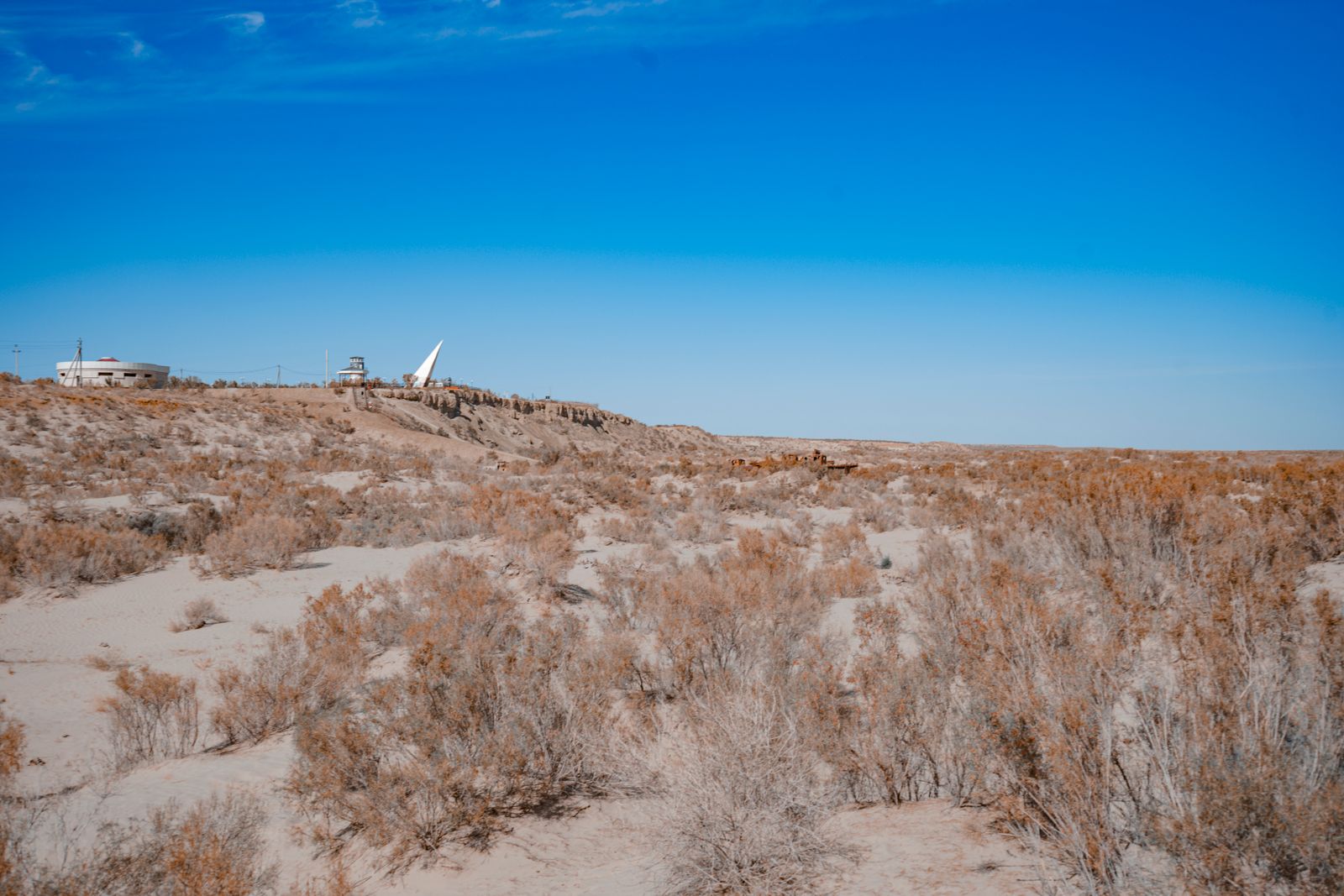
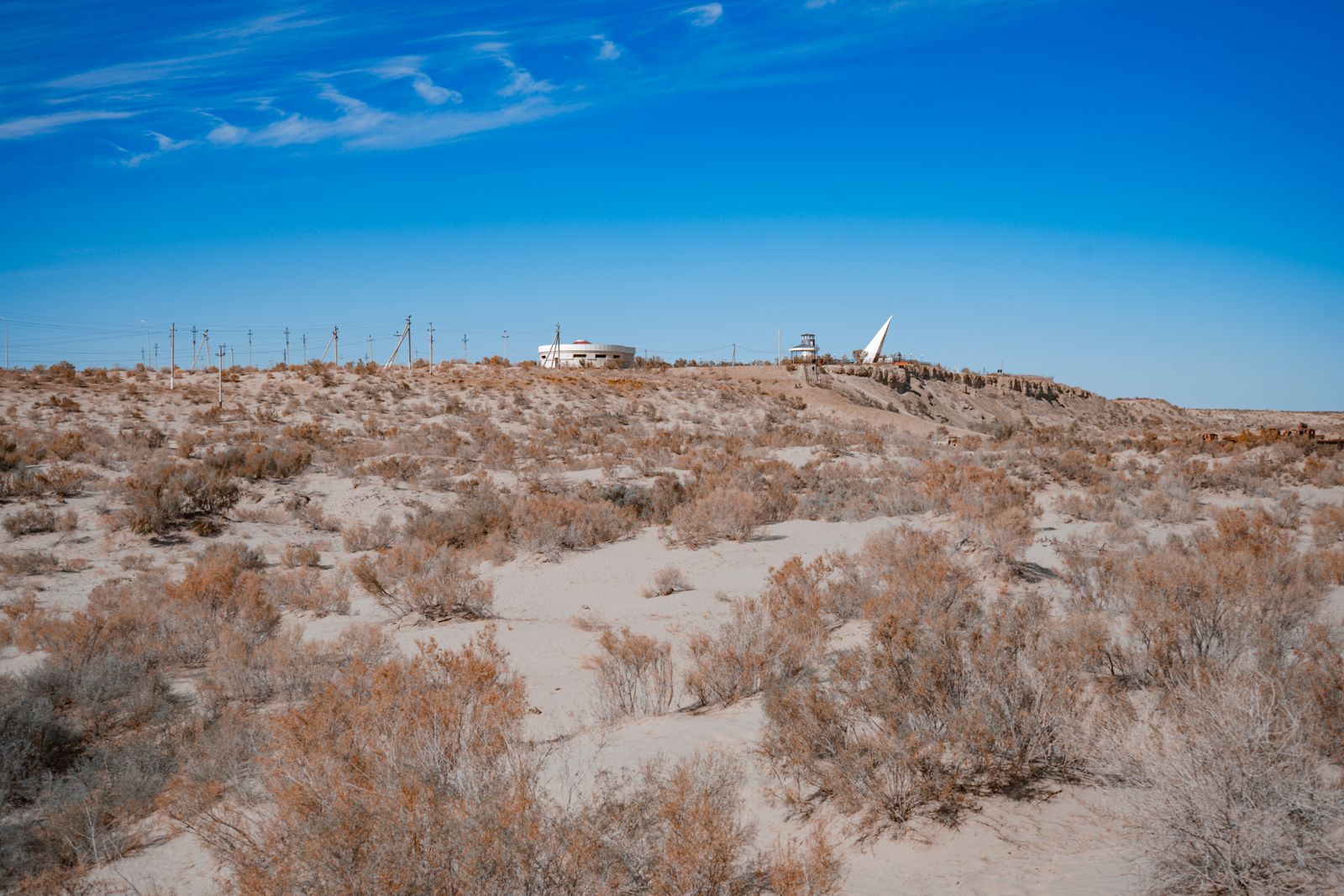
The device contained plutonium arranged as an implosion assembly. It was lowered into a shaft dug beneath a stretch of desert on the Pokhran firing range in Rajasthan, a stretch of scrub and dune the Indian Army had used for decades as an artillery testing ground. When it fired, the ground above the shaft rose before collapsing back into a crater. The yield was announced by the Indian government at around 12 kilotons, roughly the size of the bomb that destroyed Hiroshima, though later seismological analysis put the figure lower.
Officially, it was not a weapon. The Atomic Energy Commission, chaired by Homi Sethna, described it as a peaceful nuclear explosion, or PNE — a test of a device that might one day be used for civil engineering, mining, or the excavation of harbours. The phrase had been borrowed from an American programme of the 1960s called Plowshare, which had briefly promoted the idea that nuclear charges could dig canals and reshape coastlines.
Nobody outside India believed the peaceful framing for long. And nobody inside the small circle who built the device believed it either.
The reactor that made the plutonium
The plutonium came from a research reactor called CIRUS, short for Canada–India Reactor, United States. Canada had supplied the reactor design and much of the hardware in the mid-1950s as a gift under the Colombo Plan, an aid programme aimed at newly independent Commonwealth nations. The United States had supplied the heavy water that moderated its neutrons. India had assembled it at the Bhabha Atomic Research Centre at Trombay, on the coast just north of Bombay, and brought it to first criticality in 1960.
CIRUS was a natural-uranium, heavy-water reactor — a cousin of the CANDU design that Canada was then commercialising for its own electricity grid. The physics of that choice matter here. A heavy-water moderator lets a reactor run on unenriched uranium, which means the fuel cycle needs no enrichment plant. It also means the reactor produces plutonium-239 efficiently as a by-product of ordinary operation. The same feature that made CANDU attractive for civilian power made research reactors of that lineage attractive to any government interested in the plutonium route to a bomb.
The contract Canada signed with India contained a clause requiring that CIRUS and any material produced in it be used only for peaceful purposes. There were no on-site inspections. There were no cameras on the fuel channels. The clause was a written promise, not a verified safeguard. India signed it and, over the following fifteen years, quietly built a reprocessing plant a short drive from the reactor.
The reprocessing plant nobody stopped
The reprocessing facility began operation at Trombay in the 1960s. It used the PUREX chemical process — the same solvent-extraction chemistry developed at Hanford during the Manhattan Project — to dissolve spent CIRUS fuel in nitric acid and separate the plutonium from the leftover uranium and fission products. By the late 1960s, India had accumulated enough separated plutonium for a small device. Indira Gandhi gave authorisation for a test in the early 1970s.
The team was small. Raja Ramanna led the physics. P.K. Iyengar worked on the implosion design. Rajagopala Chidambaram handled the plutonium metallurgy. Sethna oversaw the programme from the AEC. The device was assembled in a laboratory at Trombay before being trucked and flown to Rajasthan under military guard.
Why 1974, and why the desert
The test came at a strange moment. India had just fought a short, decisive war against Pakistan in 1971 that ended with the creation of Bangladesh. China, which had detonated its own first device in 1964 at Lop Nur, was a nuclear power on India’s northern border. The Non-Proliferation Treaty had opened for signature in 1968 and India had refused to sign it, arguing that the treaty froze the nuclear-weapon states into a permanent club of five and denied everyone else the option.
Pokhran was chosen for reasons that were partly geological and partly geographical. The rock beneath the desert was stable enough to contain an underground shot. The site sat far from any international border, in a district the army had already cleared for its own use. The shaft was dug by engineers from the Corps of Engineers under the cover of a routine army exercise, and the device itself arrived on the range only in the final days before the test.
When it fired on that Saturday morning in May, seismographs in Sweden and in the United States picked up the signal within minutes. A seismic event in the middle of the Rajasthan desert was not something that could be hidden.
The Canadian reaction, and the birth of the NSG
Ottawa was furious. Canadian diplomats had been assured, repeatedly and in writing, that CIRUS was a civilian machine. Prime Minister Pierre Trudeau’s government froze all nuclear cooperation with India. The heavy water shipments stopped. The technical assistance stopped. A parallel Canadian reactor project at Rajasthan Atomic Power Station, called RAPS, was left incomplete and had to be completed by Indian engineers working from partial drawings.
The wider consequences were larger. In the mid-1970s, a group of nuclear-supplier countries met in London to discuss what to do about the fact that a peaceful-use clause on a piece of paper had not been enough to prevent a bomb. The meeting produced the Nuclear Suppliers Group, an informal cartel of exporting nations that agreed to require full-scope safeguards — meaning inspections not just of specific imported items but of a recipient’s entire nuclear programme — before selling reactors, fuel, or heavy water. The NSG guidelines remain the framework under which almost all civil-nuclear trade happens today.
Every reactor deal since then, from the French EPRs sold to China to the Russian VVERs built in Iran, sits inside the shadow of what happened at Pokhran in 1974.
What “peaceful” meant on paper, and what it meant in practice
According to the terms of the CIRUS agreement, India undertook that the reactor and its products would be employed only for peaceful purposes. The interpretation of what constituted ‘peaceful purposes’ became a point of contention after the 1974 test. The Indian position, argued at length after the 1974 test, was that a peaceful nuclear explosion was, by definition, peaceful. The device was not deployed on a missile. It was not weaponised. It was, in the government’s telling, a scientific experiment.
Canada’s position was that a bomb is a bomb, whatever the government sponsoring it calls it, and that the moment plutonium bred in CIRUS ended up in an implosion assembly buried under a desert, the agreement had been broken. The two governments never reconciled the interpretation. Nuclear cooperation between them did not resume in any substantive form for more than three decades, until the India–Canada agreement of 2013.
The distinction between “peaceful” and “military” uses of nuclear technology has been contested from the beginning. It is worth remembering that the physics of fission was published openly in 1939 and does not care what a state’s stated intentions are. A reactor that produces plutonium produces plutonium. What happens to it next is a political question, not a physical one.
The gap between 1974 and 1998
India did not test again for 24 years. The device fired in 1974 was demonstrated but never developed into a deployable weapon in the immediate aftermath. The programme was scaled back under domestic political pressure and international sanctions, and Indira Gandhi’s government moved on to other priorities. Rajiv Gandhi, her son and successor, pursued disarmament diplomacy through the 1980s.
It was not until May 1998, under Prime Minister Atal Bihari Vajpayee, that India tested again — this time a series of five devices at the same Pokhran range, in an operation the government called Pokhran-II. American reconnaissance satellites had detected preparations for an earlier planned test in 1995 and the government of the day had cancelled it under US pressure. The 1998 series was concealed successfully by working at night, using camouflage netting, and moving equipment in patterns that mimicked ordinary military activity. When the devices fired on 11 and 13 May 1998, the signal that went back to Delhi was, once again, that the Buddha had smiled, as The Times of India has recounted in its coverage of the anniversary.
Pakistan tested its own devices at Chagai two weeks later. The subcontinent had two declared nuclear-weapon states.
The reactor itself, and what happened to it
CIRUS kept running long after the test that made it famous. It was shut down briefly in 1997 for refurbishment and returned to service in 2003. It was finally shut down permanently on 31 December 2010, as part of the terms of the 2008 US–India civil nuclear agreement, which required India to place a defined list of its civilian reactors under International Atomic Energy Agency safeguards and to close some of its older unsafeguarded facilities.
By the time it was retired, CIRUS had been operating for fifty years. It had trained several generations of Indian nuclear engineers. It had produced medical isotopes. It had also produced, at some point in the 1960s, the plutonium that ended up in a shaft in the Thar Desert on a Saturday morning in May 1974.
The reactor building still stands at Trombay. The crater at Pokhran is still visible from the air — a shallow circular depression in the sand, ringed by the low scrub that has grown back over the desert in the half-century since. The Indian Army maintains the range. Tourists cannot visit. The nearest road runs several kilometres to the north.
The message that travelled from Rajasthan to Delhi that morning was three words long. The message that travelled from Rajasthan to every capital that exported nuclear technology took longer to arrive, and it rewrote the rules of the trade.