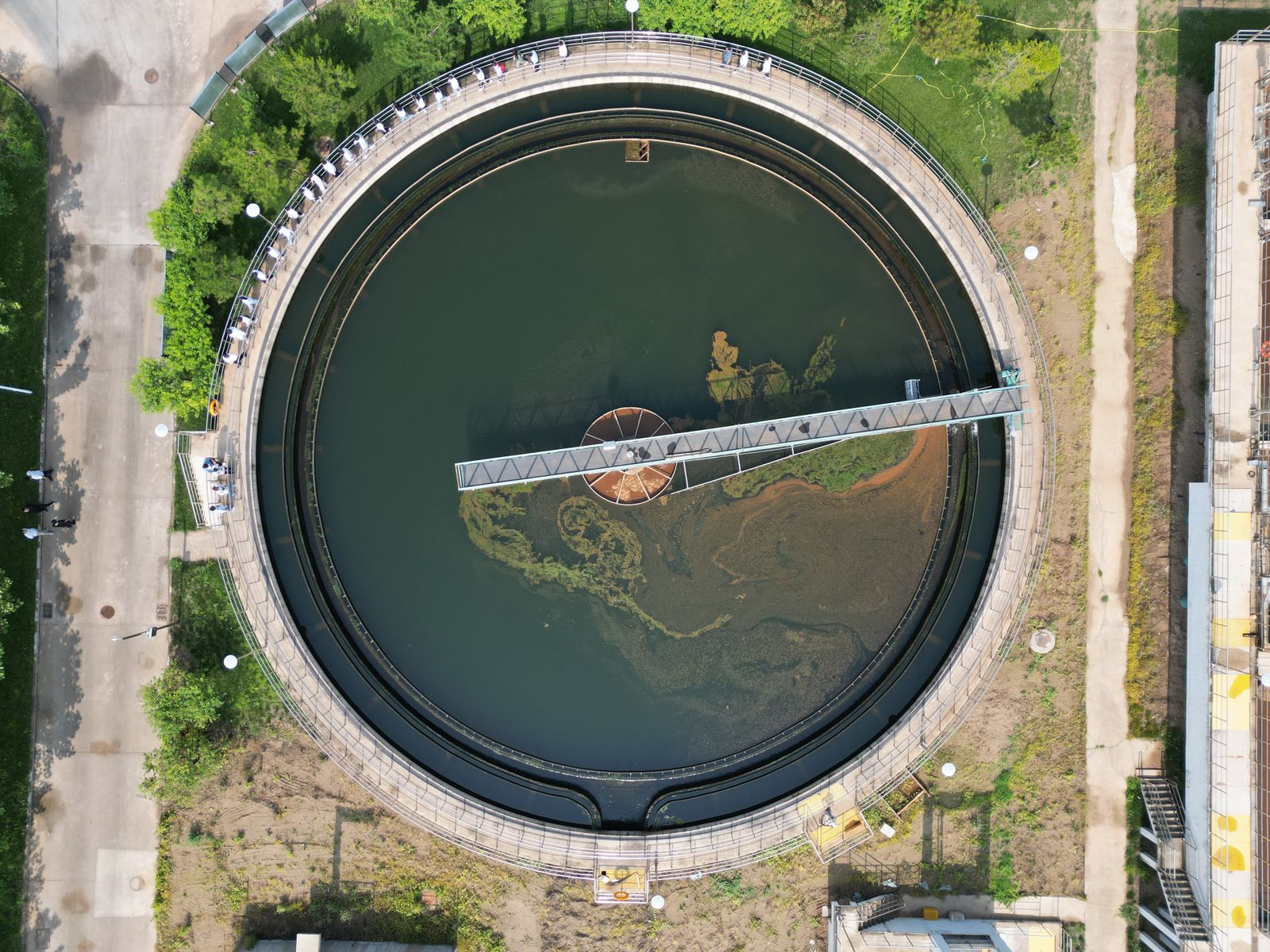
Singapore has built enough NEWater production capacity to meet up to 40 per cent of national water demand. The system takes treated used water through microfiltration or ultrafiltration, reverse osmosis and ultraviolet disinfection; most of the finished water goes to industry, while a smaller amount is added to reservoirs during dry periods before being treated again for potable supply.
The city-state had a land area of about 745.1 square kilometres as of June 2026, and PUB describes Singapore as having no natural freshwater sources of its own. National water demand is currently about 440 million gallons a day. Under the 1962 Water Agreement, Singapore can draw up to 250 million gallons of raw water a day from the Johor River; that agreement expires in 2061.
The Four National Taps
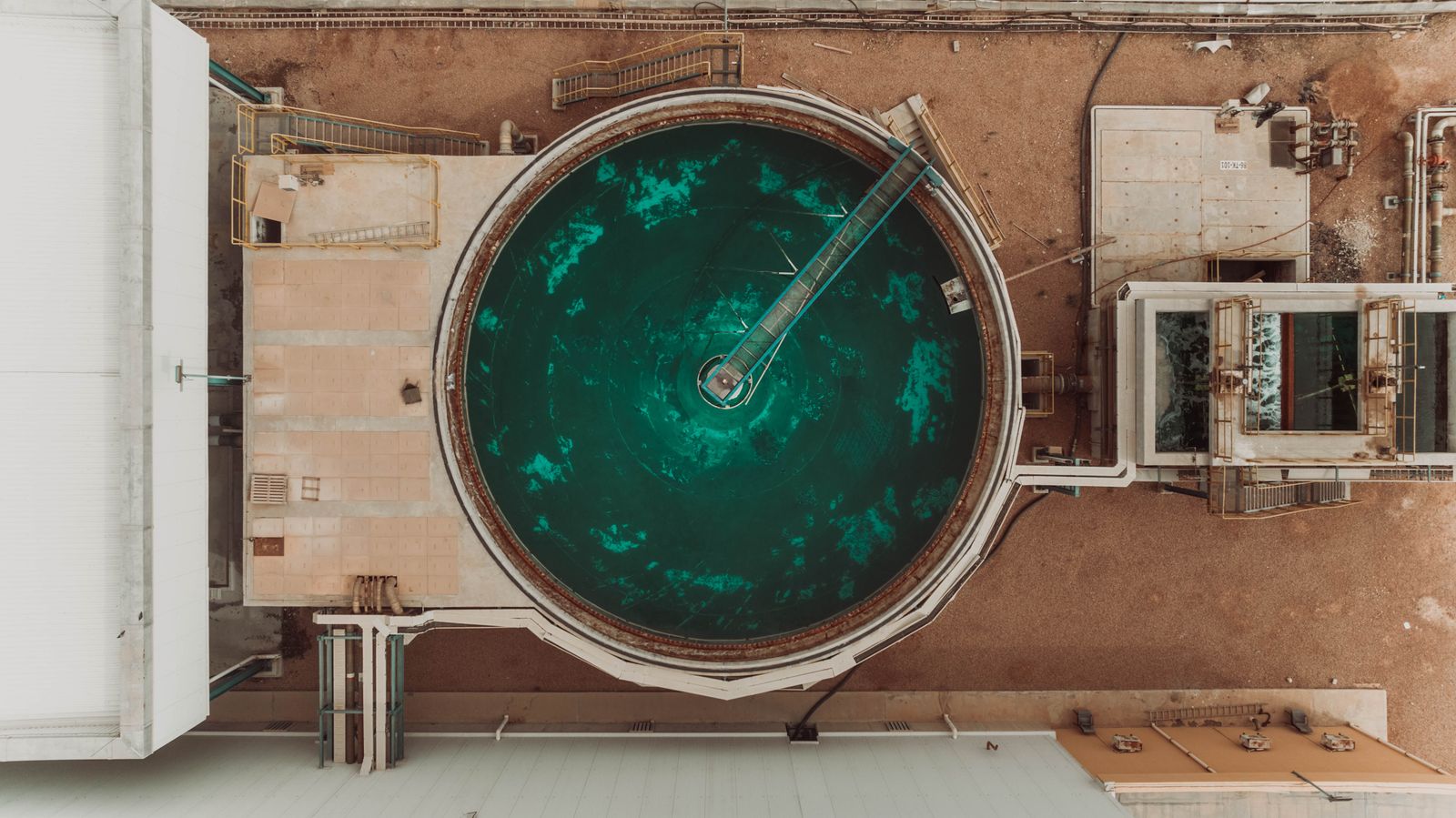
Singapore organises its water supply around the Four National Taps: water from local catchments, imported water, NEWater and desalinated seawater. Local rainfall is captured through a heavily engineered network that includes 17 reservoirs, while imported water remains part of the system alongside the two weather-resilient sources.
The modern NEWater programme was not the product of a decade-long pilot immediately before launch. PUB set up a team in 1998 to test proven membrane technology, commissioned a full-scale demonstration plant in 2000, introduced NEWater publicly in 2002 and opened the first Bedok and Kranji factories in 2003. Singapore’s first desalination plant followed in 2005.
The membranes themselves are established water-treatment technology. What distinguishes Singapore is the way the technology has been built into a national water system that links sewerage, reclamation, industrial supply, reservoirs and potable treatment under a single long-term strategy.
What actually happens inside a NEWater plant
Used water first passes through a conventional water reclamation plant, where biological and physical processes remove much of the organic matter and suspended material. Only after that treatment does selected effluent enter the advanced purification stages used to make NEWater.
The first barrier is microfiltration or ultrafiltration. These membranes remove suspended particles and microorganisms such as bacteria, preparing the water for the more selective reverse-osmosis stage.
Next comes reverse osmosis. Pressure drives water across a semi-permeable membrane while salts, heavy metals, viruses and many organic contaminants are rejected, producing high-grade water on the permeate side.
Finally, ultraviolet disinfection provides an additional safety barrier by inactivating remaining microorganisms. PUB says NEWater consistently exceeds the requirements in WHO drinking-water guidelines and US EPA drinking-water standards, with about 300 parameters monitored across the supply chain.
Why most of it never reaches a household tap
Most NEWater is supplied for non-potable use in wafer-fabrication plants, industrial estates and commercial buildings, including air-conditioning cooling systems. Those users value its consistently low levels of dissolved minerals and other contaminants.
Singapore does use NEWater for drinking, but indirectly. During dry periods, a smaller amount is added to reservoirs, where it blends with raw water before passing through conventional waterworks and entering the potable distribution system.
That arrangement was built into the programme from the start. PUB’s expert review recommended indirect potable use after extensive testing, adding a reservoir and conventional treatment step between advanced reclamation and the household tap while the agency built public confidence in the new supply.
What it costs, and where demand is growing
Reverse osmosis uses electricity, but NEWater is markedly less energy-intensive than seawater desalination because its feedwater contains far less salt. In a recent research call, PUB put a state-of-the-art NEWater factory at about 0.4 kilowatt-hours per cubic metre, compared with about 3.5 kWh/m³ for state-of-the-art seawater desalination.
That efficiency matters because Singapore expects total water demand to almost double by 2065, with the non-domestic sector accounting for roughly two-thirds of future demand. At Singapore International Water Week in June 2026, Sustainability and Environment Minister Grace Fu said the country was seeking better water technology to improve energy efficiency and strengthen resilience against climate impacts, according to The Straits Times.
Data centres are part of that non-domestic growth, although their water use varies sharply with cooling design and operating conditions. Singapore’s broader strategy is to keep high-quality potable water available for uses that require it while increasing recycling and non-potable supply for industrial customers.
Microsoft reported in June 2026 that its Singapore operations use 99 per cent recycled, reused or non-potable water, compared with 74 per cent in Quincy, Washington, and 79 per cent in San Antonio, Texas. The disclosure does not say that all of Singapore’s 99 per cent is NEWater, so it should not be treated as evidence that NEWater alone supplies those facilities.
The same distinction matters for future AI workloads. Reclaimed and non-potable water can reduce pressure on drinking-water systems, but the effect depends on the cooling technology, local reuse infrastructure and how much water a facility recirculates on site.
Building more of it
PUB is expanding capacity rather than treating today’s 40 per cent figure as a fixed ceiling. It is building a third NEWater factory at Changi and an integrated Tuas NEWater Factory planned for a production capacity of 75 million gallons per day.
PUB currently lists four NEWater plants in operation. Longer term, NEWater production is being consolidated around major water reclamation plants at Changi, Kranji and Tuas, allowing treated used water to move more directly into advanced purification and then into dedicated industrial distribution networks.
Singapore’s model is not a plug-and-play answer for every water-stressed place. The economics depend on sewer networks, treatment capacity, energy prices and public trust; those constraints look different in places dealing with aquifer depletion or in countries where desalination and power supply are tightly linked.
What the membranes actually mean
Inside a reverse-osmosis hall, the core hardware is visually ordinary: long pressure vessels containing spiral-wound membrane elements, arranged in racks and fed by high-pressure pumps. The significance lies less in the appearance of the equipment than in the fact that Singapore has made reclaimed water a routine part of national infrastructure rather than an emergency reserve.
Singapore still captures rain, imports raw water and runs desalination plants. NEWater does not mean the Johor agreement has already been replaced; it means the country now has enough reclaimed-water capacity to meet up to four tenths of current demand while another weather-resilient source is being expanded before the 1962 agreement reaches its 2061 expiry.