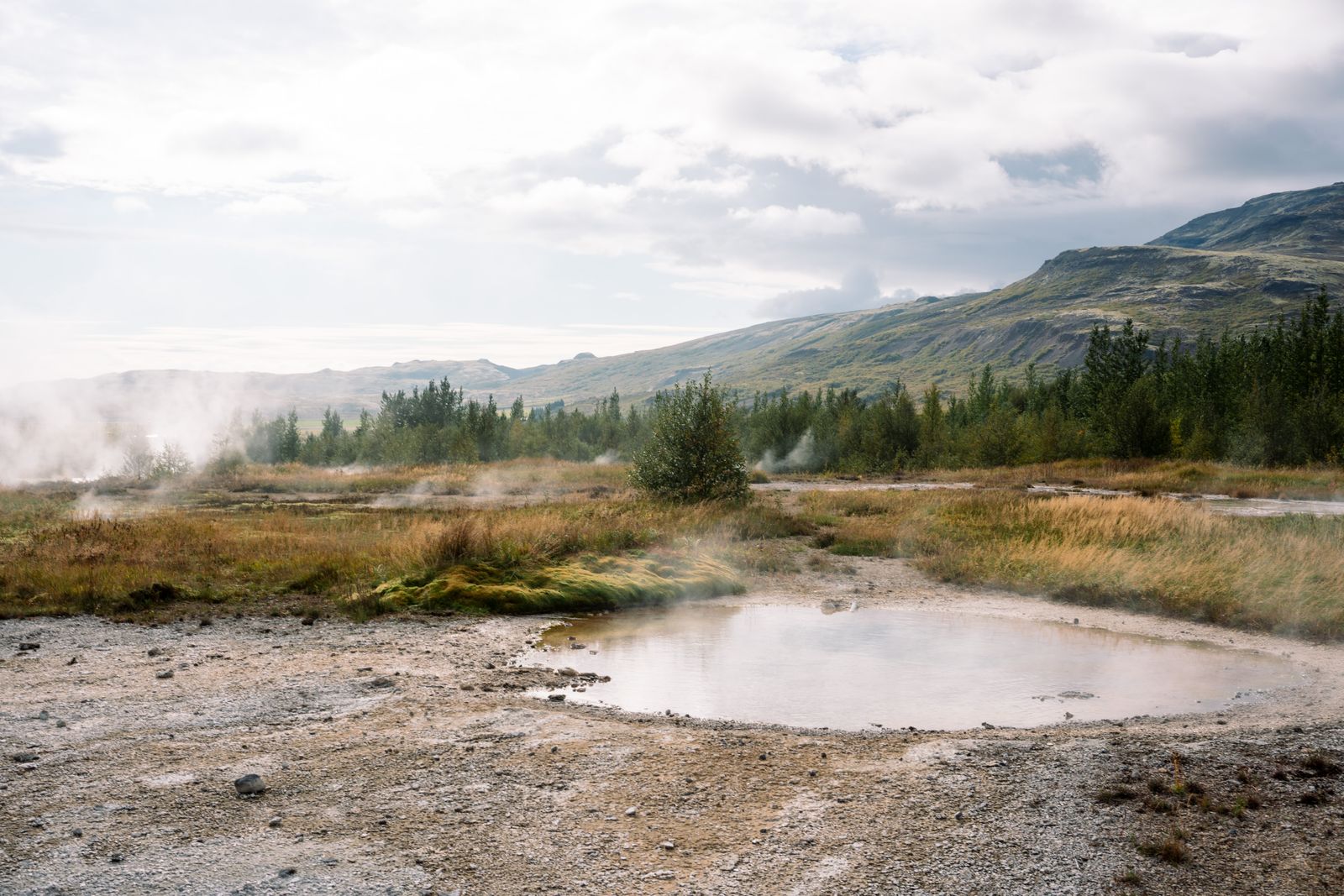
Iceland is the island, and its forests are returning through fencing that excludes sheep, erosion control, natural regeneration of downy birch, and targeted planting of native and introduced trees. Birch forest and woodland covered an estimated 25 to 40 percent of Iceland when people settled there, fell below 1 percent around the middle of the twentieth century, and now account for about 2 percent of the country. National restoration and forestry work is now coordinated by Land and Forest Iceland, formed when the forest and soil-conservation agencies merged on January 1, 2024.
The ground was not uniformly incapable of supporting trees. Birch survived in scattered remnants, and some degraded land could recover once grazing stopped. The hardest sites, however, had lost enough vegetation and soil that foresters first had to slow wind erosion, establish ground cover, and create places from which woodland could spread.
A warmer climate has also altered the conditions in which that work takes place. The Icelandic Meteorological Office reported a warming trend of 0.47°C per decade from 1980 in its 2018 assessment and found that Iceland had become visibly greener. Warmer growing conditions may help trees, but they do not replace fences, viable seed, stable soil, or decades of protection.
What the settlers inherited and used up
Downy birch, Betula pubescens, was the only tree to form extensive woodland in Iceland after the last glaciation. In sheltered valleys it could reach roughly 15 metres, while exposed coasts and uplands supported lower birch and willow scrub. The result was not a continuous forest over the whole island, but a much more wooded lowland than the landscape familiar today.
Settlement began in the late ninth century. People cleared woodland for fields and grazing, cut it for fuel and building material, and converted large quantities into charcoal for ironworking. Sheep then browsed young shoots, preventing many cut woods from replacing themselves.
The loss was severe, but it was not completed within three centuries. Woodland survived in some valleys for hundreds of years, continuing to supply farms while becoming increasingly fragmented. A historical reconstruction of Þjórsárdalur, for example, found that roughly half the valley was still wooded in the late sixteenth century before 94 percent of that woodland disappeared over the following 350 years.
By the middle of the twentieth century, native birch woodland probably covered less than 1 percent of Iceland and perhaps less than 0.5 percent. Protected remnants were already beginning to expand inside fences, while planting was establishing new stands. The national balance appears to have shifted from net forest loss to net gain sometime between 1950 and 1980.
Why stopping the damage came before planting
Once woodland and ground vegetation disappeared, Iceland’s wind, rain, frost, and volcanic ash could act directly on exposed soil. On some sites, erosion removed fertile surface layers and left gravel, sand, or shallow soil behind. Planting a tree into actively moving ground did little if the next storm exposed its roots.
Organised forestry therefore began with protection. Early national forests enclosed surviving birch woods against sheep, allowing roots, shoots, and windborne seed to produce new growth. Planting became more prominent after the middle of the twentieth century, once foresters had identified species and seed origins that could survive Icelandic conditions.
Fencing remains one of the decisive interventions. A peer-reviewed review of birch woodland restoration in Iceland identifies sheep grazing as a major obstacle because seedlings and new shoots remain vulnerable long after the first trees appear.
On badly eroded land, the sequence can be longer. Restoration teams may first apply fertiliser, sow grasses, or encourage native ground vegetation so the surface stops moving. Birch and willow can then be planted in small groups that produce seed for surrounding land instead of attempting to cover every hectare with nursery-grown trees.
What Iceland plants, and why
Iceland is not pursuing one single kind of forest. Native woodland restoration emphasises downy birch and willow, while production forestry and shelter planting also use Sitka spruce, lodgepole pine, Siberian larch, and black cottonwood. The choice depends on whether the immediate aim is biodiversity, erosion control, shelter, timber, recreation, or carbon storage.
For native restoration, the cheapest tree may be one that plants itself. A protected birch remnant or deliberately planted woodland island can release seed onto nearby stable ground for decades. That makes grazing control and seed-source placement as important as the number of seedlings delivered in any single year.
Introduced species entered Icelandic forestry through decades of trials involving species and provenances from northern climates. Some have grown far taller and faster than native birch. By 2016, the principal introduced forestry species had all produced trees at least 22 metres tall, while Sitka spruce had reached 27 metres.
That growth demonstrated that Iceland’s climate and soils did not make tall forest impossible. It also provided timber and shelter sooner than slow-growing native woodland could. These are practical advantages, but they do not make every introduced plantation an ecological substitute for the birch ecosystem that preceded settlement.
There is also no firm basis for treating all conifers as temporary nurse trees that will eventually be removed in favour of birch. Some stands may develop mixed regeneration, but plantations have different owners and purposes. Their eventual composition depends on management decisions, seed spread, grazing, and the behaviour of each species.
What the Hekla project is actually doing
Hekluskógar, the restoration programme around the active Hekla volcano, shows both the ambition and the limits of the work. Its project area extends across roughly 90,000 hectares, but that figure describes the boundary, not land already converted into forest.
The plan relies on scattered birch and willow groves, soil stabilisation, and natural colonisation over several decades. The woodland is intended to hold soil and volcanic material in place so ash deposited by future eruptions is less easily redistributed by wind and water.
The project’s published record said that by 2014 more than 2.3 million seedlings had been planted and the afforested patches covered more than 1,200 hectares. That was substantial work, but only a small fraction of the 90,000-hectare landscape. Describing the entire project area as rebuilt forest would inflate the result by more than an order of magnitude.
The cost is similarly easier to document for particular agreements than for the whole national recovery. A five-year cooperation agreement signed in 2016 allocated ISK 27.5 million annually to Hekluskógar. That figure covered one programme during one funding period, not all Icelandic forestry or the eventual cost of restoring the full project area.
The scale is real, but still small
Forest and woodland cover has at least doubled since the middle of the twentieth century, yet it remains close to 2 percent of Iceland’s land area. Native birch accounts for most of that cover, while cultivated forest occupies a much smaller share. In a country of more than 100,000 square kilometres, percentage-point changes require decades of protection and planting.
Annual planting also fluctuates with budgets and demand. Official forestry figures recorded 3.1 million trees planted in 2015, while Forest Europe reported roughly 6 million seedlings in 2022. A fixed claim of three to four million seedlings every year therefore gives a misleading impression of a stable national rate.
Iceland’s trajectory is slower than South Korea’s post-war forest recovery. Korea combined planting with a rapid change in household fuel, national mobilisation, and warmer growing conditions. Iceland is working across colder, windier land with a much smaller population and large areas where soil must be repaired before woodland can expand.
New forests do accumulate carbon, but carbon accounting cannot be reduced to the amount held in standing trunks. Soil condition, previous land use, establishment emissions, harvesting, and the permanence of the forest all affect the balance. The same principle appears in Indonesia’s effort to restore drained peat, where changing the ground beneath the vegetation matters as much as what grows above it.
The forest future is still being argued over
The central dispute is no longer whether trees can grow in Iceland. It is which trees should grow where, and what may be lost when open land becomes plantation. A 2025 peer-reviewed response on lodgepole pine in Iceland warned that the species is spreading beyond plantations, reducing vascular-plant diversity, and altering habitat important to ground-nesting birds.
Those concerns do not erase the gains from restoring native birch or stabilising eroded land. They do mean that forest area alone is an incomplete measure of success. Iceland must distinguish restoration of a lost native ecosystem from timber planting, carbon projects, shelterbelts, and recreation forests, even when all of them add trees to a map.
That argument resembles decisions facing other small jurisdictions with limited space. Niue’s management of an ocean territory vastly larger than its inhabited land is a different case, but the pressure is familiar: every protected or productive area has to serve several purposes at once.
In Iceland’s older protected woods, the return can now be experienced at human scale. A walker moves out of open wind into birch, spruce, and larch, and the sound changes before the view does. Branches interrupt the air, leaf litter replaces bare grit underfoot, and seedlings appear in places where grazing once removed them.
The national map will change much more slowly. The decisive work is happening at the edge of each fenced patch, where a seed lands on ground stable enough to hold it and survives long enough to become the next source of seed. After a thousand years of retreat, Iceland’s forest is returning a few metres at a time.