Tracking the future of nuclear energy.
Nuclear Power Daily Editorial Team
Editorial Team

Nuclear Power Daily Editorial Team

Editorial Team

The Nuclear Power Daily Editorial Team produces Nuclear Power Daily's coverage of nuclear energy. We report on reactors and small modular reactors, the fuel cycle, waste and safety, policy, and fusion research. Articles reflect our team's collective editorial process, source verification, drafting, technical review, and editing, rather than a single writer's work. Nuclear Power Daily takes editorial responsibility for content under this byline. For more on how we work, see our editorial policy.

Civil Nuclear

In December 1942, beneath the abandoned squash court under Chicago’s Stagg Field, Enrico Fermi’s team pulled the cadmium control rods from a stack of graphite bricks and uranium slugs and watched the world’s first self-sustaining nuclear chain reaction hold steady for 28 minutes before Fermi ordered the emergency rod called zip dropped back in and the pile went silent

On December 2, 1942, in a squash court beneath the University of Chicago's Stagg Field, Enrico Fermi's team ran the world's first self-sustaining nuclear chain reaction at about half a watt for 28 minutes — held in check by cadmium rods, an axe, and three buckets of cadmium sulfate solution.
Civil Nuclear

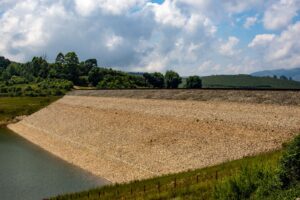
What happened when engineers built a single eight-mile dam across a dying inland sea, cutting off the shrinking northern lobe from the salt flats below, and why did the fish come back within a decade?

In 2005, Kazakhstan closed the eight-mile Kok-Aral Dam across the strait dividing the Aral Sea, walling off its northern lobe from the salt flats to the south. Within a decade, salinity in the Small Aral had halved and fish catches climbed tenfold — from 400 tonnes a year to 4,000.

Civil Nuclear

In 1955, the town of Arco, Idaho drew every watt of its electricity for about an hour from an experimental fast breeder called BORAX-III sitting out on the desert flats, becoming the first community on Earth to light its streetlamps entirely with atoms splitting a few miles away.

On July 17, 1955, an experimental boiling water reactor called BORAX-III pushed 2,000 kilowatts across the Idaho desert and lit every home in Arco, Idaho, making a thousand-person town the first community on Earth powered entirely by fission — for about an hour, while most residents slept.