
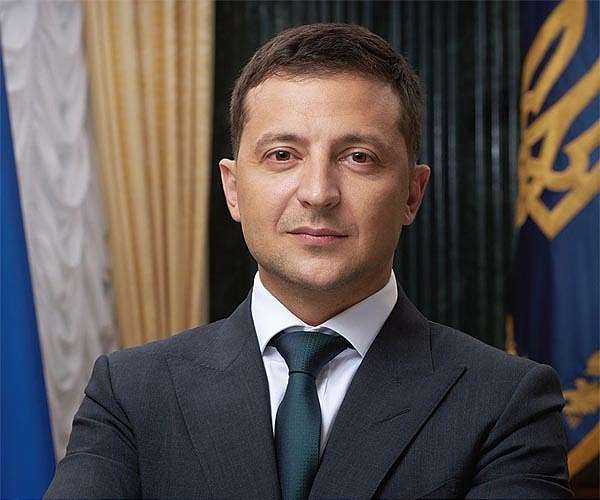
Ukrainian President Volodymyr Zelensky on Wednesday accused Russia of "ecocide" for the devastation he said its invasion has wrought on Ukraine's wildlife.
Thousands of dead marine mammals had washed up on the shore of the Black Sea, he said, including tens of thousands of dolphins.
"And this is only a small part of the devastating consequences," he added.
"The Russian war has a huge impact on the wildlife of our country," Zelensky added, denouncing Russia's "ecocide in Ukraine".
The president posted a report by United24 Media, a government initiative to raise donations, about a national park in the Black Sea region of Odessa.
"We estimate that at least 50,000 dolphins have died as a result of the war," said Ivan Rusev, research director at the Tuzly Estuaries National Nature Park.
This would amount to 20 percent of the overall Black Sea dolphin population, he said.
Many scientists, including Rusev, have blamed military sonar used by Russian warships for the disaster.
In August, Rusev, speaking to AFP, estimated that 5,000 cetaceans had been killed — about 2 percent of the total dolphin population in the Black Sea.
The Black Sea was home to an estimated 2 million dolphins during the 20th century, but fishing and pollution contributed to their decline.
A survey found there were about 250,000 dolphins left in 2020.
Ukraine conflict intrudes on UN biodiversity summit
Montreal (AFP) Dec 7, 2022 –
The Ukraine conflict cast a shadow over a high-stakes UN summit on biodiversity in Montreal on Wednesday, as Western nations slammed the environmental destruction brought about by Russia's invasion.
The broadsides by the European Union and New Zealand — which spoke on behalf of other countries, including the United States — came after Ukrainian President Volodymyr Zelensky accused Moscow of "ecocide" and of devastating his country's dolphin population.
Russia fired back that the meeting was an inappropriate forum and accused its critics of attempting to sabotage a new global deal for nature.
"The war brings about pollution and long-term environmental degradation, destroying protected areas and natural habitats," Ladislav Miko, an EU representative at the meeting, known as COP15, said.
"While the war rages on, it blocks much needed action on nature conservation and restoration," he added.
New Zealand's Rosemary Paterson, speaking for the JUSCANZ group that includes Japan, Australia and the United States, added: "The widespread environmental destruction and transboundary harm caused by Russia's military aggression against Ukraine cannot go unnoticed in this forum."
Invoking a right-of-reply, Russian delegate Denis Rebrikov said: "We resolutely refute allegations against us as being outside the scope of this COP on biodiversity."
He added that conflicts of the recent past — such as those in Iraq, Libya, Afghanistan and Syria — were not brought up at environmental summits, despite the harms done to ecosystems.
"It's hard to avoid the impression that these countries are deliberately trying to sabotage the adoption of a global framework" on biodiversity, added Rebrikov.
Earlier in the day, President Zelensky of Ukraine said tens of thousands of dead dolphins had washed up on the Black Sea and accused Russia of "ecocide." Ukrainian scientists have blamed military sonar used by Russian warships for the disaster.
Delegates from across the world have gathered from December 7 to 19 in Canada to try to hammer out a new deal for nature: a 10-year framework aimed at saving the planet's forests, oceans and species before it's too late.
Draft targets include a cornerstone pledge to protect 30 percent of the world's land and seas by 2030, eliminating harmful fishing and agriculture subsidies and tackling invasive species and reducing pesticides.
