
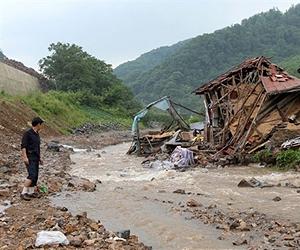
The world's biggest reinsurance company, Munich Re, said on Tuesday that deadly weather catastrophes in China had soared around four-fold in the last 30 years, costing its economy billions.
Munich Re said in a report that the number of annual disasters including violent storms, floods, extreme temperatures, droughts and forest fires had risen to about 48 by 2010 from around 11 in the early 1980s.
A company spokesman noted however that official reporting of such catastrophes would have been less transparent in China in the 1980s than today.
Munich Re said the weather events had claimed the lives of 148,000 people and cost $422 billion dollars over the same period.
The head of Munich Re's Georisk Research, Peter Hoeppe, said China's current flooding woes were only the latest in an escalating long-term trend.
"The devastating floods in China are of a dramatic dimension — a phenomenon that has unfortunately occurred in China with increasing frequency over the last few decades," Hoeppe said in an e-mailed message.
"Every year, millions of Chinese are victims of weather-related natural catastrophes. And the risk is steadily growing, for climate change harbours the potential for torrential downpours while the risk of drought in certain regions is also on the rise."
Persistent rains since early June have swamped many areas across a wide swathe of China and the state weather bureau has forecasted continued downpours with the summer typhoon season approaching.
Torrential downpours across large parts of the country last year triggered the nation's worst flooding in a decade, leaving more than 4,300 people dead or missing in floods, landslides and other rain-related disasters.
earlier related report
Taiwan military drill prioritises natural disasters
Taipei (AFP) June 21, 2011 –
Taiwan on Tuesday staged its annual computerised military exercise, but for the first time focused on growing fears about natural disasters rather than the perceived threat posed by China.
"The purpose of the drill is aimed to test the capablilities of top government officials regarding 'major natural disasters' and 'military and complex crises", the National Security Council said in a statement at the end of the day-long drill.
The exercise, which came in the wake of the killer quake and an ensuing tsunami that hit Japan on March 11, was presided over by President Ma Ying-jeou and attended by top officials from various government units, it said.
Ma's spokesman Fan Chiang Tai-chi told AFP it was first time such drills had given priority to natural disasters over the perceived military threat from China, without providing explanation.
China still claims the island as part of its territory and refuses to renounce the use of force to take it back, prompting the island to continue its military modernisation.
But ties have improved markedly since Ma of the China-friendly Kuomintang party came to power in 2008 on a platform of beefing up trade and allowing in more Chinese tourists.
