
It seems everyone wants to go someplace in the Solar System. President Trump wants to go to the Moon. Elon Musk wants to go to Mars. Some want to go to an asteroid. Others just want to go someplace in space.
So, what is the easiest way to go anywhere in the Solar System? Well, most people don't know this, but the answer is to do it in stages. One smart way is to first go from the Earth's surface to a low-orbiting waystation.
Then transfer to a solar system transport vehicle. Such transporters would be designed to travel only in space and do not have the ability to depart from the Earth's surface or to land on the moon on Mars.
For a Mars mission, this transporter would take you from low-Earth orbit on a heliocentric path to an orbit about the Red Planet. In the case of a lunar vacation, your transfer vehicle would take you on a near-escape Earth transfer trajectory that ends as an orbit about the Moon. In either case, you then transfer to a local reusable launch/reentry vehicle that can take you to the surface of your desired planet or moon.
When your vacation or work is completed, you simply reverse the steps to get home to Earth. When you get back to the Earth-orbiting waystation, a shuttle will be waiting to take you back to a spaceport on the terrestrial surface. From there, home is a simple ride in an airplane. It is all very simple.
So, why do you need a waystation? First, the energy needed to get to low-Earth orbit is about half of the total energy needed to get anywhere in the Solar System. Second, your reusable surface-to-orbit shuttle is not a good interplanetary transporter, because you would have to carry all that extra mass associated with ascent and reentry maneuvers.
These massive items include large rocket engines, massive reentry shielding and huge propellant tanks. It would be a big mistake to deal with all of that weight on your transit through the Solar System. Instead, it makes all kinds of sense to use a planetary transfer vehicle that needs no massive structure, reentry shielding nor large rockets.
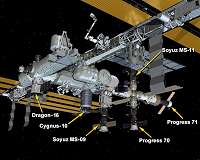
Many have argued about the best location for a waystation. Some want it in orbit near the Moon. Others have suggested the lunar surface. Of course, we do already have a possible "waystation" in orbit, the International Space Station (ISS).
However, in order to use the ISS as a waystation some major modifications would be needed. Maybe we should start with a clean sheet of paper. Where is the best and simplest place for a waystation in terms of operations, propellant savings and easy access?
One answer is an equatorial low-orbiting space station that is equipped to handle astronauts, tourists and others. It would include a stayover hotel with conference facilities, planetary docking ports, repair and manufacturing facilities and recreational activities.
An equatorial spaceport could operate a daily shuttle service to and from the waystation. Since the equatorial location offers simple ascent and reentry operations with minimal propellant expenditures and a low-radiation in-orbit environment for humans, this solution could really catch on. As it turns out, there are other neat things that can be done in orbits over the equator. So, this waystation may fit well into a multifunctional space ecosystem.
