
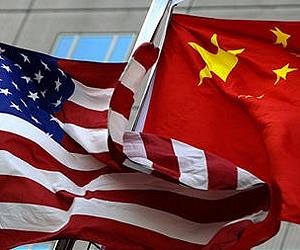
A top US diplomat urged deeper engagement with China on thorny security and economic issues, warning of the dangers of miscalculation as the two great powers contend in the years ahead.
"History teaches that moments of great change are when the dangers of misunderstanding, miscalculation or inadvertent conflict are greatest," said Deputy Secretary of State William Burns.
"In other words, we will increasingly live in a world where America and China cannot afford the luxury of quietly operating in parallel," he said.
Burns spoke at a conference at Texas A&M University in College Station, Texas that explored what's in store for the United States and China as they navigate what Burns described as a "period of extraordinary dynamism and change."
"This is going to be an enormous challenge for both of us for many years to come. Neither conflict nor cooperation is preordained. The choices each of us make matter enormously to the outcome and the stakes could not be higher," he said.
Burns cited areas where the two powers have cooperated, like Iran and North Korea, but also a host of areas of disagreement.
Among those he enumerated were tensions over maritime rights and freedom of navigation in the South China Sea, China's rapid and potentially destabilizing military modernization, the "incessant cyber attacks" emanating from China, and slow progress on economic issues, including the appreciation of China's currency.
"A narrow focusing on areas of agreement is not enough given the challenges we are facing together," he said. "We have to dive into the difficult cases as well."
Burns said the administration of President Barack Obama has stepped up engagement with China, accelerating the pace of high-level meetings and setting up new forums for airing differences, which he said has set a "positive tone."
"If we want to avoid misunderstandings and prevent crises before they emerge, then communication, transparency and trust will be essential. We must find tangible ways to deepen all three.
"As our relationship evolves we must continue to take steps to address the most competitive elements in our relationship in the space, cyber, nuclear and maritime arenas," he said. "Enhancing transparency in these areas is essential to the long-term stability of our relationship."
