
The United States pushed aggressively to discourage suspicious nuclear research in Taiwan in the 1970s, though Taipei is an ally, newly declassified documents show. The documents, published Friday by the independent National Security Archive, "shed new light on the challenges of persuading a government, in this instance a dependent ally, to abandon suspect nuclear activities even in their early stages," the archive said in a statement.
To guarantee that Taiwan stopped "what appeared to be R and D (research and development) for a nuclear capability, the (Gerald) Ford and the (Jimmy) Carter administrations continuously exerted pressures on Taiwanese leaders to stop scientists and the military from engaging in research with weapons implications," the archive added.
"For three years in a row, 1976, 1977, and 1978, the US government secretly confronted Taipei over secret activities — such as uranium enrichment work and attempts to purchase reprocessing technology — which suggested ambition to develop a weapons capability," it said.
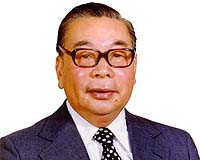
The United States was concerned enough to take its worries directly to then premier Chiang Ching-kuo.
What followed were inspection visits by US officials, and detailed commitments by Chiang.
But dogged US action on the issue reached the point "where the premier complained that Washington was dealing with Taiwan 'in a fashion which few other countries would tolerate,'" the archive said.
At one point the State Department demanded in-depth changes, and reorientation of research so that it was "more relevant to producing power than weapons," the archive said, noting that "In April Premier Chiang acquiesced in a US note demanding such changes."
Source: Agence France-Presse
