
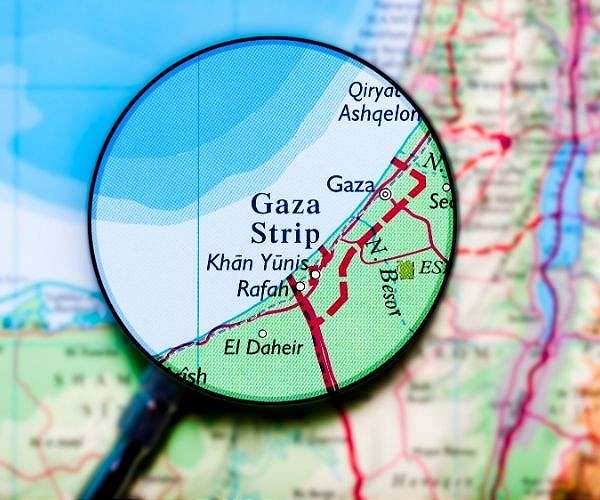
The United States, Egypt and Qatar are calling on Israel and Hamas to return to the negotiating table on a cease-fire agreement that U.S. officials have been saying is near completion.
The trio of countries is brokering talks on a cease-fire and hostage-release deal in the more than 300-day war between Israel and the Iran-backed militia. Urgency is mounting for it to get done as fears of an expanding war in the Middle East rise over Iranian threats to attack Israel for the assassinations of Tehran proxy leaders in Lebanon and Iran.
"There is no further time to waste nor excuses from any party for further delay," the three countries said in a statement distributed by the White House. "It is time to release the hostages, begin the ceasefire and implement this agreement."
They said a framework agreement they "worked tirelessly over many months to forge" has been tabled with only implementation details left to conclude, and they will present a final bridging proposal to resolve differences if necessary.
They are calling on both sides to resume "urgent discussion" on Aug. 15 in either Doha or Cairo in order to "close all remaining gaps and commence implementation of the deal without further delay."
"It is time to bring immediate relief both to the long-suffering people of Gaza as well as the long-suffering hostages and their families. The time has come to conclude the ceasefire and hostages and detainees release deal," they said.
UPI has asked Israel for comment, though the office of President Benjamin Netanyahu has reportedly agreed to participate. Hamas has yet to comment.
The three-phase cease-fire deal was first detailed by President Joe Biden in late May and has been endorsed by the United Nations.
The deal would bring about an initial six-week cease-fire in the war, which began Oct. 7 after Hamas led a bloody and merciless attack on Israel that killed 1,200 people and saw another 251 taken hostage.
Under the first phase, a number of the 115 Israelis who remain in Hamas captivity would be released in exchange for Palestinian prisoners held by Israel.
The second phase is a permanent end to hostilities and the release of more hostages and prisoners. The third phase includes the release of all dead hostages held by Hamas and the commencement of major reconstruction plan for Gaza, which has been razed by the war.
The Palestinian Ministry of Health, which does not differentiate between civilian and Hamas fighters, states nearly 40,000 Palestinians have been killed and another nearly 92,000 have been wounded.
Prospects of achieving a cease-fire have been threated by recent assassinations of commander Fuad Shukr of Hezbollah on July 30 in Lebanon and Hamas leader Ismail Haniyeh in Iran the following day. Hezbollah has been attacking Israel since the start of the war in solidarity with Hamas.
Iran has vowed to retaliate against Israel but has also said the establishment of a cease-fire in Gaza is a priority alongside achieving retribution.
Over the last few days, Biden administration officials have been publicizing that the agreement is almost done and that they have been working to prevent Iran's retaliatory attack, with John Kirby, Biden's National Security Communications advisor, stating Wednesday they are "as close as we think we have ever been" in securing a cease-fire.
US says it is close to securing cease-fire amid fears of escalating Middle East war
Washington DC (UPI) Aug 7, 2024 –
As tensions rise in the Middle East amid anticipation of an Iran attack on Israel, the Biden administration is stating they are as close as they've ever been to securing a cease-fire in the more than 300-day war between Tehran-backed Hamas and Israel.
The Biden administration has been working to achieve a three-phase cease-fire deal that President Joe Biden first detailed in late May, but the recent assassination of Iran proxy leaders in Lebanon and then in Tehran attracted vows of retaliation from the Islamic nation and raised fears of an escalating conflict, which could jeopardize those efforts.
White House officials have been voicing confidence in ongoing negotiations with Hamas and Israel that are being brokered by the United States, Egypt and Qatar.
"We are as close as we think we have ever been" National Security Communications advisor John Kirby said to reporters in Washington on Wednesday.
The war in the Gaza Strip began Oct. 7 with Hamas' bloody surprised attack on Israel that killed 1,200 Israelis and saw another 251 kidnapped, with 115 still being held captive in Gaza.
In response, Israel has razed much of the Palestinian enclave as it attempts to ferret out the Hamas leaders and find the Israeli captives. The Palestinian Ministry of Health, which does not differentiate between civilian and Hamas fighter, states nearly 40,000 Palestinians have been killed and another nearly 92,000 have been wounded in the war.
The first phase of the deal includes an initial six-week cease-fire to permit the release of some of the hostages in exchange for hundreds of Palestinian prisoners held by Israel.
During the six-week pause, negotiations would commence on securing a permanent end to hostilities, which would be enforced during the second phase of the plan that would also see the release of more hostages. The third phase includes the release of all dead hostages held and a major reconstruction plan for Gaza would commence.
Kirby told reporters Wednesday that neither Israel nor Hamas have signed off on the deal but that "we believe that gaps are narrow enough that they can be closed."
"There's some implementation details that need to be hashed out. We want both sides to hash them out and get this deal in place," he said. "We have a sense of urgency about this, and we believe all parties ought to have the same sense of urgency."
A day earlier, Secretary of State Antony Blinken told reporters that negotiations have reached "a final stage."
"Concluding that agreement and avoiding any action that could somehow disrupt it is the only path to ending the conflict in Gaza and bringing calm to the region," he said.
Potential disruptions include a potential retaliatory attack on Israel for the assassinations of commander Fuad Shukr of Hezbollah on July 30 in Lebanon and Hamas leader Ismail Haniyeh in Iran the following day.
The United States and other democratic nations have been plying diplomatic pressure to prevent such an attack, while moving military infrastructure into position in case those efforts fail.
Blinken on Tuesday warned that further attacks would perpetuate conflict and instability while raising the risk of "dangerous outcomes that no one can predict and on one can fully control."
"It's urgent that everyone in the region take stock of the situation, understand the risk of miscalculation, and make decisions that will calm tensions, not exacerbate them," he said.
Iran's permanent mission to the United Nations in New York City issued a statement Wednesday night in response to the question would Iran continue with a retaliatory strike if Hamas secured a cease-fire, stating yes, it would.
"We have pursued two priorities simultaneously: first, establishing a durable ceasefire in Gaza and the withdrawal of the occupiers from this territory; second, punishing the aggressor for assassinating Haniyeh, preventing the recurrence of the Israeli regime's terrorist aggression, and making the Zionists regret embarking on such a trajectory," it said, according to the state-controlled Islamic Republic News Agency.
