
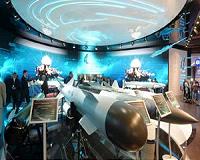
The Air Force general overseeing US air operations in the fight against Islamic State jihadists in Iraq and Syria said Thursday he was concerned about dwindling stockpiles of precision bombs.
A US-led coalition has since August 2014 been striking IS targets, usually with smart bombs that hone in on a target using GPS coordinates and other technology.
The Pentagon in February said it would spend $1.8 billion to buy over 45,000 more of the sophisticated bombs, but supplies remain low for now.
"It's still a concern," Lieutenant General Charles Brown Jr, who works for the US Central Command that runs operations across the Middle East, told Pentagon reporters in a video call.
"The Air Force has taken some steps to… to buy more weapons… Those weapons are about two years or so away, if not more."
Brown said the military is assessing whether it needs to draw down stockpiles from other regions and move them to the Middle East to ensure it has enough bombs there.
"We have to do some analysis of where we take risk," he said.
The US-led anti-IS coalition has conducted about 12,500 air strikes in all.
Separately, Brown also said there had been a "little uptick" on air strikes in Afghanistan, though he declined to provide further details.
South Korea to import $3 billion worth of arms
Seoul (UPI) May 26, 2016 –
South Korea plans to import $3.5 billion worth of arms this year to enhance its defense capabilities, the Yonhap news agency reported Wednesday.
Defense Acquisition Program Administration officials said the republic will spend nearly 10 percent of this year's $32.9 billion defense budget on such efforts.
South Korea is looking to develop home-grown missile defense systems by 2023, the Kill Chain and Korean Air and Missile Defense systems, which can spot and destroy incoming North Korean missiles, according to Yonhap.
DAPA Minister Chang Myoung-jin said in January that the agency would focus on upgrading the country's existing Patriot missiles while also developing long-range ground-to-air missiles to counter threats from the north.
In reaction to Pyongyang conducting its fourth nuclear test and firing off a long-range rocket this year, South Korea's DAPA is also reportedly seeking to get its homegrown defense system established ahead of schedule.
