
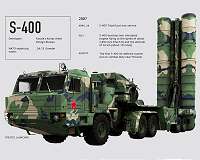
Ankara's purchase of US missiles worth $3.5 billion will not affect a deal to acquire rival S-400 missiles from Russia, the Turkish presidential spokesman said Monday.
"The US Patriot sale process does not affect the S-400 process. We don't see one as an alternative for the other," Ibrahim Kalin said.
The US State Department on December 19 said it had informed Congress of plans to sell a package including 80 Patriot missiles, and 60 PAC-3 missile interceptors and related equipment to Turkey.
Turkey's plans to buy the Russian S-400s has drawn rebuke from its NATO allies with the United States warning that the purchase jeopardised participation in the F-35 fighter jets programme.
Turkish officials have previously said it "needs" the S-400 missile defence system and repeatedly stressed that Ankara would buy systems from allies if they had sold them.
Turkish media has reported that the first delivery from Russia will be in 2019.
The S-400 order is seen as one of the key symbols of Turkey's closer relationship with Russia under Erdogan and Russian counterpart Vladimir Putin.
The two men have also worked closely on finding a political solution to the seven-year Syrian war despite being on opposing sides of the conflict.
Turkey has provided support to Syrian rebels and called for Syrian President Bashar al-Assad's ouster while Russia's intervention in 2015 helped his Damascus regime recapture swathes of the country.
Turkey says US team coming to discuss Syria troops withdrawal
Ankara (AFP) Dec 24, 2018 –
A US military delegation will visit Turkey this week to discuss the withdrawal of American ground forces from Syria, President Recep Tayyip Erdogan's spokesman said on Monday.
"They will discuss how to coordinate (the withdrawal) with their counterparts," Ibrahim Kalin told a news conference in Ankara after US President Donald Trump's shock decision last week to order the pull-out of 2,000 troops.
The US has for years supported the Kurdish-led Syrian Democratic Forces (SDF) in the fight against the Islamic State (IS) jihadist group in Syria.
Critics of Trump's move fear that thousands of IS members could make gains in Syria, despite the US leader's claim that the group had been defeated.
"There is no question of a step backwards, vulnerability or a slowdown in the fight against Daesh (IS)," Kalin vowed, adding: "Turkey will show the same determination against Daesh… We can bring peace to this region."
He referred to Turkey's cross-border offensive launched in August 2016 against the IS in northern Syria and said Ankara would take all measures to avoid a power vacuum after the US withdrawal.
Kalin said there would be further talks between the two countries' foreign ministries and other departments including a meeting planned in Washington on January 8.
"There will be intensive traffic" between officials, he added, a day after Trump and Erdogan held a telephone conversation agreeing to coordinate the Syria pull-out.
Trump's order came as Ankara warned it would launch an operation east of the Euphrates River against the Kurdish People's Protection Units (YPG) militia which dominates the SDF.
Ankara says the YPG is a "terrorist offshoot" of the outlawed Kurdistan Workers' Party (PKK), which has waged an insurgency against the Turkish state since 1984.
Although Turkey said it would postpone the offensive, a Turkish military convoy has arrived in the Turkish border district of Elbeyli carrying howitzers and artillery batteries.
Parts of the convoy entered Syria, the private IHA news agency reported.
