
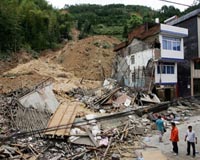
Taiwan's president is to push a tough new planning law designed to prevent a repeat of deadly landslides in August that swept away homes killing hundreds of people, officials said Sunday.
The island's first-ever strict national land planning law comes after Typhoon Morakot hit in August, dumping record rains that triggered widespread mudslides and left more than 700 people dead or missing.
The bill, which was approved by the cabinet last week and is currently being considered by parliament, aims to reduce development in environmentally sensitive areas and lessen the human cost of future natural disasters.
"We have learnt a painful lesson" from Morakot, President Ma Ying-jeou said in a National Day address over the weekend. "In the future… development of environmentally sensitive areas must be barred or restricted."
"This year will be the turning point in our efforts in national land planning and conservation. We must pass the law as swiftly as possible."
The law would affect hot spring resorts and real estate developers as well as tourism operators in the newly protected areas. Experts have warned that the areas are not suitable for residential development.
People could face jail terms of up to 12 years if their illegal use of land in such areas results in fatalities, according to the draft law.
Ma again underscored the threat of natural disasters and defended his argument that disaster prevention is more important than rescue, when he spoke during a flood control seminar in Taipei Sunday.
He said 73 percent of Taiwan's 23 million population was threatened by earthquakes, flooding, typhoons and mudslides.
Ma's government faced a wave of public anger over its handling of the disaster, plunging Ma into his worst political crisis since taking office in May 2008 and costing premier Liu Chao-shiuan his job.
Ma's popularity has since rebounded sharply, with a survey last week showing that more than half of respondents supported the way his government responded to Typhoon Parma, which hit the island last week.
Share This Article With Planet Earth
