
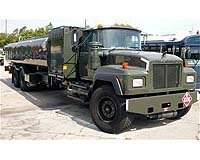
Sustainable Oils has announced it has been awarded a contract by the Defense Energy Support Center (DESC) to supply camelina-based jet fuel for the Air Force. The contract is for 100,000 gallons of HRJ-8 beginning 2009 through 2010, and includes an option to purchase an additional 100,000 gallons between June 2010 and December 2012.
"Once again, camelina is the choice for high-performance, domestically produced renewable jet fuel," said Scott Johnson, president of Sustainable Oils as well as president of the North American Camelina Trade Association. "This contract sends a strong signal to growers around the state and across the country that there is a market for camelina. We're expecting to see an increase in acreage as a result of this great opportunity."
Last month, the DESC awarded a similar contract to Sustainable Oils for a minimum of 40,000 gallons of camelina-based jet fuel with an option to supply up to an additional 150,000 gallons. Combined, Sustainable Oils will deliver a minimum of 140,000 gallons – and up to 390,000 gallons – of camelina jet fuel to the U.S. military, dramatically increasing the need for acreage dedicated to camelina next year.
"This is a great opportunity for Montana farmers to not only drive additional revenue, but also participate directly in decreasing our country's reliance on foreign oil," said Governor Brian Schweitzer. "I know our agricultural community is up to the challenge to supply our armed forces with camelina-based fuels."
Camelina was selected because it does not compete with food crops, has been proven to reduce carbon emissions by more than 80 percent, and has already been successfully tested in a commercial airline test flight. In addition, camelina has a naturally high oil content, is drought tolerant and requires less fertilizer and herbicides. It is an excellent rotation crop with wheat, and it can also grow on marginal land.
Camelina is the most readily available renewable fuel feedstock that meets the Air Force's criteria, with the ability to scale up acreage to meet demand. The camelina for the contract was primarily grown in 2009 and harvested recently by farmers in Montana. The company also has several field trials in Washington State.
Sustainable Oils has the largest camelina research program in the nation. The company's camelina breeding program began in 2005 and has steadily expanded to include more than 140 trials across North America from 2005-2009. The company is also evaluating more than 90 breeding populations of camelina to analyze agronomic and oil qualities and to develop new high-yielding varieties. Sustainable Oils leverages biotechnology resources from its Seattle-based agricultural biotech parent company Targeted Growth.
Camelina has also been proven to significantly reduce carbon emissions in aviation fuel. A life cycle analysis (LCA) of jet fuel created from camelina conducted at Michigan Tech University in conjunction with UOP LLC, a Honeywell Company, and Sustainable Oils found that the renewable fuel reduces carbon emissions by 80 percent compared to petroleum jet fuel.
In January, Sustainable Oils sourced the camelina for Japan Airlines' historic biojet demonstration flight, whose biofuel blend was comprised primarily of camelina. In August, camelina again performed under high-performance conditions in a 100 percent blend of fuel powering the Boeing U-787 hydroplane in a series of demonstration laps at the Seafair Cup in Seattle.
Share This Article With Planet Earth
