
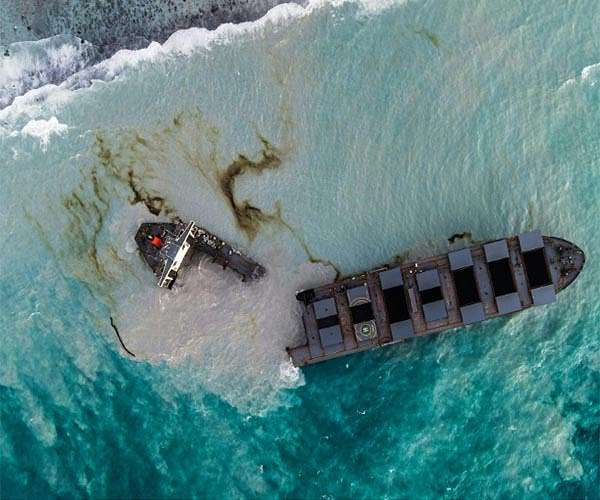
The broken stem of a Japanese-owned ship which ran aground causing a devastating oil spill in pristine waters off Mauritius, has been successfully sunk in the open ocean, the national crisis committee said Monday.
The MV Wakashio ran aground on a coral reef off the Indian Ocean island on July 25 and began leaking oil two weeks later, prompting a race against the clock to pump all the fuel off the bulk carrier before it broke in two.
The operation was successful and two tugboats last week began towing the larger, forward section of the vessel some 15 kilometres (nine miles) out into the open ocean, where it has been sunk to a depth of 3,180 metres.
The smaller section remains wedged on the reef where the shipwreck occurred.
"The planned sinking of the stem (forward) section of the casualty has been completed and at around 3.30pm was no longer visible on the sea surface," read a statement from the crisis committee.
Greenpeace opposed the plan, warning last week that sinking the vessel would "risk biodiversity and contaminate the ocean with large quantities of heavy metal toxins".
Over 1,000 tonnes of oil spilled into the pristine waters that have long been a major draw for honeymooners, and contain precious mangroves and coral reefs.
Last week a team of British scientists arrived to co-ordinate an impact assessment on what damage has been done to the island and how to help the eco-system recover.
International experts from Japan and France are also on the ground assisting the archipelago nation in the wake of the spill.
Senior British marine monitoring scientist Dr Sue Ware told AFP the team would help "determine the footprint of the oil both on the shoreline and… whether it has managed to reach any areas of the seabed" and how it has impacted mangroves, coral reefs and different marine species.
She said efforts by Mauritius to place booms in the water appeared to have been successful in preventing oil from reaching the protected Blue Bay wetlands area.
The captain of the ship and his second-in-command were arrested on Tuesday.
Officials have yet to reveal why the ship, which was making its way from Singapore to Brazil, came so close to the island.
Long-term threat to Mauritius ecology after spill: Japan experts
Tokyo (AFP) Aug 25, 2020 –
The major oil spill caused by a Japanese ship that ran aground in Mauritius may pose a long-term threat to the region's ecology, including to the Indian Ocean island's delicate mangroves, Japanese experts said Tuesday.
The bulk carrier MV Wakashio crashed into a reef last month spewing more than 1,000 tonnes of oil into pristine waters that are home to mangrove forests and endangered species.
After the boat split in two, the larger piece was towed out to sea and sunk, but the smaller section remains stranded on the reef.
Japanese experts and officials in Mauritius said they had surveyed a dozen marine spots about 800 metres (yards) northwest of the wreck, and found no major damage, nor any sign of oil on the ocean bottom or on the coral reef.
But they said the remaining wreck appeared to be grinding against the reef as waves push it back and forth.
"If this situation continues, it could cause stress to the corals and could kill them," said Noriaki Sakaguchi, an ecosystems expert with Japan International Cooperation Agency.
He said efforts to remove sediment could harm the coral, which is also being damaged by ropes holding oil fences set up to stop the spill reaching shore. Removing the remaining wreckage appears to be the only solution to the problem, the team said.
The spilled oil has also reached the soft soil of mangrove forests along the coastline.
While there is no evidence of mangrove death yet, the oil could kill plants in the protected area in coming months, the team warned.
Mangrove clean-up is extremely complicated because human activity in the area risks driving oil deeper into the soil where it could cause more harm.
For now, cleanup efforts are focused on picking up seagrass and other plants that wash through oil-covered areas and end up on the shore.
The team called for long-term monitoring of the area after the accident, which is still under investigation by Mauritian authorities.
Japan's Kyodo News said Monday that crew on the ship had steered it close to shore because they wanted to find a mobile signal so they could contact family and ask about the coronavirus situation at home.
It cited an unnamed judicial source, who also said an alcohol-fuelled birthday party had been held on board before the accident, though it was not clear if on-duty crew participated.
