
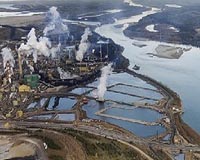
Norwegian energy company Statoil said Thursday it paid an Indonesian counterpart $200 million to split up oil sands interests in Alberta, Canada.
Statoil and PTT Exploration and Production divided their interests in the Kai Kos Dehseh oil sands project in Alberta. Both sides under the terms of the agreement take full control of individual development projects within the area of interest, with Statoil taking on two and the Indonesian company taking on three areas.
"At the closing of this transaction, Statoil paid to PTTEP the sum of $200 million plus a working capital adjustment amount of $219 million," the Norwegian company said in a statement.
The Indonesian company joined Statoil at the Kai Kos Dehseh oil sands project in 2010.
Statoil's overall production from Canadian oil sands declined 6.3 percent from 2012 to 15,000 barrels of oil per day.
The company attributed the decline to planned maintenance.
Report says crude oil exports would bring relief to U.S. consumers at the pump
Houston (UPI) May 29, 2013 –
A report Thursday from global consulting group IHS finds U.S. gasoline prices could decline if a 1970s era ban on crude oil exports is lifted.
IHS said reversing legislation enacted after the Arab oil embargo in the 1970s would lead to an increase in oil production from the current level of 8.2 million barrels per day to 11.2 million barrels per day, which it says would translate to lower domestic retail gasoline prices.
The report said more crude oil on the international market would lower global prices, which would be to the benefit of U.S. consumers.
"The assumption that allowing crude oil exports would result in higher gasoline prices for consumers is not accurate," the report said.
The report from IHS mirrors a March report prepared for the American Petroleum Institute, the industry's lobbying group.
In January, Graeme Burnett, a senior vice president from Delta Air Lines, which owns an oil refinery in Pennsylvania, testified that reversing the ban would hurt the U.S. economy. More exports of U.S. crude would mean more imports for some markets, which would lead to higher global oil prices.
U.S. Reps. Ed Markey last year said exports would only go to "boost oil company profits" and not help the American consumer.
