
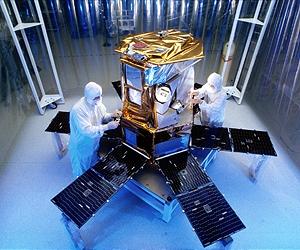
One would think that spacecraft assembly, integration and test (AI and T) is a well known process, designed and executed very efficiently by professionals after a significant amount of planning and thought were expended. Automakers and other high- and medium-rate production operations have spent considerable efforts optimizing their AI and T processes for their products in order to ensure that a financially acceptable underperformance and/or failure rate is achieved.
Supported by a significant dealer network and feedback from the field, these companies have honed their AI and T process very well, gathering statistics and data, and injecting changes into the production AI and T systems in real time.
Unfortunately for the Space world, there are few or no established product lines, and when there are repeat builds of a design, the production quantities are pretty low. Space projects can easily span 10 years or more when measured from concept to completion and career changes, promotions and advancements of staff, almost ensure just a few critical staff may repeat the AI and T experience, if ever, over their entire career.
For scientific, experimental and many military space systems, the product life cycle is very, very long. Often Space System Program Managers, Spacecraft System Engineers, AI and T leads, sub-system engineers and technical support staff, as well as scientists and investigators, may experience the AI and T process once in their careers.
Due to the product development cycle length, many one-of-a-kind space missions will naturally employ a large percentage of staff who have never experienced and/or participated in the AI and T "boots on the ground" real-life experience.
They will often be learning "as they go", proceeding towards a fixed end-date, one that doesn't move or adjust to their learning experiences in AI and T. Often, unique test configurations cannot be reconstructed (even if time and money permit) in order to repeat the collection of critical data that was missed.
Schedules in AI and T are unforgiving when critical data is missed, tests run longer than expected, failures or anomalies occur and additional hours are needed to recover. Sometimes, the most costly mistake that occurs after launch that could have been addressed prior to launch is the observation of an anomaly that isn't really quite understood, but is explained away due to schedule and pressure being applied to proceed applied.
A wise experienced engineer once said, "Why on earth would someone (either by design or a lack of experience or education or a lack of detailed planning) create unnecessary and avoidable issues, when we have plenty of them that will occur naturally in AI and T? Even though we cannot predict everything that "may"occur, we can surely put sufficient time into the AI and T detailed planning and develop a schedule and budget that align with our requirements and verifications, can't we?".
Anticipating issues and planning successfully in advance ensures that technical objectives are achieved, paperwork is closed, critical data is acquired and reviewed before it's too late.
In today's budget-conscious environment, we surely don't want to overrun the budget during spacecraft AI and T especially when the other program elements and staff have met their schedule and budget objectives, sometimes at great personal cost. Everyone involved in spacecraft AI and T has surely experienced significant cost and/or schedule over-runs and the staff adjustments required to correct and meet the end-date.
So, how can our future spacecraft AI and T teams, with broad skill and experience start to plan and budget properly, draft realistic schedules, and prepare themselves for the spacecraft AI and T experiences and process ahead of time? College courses simply cannot offer the hands-on perspective or the instructors who can leverage their industry experience.
Space system courses and program and technical management courses offered commercially, primarily due to both time constraints and the very broad subject matter, cannot delve deeply into the hands-on planning tasks, and execution and lessons learned, and the "boots on the ground" experiences gained across multiple AI and T missions. The Launchspace Spacecraft Assembly, Integration and Test course focuses on the subject matter not offered in other courses including many "unfiltered" lessons learned.
This course also supplements the syllabus with material collected from actual experiences encountered by a wide variety of individuals and skill sets, spanning multiple military space and science missions conducted by the US Government. This course, currently scheduled for December 3, 2013 in Cocoa Beach, Florida, is particularly useful to those who have never experienced the complete AI and T process and for those who have experienced only certain elements of AI and T.
