
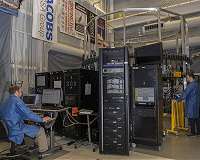
The booster avionics system for the Space Launch System (SLS) rocket completed system-level qualification testing in October 2017.
Engineers simulated the booster avionics operations in a systems integration lab at NASA's Marshall Space Flight Center in Huntsville, Alabama, where all the avionics boxes and electronics were tested. The tests verified the fidelity of the system.
Two five-segment rocket boosters, developed by Orbital ATK, will provide 80 percent of the thrust for the first two minutes of flight. The booster avionics, receiving commands from the SLS flight computers in the core stage, provide 80 percent of the control authority for the rocket during the first two minutes of flight.
Key interactions confirmed during qualification testing included the ability to initiate booster ignition, control the booster during flight, terminate flight, and triggering core stage separation.
NASA Conducts Final RS-25 Rocket Engine Test of 2017
NASA engineers capped a year of Space Launch System testing with a final RS-25 rocket engine hot fire on Dec. 13 at Stennis Space Center near Bay St. Louis, Miss. The 400-second test on the A-1 Test Stand was a "green run" test of an RS-25 flight controller. It marked the eighth RS-25 test of the year and the sixth flight controller to be tested for use on NASA's new Space Launch System (SLS) ve … read more
