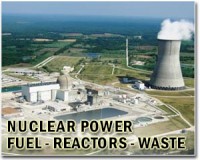
South Korean President Lee Myung-Bak Tuesday signalled Korean firms were keen to build Poland's first atomic reactor and liquefied natural gas terminal, projects key to its energy diversification bid.
"I know that in the context of energy security and diversification Poland is planning to build a nuclear electricity plant and an LNG terminal. Korea has a very strong position in these areas and awaits greater cooperation with Poland on these matters," he told a Polish-Korean economic forum in Warsaw.
"Over the last 30 years Korea has built and safely used over 20 nuclear power plants and is currently constructing eight more. We have a wealth of experience and the most modern technology," he added.
Poland, currently nuclear-free, is trying to reduce its reliance on coal which provides 94 percent of its electricity. The government has signalled the construction of "one or two" nuclear energy plants by 2020 and is in talks with France and South Korea regarding technology for the project.
The South Korean leader also said talks with the EU on a free-trade deal were nearing completion.
"The ongoing talks on free trade between Korea and the European Union are in their final phase," he said.
"When this agreement takes effect, trade barriers will be far smaller than they are at present and trade turnover and mutual investments with increase."
The 27-nation European bloc was South Korea's second-largest trading partner after China last year, with two-way trade worth more than 90 billion dollars (70 billion euros).
South Korea has already invested some two billion dollars in 2004 EU newcomer Poland, mostly in the electronics sector.
Both countries are weathering the global recession relatively well.
Last month Seoul revised up its economic outlook for this year from a contraction of 2.0 percent to one of 1.5 percent, citing the positive effects of stimulus measures and stabilising financial markets.
Poland's government, meanwhile, has forecast economic growth of 0.2 percent this year while the International Monetary Fund expects a 0.5 percent contraction and the EU has predicted a 1.4 percent contraction. The World Bank expects slight growth.
Share This Article With Planet Earth