
To tell the full story of human evolution, researchers need to know what our earliest relatives looked like. Unfortunately, soft tissue reconstruction is quite difficult.
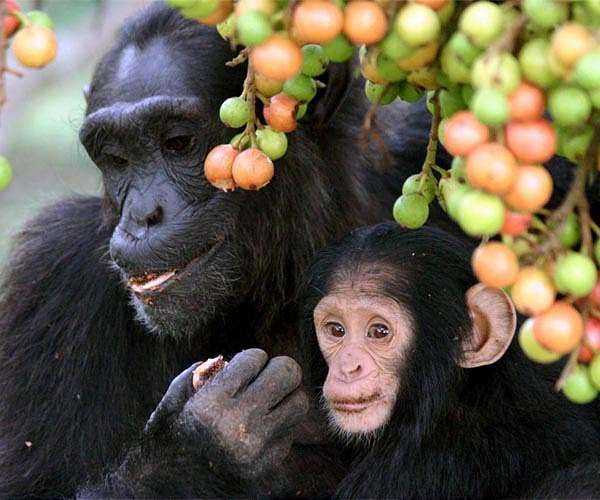
In a new study, published Friday in the journal PLOS One, scientists turned to chimpanzee models to improve soft tissue measurements in hominids.
Accurately modeling the appearance of hominids has become increasingly important as they proliferate among the halls of various scientific institutions.
In museums all over the world, the popularity of the story of early human evolution is delivered alongside hominid models.
"It is essential that accurate facial soft tissue thickness measurements are used when reconstructing the faces of hominids to reduce the variability exhibited in reconstructions of the same individuals," lead study author Ryan M. Campbell, a doctoral student at the University of Adelaide in Australia, said in a press release.
According to the study's authors, the way early hominids are presented to the public can influence the way scientific information is perceived.
"Up until now, soft tissue reconstruction has been based on mean tissue depth measurements, which does not take into account variation in tissue depths between individuals," said Campbell.
For the new study, researchers amassed a large dataset of facial soft tissue measurements for adult chimpanzees.
From the data, scientists were able to derive a set of regression equations that will allow researchers to more accurately model the soft tissues of ancient hominids.
"Correlations have been found and multiple regression models have been used to generate equations for improving estimations of soft tissue thickness from craniometrics in modern humans," said co-author Gabriel Vinas, who is earning a masters in fine arts at Arizona State University.
"We looked at tissue depths in present day chimpanzees to identify correlations in skin and bone," Vinas said.
The researchers said they hope the new dataset and accompanying equations — downloadable on the website Figshare — will prove useful to scientists, teachers, curators and artists like Vinas, who sculpts hominid models for museum display.
"The equations, which resulted directly from this research, are also included and can be implemented in future practitioners' reconstructions," Campbell said.
"This research is invaluable for future efforts reconstructing ancient hominids, as well as for comparative studies within and outside the discipline of biological/physical anthropology," Campbell said.
