
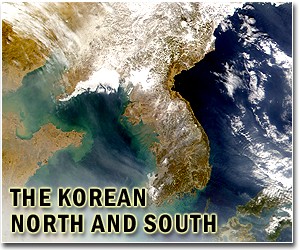
South Korea held a live-fire military drill on a border island and scrambled fighter jets Monday, despite North Korean threats of deadly retaliation, as UN diplomacy on the crisis broke down.
But in an apparent sign of compromise over its nuclear ambitions, CNN said North Korea had agreed with US troubleshooter Bill Richardson to permit the return of UN atomic inspectors to ease tensions.
"The drill has started," a defence ministry spokesman told AFP around 2:30 pm (0530 GMT). An AFP photographer sheltering in a bunker on Yeonpyeong island confirmed he heard the sound of artillery.
"Our armed forces are now on alert and fighter jets are on airborne alert," the ministry spokesman said.
Yonhap news agency said the drill ended about an hour later, and said two destroyers had also been deployed in forward positions in the Yellow Sea. But the AFP photographer said the sound of firing was ongoing after an hour.
An emergency UN Security Council meeting failed to agree a statement on the crisis, and Russia warned that the international community was now left without "a game plan" to counter escalating tensions.
China's deputy UN ambassador warned that bloodshed on the peninsula would be a "national tragedy of fratricide" for the Korean people, the Xinhua news agency reported.
After a similar exercise by South Korean marines based on Yeonpyeong on November 23, the North fired some 170 shells onto or around the island, killing four people including civilians and damaging dozens of homes.
North Korea said Saturday the upcoming exercise "would make it impossible to prevent the situation on the Korean peninsula from exploding and escape its ensuing disaster".
But the United States has stood by South Korea's right to self-defence, and Japan Monday urged North Korea not to take any "provocative action" in response to the exercise.
The North disputes the Yellow Sea border drawn by United Nations forces after the 1950-53 Korean War. It claims the waters around Yeonpyeong as its own.
The North's military appears to be preparing for a counter-attack, removing covers from coastal artillery guns and forward-deploying some batteries, a military source told Yonhap.
But CNN correspondent Wolf Blitzer, who is travelling with Richardson in Pyongyang, said there were signs of deal-making.
North Korea had agreed with Richardson, a former US ambassador to the UN, to let inspectors from the UN's International Atomic Energy Agency go back to its Yongbyon nuclear facility, Blitzer said.
It had also agreed to allow fuel rods for the enrichment of uranium to be shipped to an outside country, and to the creation of a military commission and hotline between the two Koreas and the United States, Blitzer said.
A veteran negotiator with the reclusive communist state, New Mexico Governor Richardson was due to brief reporters in Beijing later Monday after ending his five-day visit to Pyongyang.
At the UN, China fended off Western demands that its ally North Korea be publicly condemned for the November 23 artillery assault, diplomats said.
They said it even rejected a proposed statement which did not mention North Korea or the name of Yeonpyeong.
"Now we have a situation with very serious political tension and no game plan on the diplomatic side," said Russia's UN envoy Vitaly Churkin.
The foreign ministers of China and Russia held telephone talks Saturday and urged South Korea to cancel its military exercise. But Seoul's allies in Washington and Tokyo lined up behind it.
Last month's bombardment was the first of civilian areas in South Korea since the war. It sparked outrage in the South, which rushed more troops and guns to frontline islands, and vowed a forceful response to any repetition.
About 20 US soldiers — part of a 28,500-strong force stationed in the South — are on Yeonpyeong to provide back-up to the latest drill, the US military said.
Pyongyang, deriding the US troops as a "human shield", threatened "decisive and merciless punishment" from its military.
But South Korea says the exercise is a routine defensive drill, with guns pointed away from the North and shells landing 10 kilometres (six miles) south of the maritime border.
Share This Article With Planet Earth
