
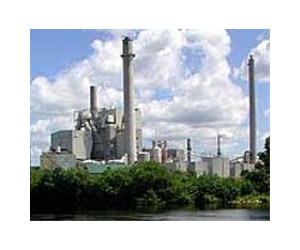
National Clean Fuels President Maurice Stone has announced that he completed a second productive scoping trip to Port Gibson, Miss., where the company is planning to build a biomass-to-electricity (BTE) plant.
National Clean Fuels is partnering with the Center for Environment, Commerce and Energy (The Center) on the project. Plans call for the new Port Gibson plant to generate electricity by gasifying sawdust and woodchips to power a massive turbine.
NACF inked a letter of intent with the City of Port Gibson last month to devise plans for biomass and solar-energy production in and around the municipality as well as other potential means of green energy production. The Center, which signed an option agreement with NACF earlier this month, will assist in the planning and implementation of the project.
Stone, along with Center President Norris McDonald, Center Vice-President Derry Bigby and Dyson Engineering and Technical Services President Al Dyson, met with service providers Entergy Mississippi to discuss the steps needed to connect the BTE plant to the local energy grid.
"We're continuing to work towards obtaining an interconnection agreement with local energy providers to get our plant on the grid," Stone said.
"At some point in the future, it's our hope that this biomass plant will be producing an abundance of energy that can be redistributed along the energy grid in Port Gibson and surrounding areas."
Stone and his fellow executives also visited with the Mississippi Department of Environmental Quality, where they were briefed on the environmental standards that must be met in order to obtain the proper permits for the biomass facility.
"It's important to us to meet or exceed all environmental quality standards necessary to get this project off the ground," Stone said.
"The Port Gibson Biomass-to-Electricity Project is intended to help improve the environment in Mississippi, not damage it."
Recently, the State of Mississippi has made increasing clean-fuel production and usage a priority. State lawmakers have authorized $51 million in new incentives to help bring three biofuel plants to the state. These incentives, along with an existing $30 million loan from the state, add up to an $81 million incentive package.
Share This Article With Planet Earth
