
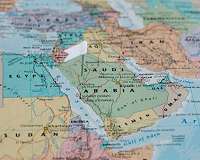
The Saudi-led coalition carried out two air strikes on the defence ministry in Yemen's rebel-held capital Sanaa late Friday, witnesses and rebel media said, without reporting casualties.
Warplanes continued to circle in the skies above Sanaa after the strikes, the witnesses added.
The Huthi rebel media outlet Al-Masirah also reported the two air strikes. There was no word of any casualties.
The coalition has targeted the defence ministry in the past, leaving it heavily damaged, but the fresh strikes come amid a ratcheting up of tensions between Saudi Arabia and its rival Iran, which backs the Huthi rebels.
The coalition shut down Yemen's borders earlier this week after Saudi forces on Saturday intercepted a ballistic missile fired by the Huthis near the Riyadh airport.
The rebels have threatened additional attacks on Saudi Arabia and its coalition partner the United Arab Emirates in response to the blockade.
The United Nations said on Friday that the coalition is still blocking desperately needed UN aid deliveries to Yemen despite the re-opening of the Yemeni port of Aden and also a land border crossing.
This week, UN aid chief Mark Lowcock warned the Security Council that, unless the blockade was lifted, Yemen would face "the largest famine the world has seen for many decades, with millions of victims".
The world body has listed Yemen as the world's number one humanitarian crisis, with 17 million people in need of food, seven million of whom are at risk of famine.
More than 2,000 Yemenis have died in a cholera outbreak now affecting nearly one million people.
Saudi Arabia and its allies intervened in neighbouring Yemen in March 2015 with the stated aim of rolling back Huthi rebel gains and restoring the government of President Abedrabbo Mansour Hadi to power.
The Huthis continue to control the capital Sanaa and much of Yemen's north.
The conflict has left more than 8,650 people dead, including many civilians.
First coast-to-coast land motion map of Scotland derived from satellite radar images
The first country-wide map of relative land motion has been created by a team at the University of Nottingham. Using hundreds of satellite radar images the team, working with Geomatic Ventures Limited (GVL), an innovative University spin-out company, created a complete map of mainland Scotland.
The map covers a two-year period from 2015 to 2017 and was created using Intermittent Small Base … read more
