
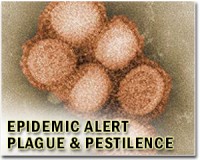
A mysterious SARS-like virus has killed a third person and spread around China — including to Beijing — authorities said Monday, fuelling fears of a major outbreak as millions begin travelling for the Lunar New Year in humanity's biggest migration.
The new coronavirus strain, first discovered in the central city of Wuhan, has caused alarm because of its connection to Severe Acute Respiratory Syndrome (SARS), which killed nearly 650 people across mainland China and Hong Kong in 2002-2003.
Wuhan has 11 million inhabitants and serves as a major transport hub, including during the annual Lunar New Year holiday which begins later this week and sees hundreds of millions of Chinese people travel across the country to visit family.
No human-to-human transmission has been confirmed so far, but authorities have previously said the possibility "cannot be excluded".
A third person was confirmed to have died and 136 new cases were found over the weekend in Wuhan, the local health commission said, taking the total number of people to have been diagnosed with the virus in China to 201.
Three cases have been reported overseas — two in Thailand and one in Japan, all of whom had visited Wuhan.
Health authorities in Beijing's Daxing district said two people who had travelled to Wuhan were treated for pneumonia linked to the virus and are in stable condition.
In southern Guangdong province, a 66-year-old Shenzhen man was quarantined on January 11 after contracting a fever and showing other symptoms following a trip to visit relatives in Wuhan, the provincial health commission said in a statement. He is also in stable condition.
Shenzhen officials said another eight people were under medical observation.
"Experts believe that the current epidemic situation is still preventable and controllable," the Guangdong health commission said.
Five other people have been put in isolation and tested in eastern Zhejiang province.
– Detection measures –
A seafood market is believed to be the centre of the outbreak in Wuhan, but health officials have reported that some patients had no history of contact with the facility.
The World Health Organisation (WHO) said in a statement on Twitter Monday that "an animal source seems the most likely primary source" with "some limited human-to-human transmission occurring between close contacts".
It said the new cases in China were the result of "increased searching and testing for (the virus) among people sick with respiratory illness".
Scientists with the MRC Centre for Global Infectious Disease Analysis at Imperial College in London warned in a paper published Friday that the number of cases in the city was likely to be closer to 1,700, much higher than the number officially identified.
Wuhan deputy mayor Chen Xiexin said on state broadcaster CCTV at the weekend that infrared thermometers had been installed at airports, railway stations and coach stations across the city.
Chen said passengers with fevers were being registered, given masks and taken to medical institutions. Nearly 300,000 body temperature tests had been carried out, according to CCTV.
Authorities in Hong Kong have stepped up detection measures, including rigorous temperature checkpoints for inbound travellers from the Chinese mainland.
US authorities decided to screen direct flights arriving from Wuhan at San Francisco airport and New York's JFK, as well as Los Angeles, where many flights connect.
Thailand said it was already screening passengers arriving in Bangkok, Chiang Mai and Phuket, and would soon introduce similar controls in the beach resort of Krabi.
In Wuhan, 170 people are still being treated at hospital, including nine in critical condition, the city health commission said. The new patients are between 25 and 89 years old and their symptoms included fever, coughing and chest pain.
Guangdong's health authority said it was taking measures including intensifying its triage of fever at clinics and banning illegal wildlife sales.
State media moved to calm the mood as discussion about the coronavirus spreading to other Chinese cities swelled on social media.
The China Daily said in an editorial that people "should remain alert, but not panic".
And nationalist tabloid Global Times called for better handling of the new virus outbreak than that of the SARS outbreak in 2003, when it says there was "concealment in China".
Coronavirus: new disease spreading in Asia revives SARS fears
Paris (AFP) Jan 20, 2020 –
A mysterious SARS-like virus has spread around China with more than 200 diagnosed cases in the cities of Wuhan, Beijing and Shenzhen, plus two people infected in Thailand and another case confirmed in Japan. Here are a few key points about coronavirus.
– What is coronavirus? –
The UN's health agency says that the outbreak of the disease in Wuhan is a never-before-seen strain belonging to a broad family of viruses ranging from the common cold to more serious illnesses such as SARS.
According to Arnaud Fontanet, head of the department of epidemiology at Institut Pasteur in Paris, the new strain is the seventh known type of coronavirus that humans can contract.
"We think that the source may have been animals sold at market and from there it passed to the human population," he told AFP.
The World Health Organization (WHO) says an "animal source seems the most likely primary source… with some limited human-to-human transmission occurring between close contacts."
The outbreak has caused alarm because of the link with SARS (Severe Acute Respiratory Syndrome), which killed 349 people in mainland China and another 299 in Hong Kong in 2002-2003.
Fontanet said the current virus strain was 80 percent genetically identical to SARS.
A total of 201 people have now been diagnosed with the virus in China, and the outbreak has already claimed three lives.
– Time to panic? –
Fontanet said that the coronavirus appears to be "weaker" than SARS in its current form, but cautioned that it could mutate into a more virulent strain.
"We don't have evidence that says this virus is going to mutate, but that's what happened with SARS," he said.
"The virus has only been circulating a short time, so it's too early to say."
As for person-to-person transmission — a key hallmark of pandemics — it may also be too early to tell for sure.
But Wuhan authorities said over the weekend that some of the new cases had "no history of contact" with the seafood market believed to be the centre of the outbreak.
Authorities have pronounced the risk of human transmission "weak" but not impossible.
Fontanet said the fact that the virus had spread beyond China, to Japan and Thailand, was "starting to make us fear that interhuman transmission is possible".
Scientists with the MRC Centre for Global Infectious Disease Analysis at Imperial College in London warned in a paper last week that the number of cases in Wuhan was likely to be close to 1,700, much higher than the number officially identified.
WHO has advised that individuals should protect themselves against the virus by thoroughly washing their hands, covering their noses when they sneeze, thoroughly cooking meat and eggs, and avoiding close contact with wild or farm animals.
The best way of containing any disease outbreak is to rapidly confirm the source, according to Raina MacIntyre, from the University of New South Wales in Sydney.
"Tests are being done on animals in the Wuhan region and they should provide some insight," she said.
Experts said authorities must be vigilant and monitor travellers coming to and from Wuhan for signs of breathing problems.
– Lessons learned? –
Fontanet said health workers in China had responded admirably by rapidly carrying out testing among patients and linking the cases to the market in question.
"We've learned some lessons from SARS. We're better armed and more reactive," he said.
Adam Kamradt-Scott, an expert in the spread and control of infectious diseases at the University of Sydney, said China had "has been quick to share the genome sequencing of this novel coronavirus".
"This has enabled the identification of this new case in Japan," he said.
Fontanet said that such transparency was different to the start of the SARS epidemic, when China "hid the story for two or three months" at the start of the outbreak.
