
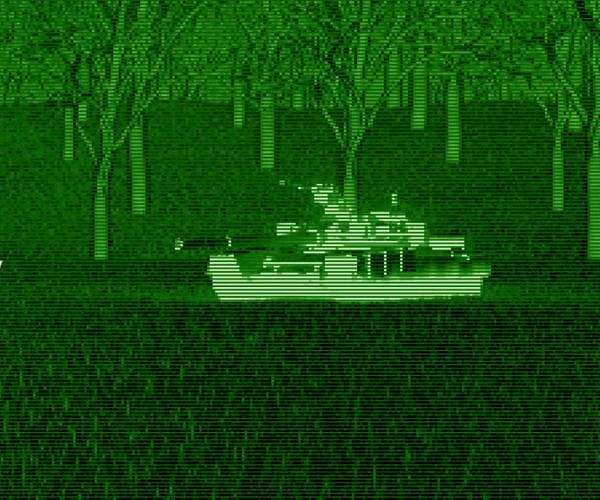
RTX, a leading defense technology company, has been awarded a substantial contract worth $117.5 million by the U.S. Army for the production of advanced targeting sensor systems. This significant development underscores the Army's commitment to enhancing its combat capabilities in challenging environments while bolstering situational awareness and survivability. The contract specifically pertains to the low-rate initial production of the 3rd Generation Forward Looking Infrared (3GEN FLIR) B-Kit sensors, which are set to revolutionize the Army's ground combat platforms.
Torrey Cady, the Vice President of Electro-Optical (EO) and Infrared (IR) Solutions at Raytheon, expressed the importance of this technological advancement in supporting the Army's modernization efforts. He emphasized that the cutting-edge sensors developed by RTX play a pivotal role in reducing latency and providing military forces with a critical battlefield advantage. Furthermore, the advanced capabilities of the 3GEN FLIR sensors surpass those of previous generation systems, further cementing the Army's commitment to addressing the challenges posed by near-peer competitors.
Under the terms of the contract, RTX will deliver the 3GEN FLIR B-Kit sensors for the United States Army's combat platforms, including the renowned Abrams Main Battle Tanks. The contract also includes an option for optionally manned fighting vehicles, highlighting the versatility of the sensor systems. The 3GEN FLIR B-Kit sensors, designed to be platform agnostic, offer a standardized operating picture for future combat ground vehicles. Additionally, they provide enhanced target detection, recognition, and identification capabilities from a significant standoff distance. This ensures that high-resolution imagery is made available to military personnel in any environment, enabling them to make informed decisions crucial to mission success.
One of the standout features of RTX's dual-band infrared system is its ability to generate high-resolution images, facilitating night vision and visibility in adverse weather conditions. Even in the darkest of nights, commanders will have access to critical information, aiding them in effective mission planning and execution. Building on the company's rich legacy of success in delivering defense technologies, Raytheon has leveraged its extensive experience in producing over 25,000 second-generation FLIR sensors over the past two decades. The lessons learned from the development and production of these sensors have been instrumental in refining the 3GEN FLIR sensor production process.
An essential aspect of the 3GEN FLIR B-Kit is its ability to provide commonality across the battlefield, a feature that aligns with the Army's affordability and sustainability goals. By leveraging a rigorous application and adherence to systems engineering best practices, a joint effort between the government and industry has resulted in significant cost savings and avoidance. This collaboration underscores the commitment to delivering cutting-edge technologies while ensuring the responsible use of resources.
The primary location for this monumental effort is set to be McKinney, Texas, reaffirming the state's prominence as a hub for advanced defense technology. With this contract, RTX is poised to further solidify its position as a key player in the defense industry and a provider of critical technologies that support the U.S. Army's mission to maintain superiority in the face of evolving threats.
In conclusion, the $117.5 million contract awarded to RTX by the U.S. Army is a testament to the company's innovation and expertise in developing advanced targeting sensor systems. The 3GEN FLIR B-Kit sensors will undoubtedly enhance the Army's ground combat platforms, enabling improved situational awareness, survivability, and lethality in challenging environments. By employing state-of-the-art technologies, RTX continues to play a vital role in supporting the modernization efforts of the U.S. Army, ensuring it remains prepared to address the challenges posed by near-peer competitors.
