
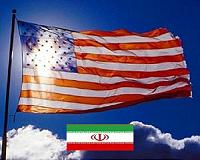
The United States' refusal to issue a visa to Iran's pick for UN ambassador is not impacting talks over the country's disputed nuclear program, Washington's envoy to the United Nations said Sunday.
Washington has said it won't issue a visa to newly appointed Hamid Aboutalebi, who has been linked to the 1979 US hostage crisis.
Iran, in response, has insisted the objection is unacceptable and threatens to cloud a gradual thaw in relations between the two enemies after decades of mistrust.
The spat comes as Tehran and world powers engage in negotiations aimed at transforming a temporary accord on Iran's nuclear program into a permanent agreement.
In an interview with ABC's "This Week" program, the US envoy to the UN said Washington was focused on continuing those so-called P5+1 talks involving the United States, Russia, China, Britain, France and Germany.
"Nothing in this quite public confrontation so far has had any impact on that," Ambassador Samantha Power said.
"Again, so far we had talks just last week. We'll have more high level talks in the next month," she added when prodded about potential harm.
"And our experts are meeting every day. We have not seen this issue influence those talks in any way. And the urgency, of course, of that issue is plain to everyone."
Under a November deal, which took effect on January 20, Iran froze certain nuclear activities for six months in exchange for minor relief from sanctions hurting its economy.
Now the powers want Iran to reduce permanently, or at least long-term, the scope of its program in order to make any dash to create an atomic bomb extremely difficult and easily detectable.
Iran in return wants all sanctions lifted.
"We would expect that Iran's own interest in getting out from under economic sanctions, which is what it says it wants — our interests, certainly, in making sure that Iran doesn't possess or develop a nuclear weapon, that that's what is going to be paramount here," Power said.
Tehran denies it has any ambitions to develop nuclear arms, but has failed to allow verifications that would satisfy the West in particular.
As the host government, the United States is obliged to issue visas to diplomats who serve at the United Nations, headquartered in New York.
Iran economy stabilizing, to soar if deal reached: IMF
Washington (AFP) April 11, 2014 –
Iran's economy is stabilizing and will post substantially stronger growth if the Islamic republic reaches a comprehensive deal with world powers on its nuclear program, the IMF said Friday.
The International Monetary Fund estimates that Iran's economy shrank by 1.7 percent in 2013, the second straight year of contraction after the United States and its allies imposed sweeping sanctions.
But the IMF projects that Iran's economy will rebound by 1.5 percent in the current year — even if sanctions relief under a temporary deal proves short-lived — as Tehran undertakes reforms.
Masood Ahmed, director of the IMF's Middle East and Central Asia department, said that Iran's economic woes were "beginning to level off" but that much depends on whether the country reaches a comprehensive nuclear deal.
"We do think that if there is a permanent improvement in that international environment… this should have an impact in terms of generating growth rates in the medium term that are substantially higher," Ahmed told reporters at the IMF/World Bank spring meetings in Washington.
Ahmed said that Iran has been benefitting from foreign exchange market reforms and a dramatic calming of once-soaring inflation. But he said that Iran needed further structural reforms and to tighten monetary policy.
Iran's new reform-minded government under President Hassan Rouhani in November reached a deal with six world powers to freeze its nuclear program, which some Western officials and Israel charge is aimed at building nuclear weapons.
The United States and European powers in return offered temporary relaxation of sanctions. But President Barack Obama has said that the sanctions would resume if talks on a comprehensive agreement fail.
