
The race to train the Einsteins of tomorrow is on, beginning with toys. Continuing advances in solid state electronics, robotics, modular building blocks and graphic software are coming together to allow for the most innovative learning kits for kids yet.
For a long while, Lego's Mindstorm lineup had held the consensus industry lead in programmable robot kits, but more kid-friendly gadgets are garnering more attention these days.
A pair of Chinese companies, Shenzen Maker Works Technology and UBTECH Robotics Corp., is helping to lead the way in Asia. Both firms operated booths at the Spring Hong Kong Electronics Fair held in April, attracting swarms of interested onlookers.
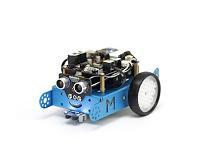
Set up through crowdfunding in 2012, Shenzen Maker Works has established a presence in the market with its Makeblock brand and open-source robot building platform. The company provides mechanical parts, electronic modules and software to enable the creation of hundreds of designs based on customer preferences. Its flagship boxed offering is the Makeblock Starter Robot Kit featuring the "mBot" and basic Arduino programming.
Comprised of just a few dozen mostly metal parts, the mBot can be put together quickly, and comes with various pre-assembled options, including a caterpillar-treaded tank and a car. At the Hong Kong expo, the demo model dutifully followed a strip sensor laid out in a random pattern on the floor. The vehicles can be used in a multiple of pre-programmed games like including soccer and sumo. The entire system allows for cameras and other extensions, and connects by Bluetooth or 2.4GHz wireless module.
"The mBot helps kids get accustomed to science and basic technology in a fun way," says company rep Alice Zhong. "The drag-and-drop graphical programming system is a quick way to learn how to control the robot that even non-tech savvy adults appreciate."
Updated online manuals and online courses are available for tutorials. It's billed as suitable for kids aged eight years and up, and retails for under $80.
Robotic Trends, an online review site, ranked the mBot at No. 3 in its Top 10 Best Educational Robot Kits list. "Instead of a toy played by kids, mBot is a masterpiece created by kids," it says. "As for the mBlock software, users do not need to code; instead, they only have to drag the pattern to design a program. The affordable price helps to realize the goal of 'one robot per kid.'"
UBTECH also develops a range of kits, including the sophisticated Alpha 1S and Alpha 2 android robots. Its basic "Jimu Robot" can be made to roughly mimic human and animal motions. The system makes use of app-based 3D instructions to guide users through each step of the assembly process. Components are plastic and snap together swiftly. The system comes with templates, but can be manipulated to accommodate the imagination. An Android or iOS compatible app is used to program the toy via Bluetooth.
'Programming' the unit could not be easier; the operator simply pushes 'record' on the cell phone or tablet screen, and manually manipulates the desired appendage on the robot (up, down, forward, back, etc.). The program remembers the motion for future use on a graphic interface screen in 'playback' mode. The software is open-source, allowing users to collaborate on designs.
"The Jimu appears to be a much easier robot to build and control (than Lego systems)," says PC World editor John Phillips. "If I can do it, then an eight-year old should be able to do it."
The Jimu Robot starts at a retail price of about $99; more complex units run as high as $499. "It's not like the old Lego building block sets that today's parents might remember," says UBTECH's Andy Chen. "The educational value makes it more of an investment in learning, but both parents and kids like the creative stimulation it brings."
