
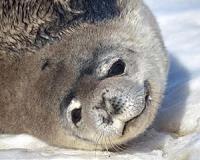
Researchers at the University of Minnesota are recruiting the public to assist in the first-ever comprehensive Weddell seals census.
Scientists need help scanning thousands of satellite images of Antarctica — like a game of EyeSpy.
Last summer, some 5,000 volunteers helped researchers count seals on sea ice in Ross Sea, just off the southern coast of West Antarctica. Now, scientists want to survey the entire continent.
"Right now, everything we know about Weddell seals is limited to an area representing about one percent of the coastline around Antarctica," Michelle LaRue, a research ecologist Minnesota's earth sciences department, said in a news release. "Now we need help from the public to search the remaining 99 percent so we can better understand where seals live and why."
The harsh weather in Antarctica make physical surveys too difficult. Surveying satellite images is more feasible, but the researchers need help with the workload.
"Even though our team includes seasoned researchers and know how to count seals on the images, it would take years for our small team to search all the images," LaRue said. "These types of projects also expand education on important wildlife species. We have engagement from classrooms nationwide in our research."
Weddel seals boast the southern-most range of any mammal. They are one of Antarctica's most beloved inhabitants — a favorite of photographers, as they're docile and approachable. Their short, cat-like jaw-line and whiskers make them especially photogenic. Though cute, they are also hardy, able to live up to 30 years in some of the harshest conditions on planet Earth.
Studies suggest Weddell seal populations are healthy and thriving, but scientists want to gather more accurate information so as to better monitor the effects of global warming and changes in sea ice coverage.
Volunteers can go to the Tomnod website to count seals and aid the research effort.
How polar bears find their prey
Researchers at the University of Alberta have demystified the way that polar bears search for their typical prey of ringed seals. The answer, it turns out, is simple: they follow their nose using the power of wind.
Using satellite telemetry data collected from 123 adult polar bears in Canada's Hudson Bay over 11 years, the researchers merged the movements of polar bears with wind patterns … read more
