
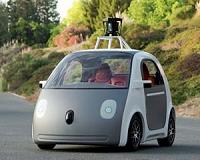
The first autonomous vehicles are expected in the next few years. They should ease traffic and reduce pollution and accidents compared with today's cars. But these self-driving cars (SDC) will face tragic dilemmas: for example, they will have to choose between saving the lives of their passengers or those of pedestrians.
CNRS researchers (the first author of the study is a member of and Toulouse School of Economics at Universite Toulouse Capitole and the CRM1), and colleagues from the University of Oregon and MIT have carried out the first study of how Americans perceive these vehicles and whether they would use them.
Surprisingly, the people surveyed had a strong moral preference for SDCs that "sacrificed" their passenger for the greater good. But they would be much less inclined to buy a SDC if the government required these vehicles to save the maximum number of people. Paradoxically, a law to this effect could actually cost more lives, by hindering the take-up of autonomous cars, which are safer than current vehicles. This study is published on June 24th in the journal Science.
The anticipated emergence of autonomous vehicles in the next few years is set to cause a revolution. These cars have a number of appealing advantages: their smoother driving style is less energy-intensive, their wide use will reduce congestion, and, above all, they will have a significant effect on the number of accidents.
But these vehicles will sometimes have to choose between two disasters. Self-driving cars (SDC) may have to decide, in a fraction of a second, whether to save the life of their passenger or a group of pedestrians. The chance of this situation arising is infinitely small, but are we ready to drive in cars licenced to kill us if this means saving more lives?
Two psychologists and a computer scientist, respectively from the CNRS and the University of Oregon and MIT, studied the matter. They questioned nearly 2,000 US citizens2 in 6 surveys. The first surprising result was that over 75% of those surveyed held the moral conviction that SDCs that sacrifice their passenger for the greater good should be privileged.
This preference is relatively high as it scored an average of 85 on a scale of 0 to 100-and still exceeded 50/100 in extreme situations where the passenger is travelling with their own children in the SDC. The researchers went a step further, to assess whether the purchasing intentions of those polled matched their moral convictions. And the answer was no! The respondents wanted other drivers to buy autonomous vehicles that protect the greater good, but preferred to buy a car that would protect them.
In this context, government regulations would make a difference. But the respondents were against the idea of the government making it compulsory for SDCs to save the most people. In this case, they would be much less inclined to buy an SDC. Requiring these vehicles to choose to save the greastest number of people could paradoxically end up costing more lives, by curbing adoption of this safer technology.
To enable Internet users to explore the various scenarios, the researchers have developed an Internet portal (available after the embargo is lifted). The scientists' aim was to identify and study situations where people have the most difficulty making a decision.
This work received support from the IAST Laboratory of Excellence (Labex) "Institute for Advanced Study in Toulouse", an interdisciplinary research institute hosted by the University of Toulouse Capitole. Should similar studies be carried out in countries other than the US, cultural differences could lead to slightly different conclusions.
