
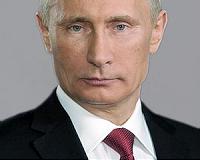
Economic decline has reached its peak and Russia is adapting to the new climate of low crude oil prices and sanctions pressures, President Putin said.
"We have generally reached the peak of the crisis and overall our economy is gradually adapting to these new economic circumstances" Russian President Vladimir Putin said at an investment conference in Moscow. "Not all of it, but generally, it has adapted."
The Russian economy teetered on the brink of recession when entering fiscal year 2015. The International Monetary Fund warned in its latest economic forecast Russia's economy may be in for a prolonged contraction.
"In Russia, the economy is expected to contract by 3.8 percent this year, reflecting the interaction of falling oil prices and international sanctions with preexisting structural weaknesses," the IMF's report said. "Output is projected to decline further in 2016."
Elvira Nabiullina, the governor of the Russian Central Bank, told CNBC the IMF's forecast was in line, but slightly more pessimistic, than the bank expects. Economic factors like inflation, she added, were influenced by short-term forces.
"We're assuming that inflation by the end of this year will be a little bit more than 12 percent, but then it will start dropping quite abruptly because those one-time factors that caused the inflation will have passed and also because of weak demand in the economy and our tough monetary policy," she said.
The bank said it was gauging its strategy on the expectation of "considerable economy cooling."
Putin said that while the energy sector is burdened by low crude oil prices and other external factors, some sections of the economy like agriculture and machinery were improving. While economic pressures remain, he said the country was adapting to oil priced at around $50 per barrel.
"The task is to achieve structural changes in our economy, and this is what all our actions will be based on," he said.
Iran's economy resilient, Rouhani says
Tehran (UPI) Oct 14, 2015 –
Iranian President Hassan Rouhani said international efforts and sanctions pressures meant to drive the economy back into recession backfired.
With parliamentary approval of the multilateral nuclear agreement reached in July in hand, Rouhani said he'd lay out new economic policies next week.
Rouhani in September said about one-third of the national budget relies on revenue generated from oil. The budget for the current Iranian year, which started March 21, is the least dependent on oil revenue ever for the country, however.
Sanctions on Iranian oil exports and other parts of the economy resulted in an economic contraction of 5.8 percent in 2012-13. For fiscal year 2013-14, the World Bank estimates the Iranian economy contracted at an annual rate of 1.7 percent.
Iran entered the year by emerging from recession. Rouhani blamed the drop in crude oil prices and pressures from economic sanctions as part of a broader plot to cripple the Iranian economy.
"It backfired," he said.
White House spokesman Josh Earnest said during his regular press briefing there "are significant steps [on the nuclear research front] that Iran still must take before any sanctions relief will be offered."
The Central Bank of Iran in March said sanctions relief would translate to about a 2 percent increase in growth, but likely not until the first quarter of 2016.
Rouhani in the past blamed his predecessor, Mahmoud Ahmadinejad, for steering the economy in the wrong direction. Iran's Central Bank said inflation went from a monthly rate of 45.1 percent when Rouhani was elected in June 2013 to around 15.5 percent. It aims for single-digit inflation by March 2017.
