
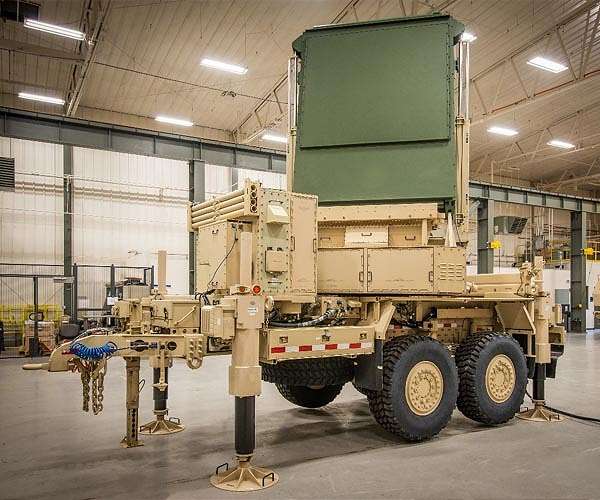
In a significant advancement for U.S. missile defense capabilities, Lockheed Martin's Patriot Advanced Capability – 3 (PAC-3) has been successfully integrated with the Lower Tier Air and Missile Defense Sensor (LTAMDS) radar. This milestone event marks the first time these two sophisticated defense technologies have worked in tandem to counter an Air Breathing Threat (ABT), showcasing a pivotal step up in the U.S. Army's air and missile defense capability.
The integration test, conducted at the White Sands Missile Range, demonstrated the PAC-3's ability to communicate and coordinate with the LTAMDS radar. This interaction is crucial, as it allows the PAC-3 missile system to maintain its renowned Hit-to-Kill intercept performance while leveraging the advanced detection and tracking capabilities of the LTAMDS radar.
Brenda Davidson, vice president of PAC-3 Programs at Lockheed Martin Missiles and Fire Control, emphasized the significance of this test, stating, "This test is another example of how Lockheed Martin is advancing modernized air and missile defense capabilities for 21st Century Security." Davidson highlighted the integration with LTAMDS as a "crucial step towards fielding a modernized IAMD solution for the U.S. Army to keep our Soldiers ahead of evolving threats."
The PAC-3's unique Hit-to-Kill technology enables it to neutralize threats through direct impact, delivering a kinetic energy punch far greater than that of traditional blast-fragmentation mechanisms. This technology makes the PAC-3 an effective defense tool against a variety of threats, including aircraft, tactical ballistic missiles, and cruise missiles, which are becoming increasingly sophisticated and challenging to intercept.
This successful integration is the culmination of extensive preparatory work, including ground testing and captive carry tests, conducted in partnership with the U.S. Army. The test builds upon the already demonstrated capability of PAC-3 with the U.S. Army's Integrated Battle Command System (IBCS), further solidifying its role as a cornerstone of U.S. missile defense.
