
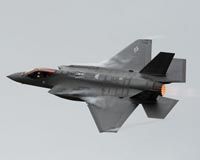
The U.S. Air Force announced Monday it has removed restrictions preventing pilots weighing less than 136 pounds from flying the F-35A.
Previously, pilots under the weight were not permitted to fly the fighter because of concerns its ejection system could cause neck injuries during deployment and opening of parachutes.
Modifications to the system to prevent injuries include switches that slightly delay parachute deployment, making it safer for lightweight pilots, along with head support on the parachute risers. Helmet modifications also include the removal internal strapping and an external visor also reduce injury risks during ejection.
"I have personally briefed every single F-35 pilot in the United States Air Force about these changes to their ejection seat, and I'm confident our pilots are no longer concerned with the safety of the F-35 ejection system," Brig. Gen. Scott L. Pleus, director of the F-35 integration office, said in a press release. "I've flown in this seat myself and believe, with these modifications, this is the safest ejection seat I've ever flown."
Concerns first emerged from testing on the ejection system in 2015 emerged when it was found that pilots under 136 pounds suffered a far greater risk of neck injury.
The updated seats are being retrofitted now, along with the new lightweight helmets. The new ejection system can accommodate anyone between 103 and 245 lbs and will be installed throughout the F-35 fleet now being deployed.
A-29 chosen for USAF assessment
The A-29 light attack aircraft from the Sierra Nevada Corporation and Embraer is participating in a U.S. Air Force capability assessment.
The assessment known as AO-X, or Capability Assessment of Non-Developmental Light Attack Platforms, will be held in New Mexico in July to evaluate the benefits of the USAF acquiring a new, low-cost, non-developmental light attack aircraft for close ai … read more
