
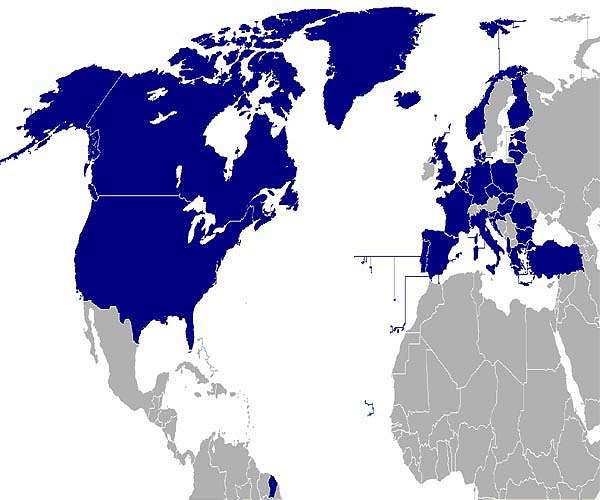
NATO chief Jens Stoltenberg said Wednesday the alliance was looking to substantially bolster forces on its eastern flank after Russia's invasion of Ukraine, but would not send troops to the war-torn country.
NATO member Poland on Tuesday suggested the alliance deploy an armed "peace mission" in Ukraine to provide humanitarian aid in the face of Moscow's devastating onslaught.
"We support peace efforts, we call on Russia, on President (Vladimir) Putin to withdraw its forces, but we have no plans of deploying NATO troops on the ground in Ukraine," Stoltenberg told journalists after a meeting of NATO defence ministers.
NATO has already rebuffed pleas from non-member state Ukraine to intervene in the conflict, including by imposing a no-fly zone to help halt Russian bombings.
The US-led alliance says its direct involvement could spark a confrontation with Russia that may spill over into nuclear war.
NATO allies have instead been sending weapons to help Ukrainian forces to defend their country, especially vital portable anti-tank and anti-aircraft missile systems.
Moscow has warned that any deliveries are legitimate targets for its military to strike.
"Ministers addressed this today, they reinforced the message of the importance of providing support with equipment, advanced equipment, air defence systems, anti-tank weapons and many other types of support," Stoltenberg said.
"But no NATO deployment of air or ground capabilities in Ukraine."
– Defence 'reset' –
While the 30-nation alliance has refused to intervene directly in the war in Ukraine, it has already temporarily shifted tens of thousands of troops closer to prevent any spillover from the conflict.
Stoltenberg said defence ministers had now tasked military commanders to come up with plans to "reset our collective defence and deterrence for the longer term".
"On land, our new posture should include substantially more forces in the eastern part of the alliance, at higher readiness with more pre-positioned equipment and supplies," he said.
"In the air: more allied air power and strengthened integrated air and missile defence. At sea: carrier strike groups, submarines and significant numbers of combat ships on a persistent basis."
NATO leaders are set to hold an emergency summit next week in Brussels on the Ukraine war and their response to Russia's assault.
Ukraine and Russia are currently locked in negotiations that Kyiv hopes will lead to a ceasefire and peace deal.
The Kremlin is pushing for Ukraine to drop any ambitions of joining NATO, while Kyiv insists it needs concrete security guarantees that prevent any future attack.
Stoltenberg said it was up to the Ukrainians "to decide whether they aspire for NATO membership or not".
He called on Russia to engage in peace talks in "good faith" but warned there were not yet any signs on the ground that Moscow was looking to pull back.
"What Ukraine can achieve around the negotiating table is very closely linked to the situation on the ground and therefore the support we give to them to stand up against and to resist the Russian invasion also helps," Stoltenberg said.
EU committed to Bosnia's stability amid Ukraine war
Sarajevo (AFP) March 16, 2022 –
EU foreign policy chief Josep Borrell on Wednesday pledged the bloc's "unwavering commitment" to Bosnia's stability while visiting European peacekeeping troops who were heavily reinforced after Russia's invasion of Ukraine.
Borrell stressed however that the troop increase in Bosnia is a "precautionary measure" in the wake of the February 24 invasion and secessionist threats made by a Bosnian Serb leader allied with Moscow.
"We have reinforced our ability to react swiftly in case of crisis", Borrell told the European Union force in Bosnia (EUFOR) outside Sarajevo.
"And we will continue deterring those who would feel emboldened to undertake destabilisation actions."
While referring to the "brutal Russian attack on Ukraine", the EU's top diplomat underlined that the EUFOR presence is "more important then ever".
"In this tense moment, I want to reassure the people of Bosnia and Herzegovina of our unwavering commitment to maintain safety and stability", Borrell told the soldiers.
On the same day that the Russian offensive in Ukraine began — February 24 — EUFOR announced the deployment of 500 troops to Bosnia to reinforce the 600 already in place.
Borrell stressed that the move should be understood only as a "precautionary measure," however.
"As we speak, right now, there are not serious threats to the safety and security on the environment in Bosnia and Herzegovina", the Spanish diplomat told reporters later at the base.
Ever since the brutal 1990s war that claimed some 100,000 lives, Bosnia has been divided on ethnic lines. One half of the country belongs to the Serb entity while the other is ruled by a Muslim-Croat federation.
However last December, after years of fragile peace, Serb political leader Milorad Dodik launched a process of Serb withdrawal from the army, judiciary and the tax system, stirring fears of breaking up the country or starting a new conflict.
Before making the move, Dodik travelled to Moscow, appearing to have tacit backing from Russia, the Serbs' historic ally.
Dodik — who was slapped with US sanctions in January — recently said he has no plans of secession.
