
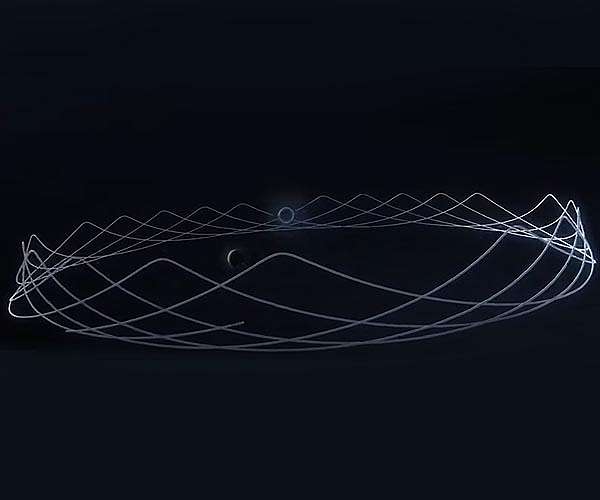
The CAPSTONE orbiter left the low Earth orbit on its way to the moon, NASA said in a statement.
The Cislunar Autonomous Positioning System Technology Operations and Navigation Experiment is attached to Rocket Lab's Photon upper stage, which maneuvered CAPSTONE into position for its journey to the moon.
The Photon engine gradually increased its orbit over six days to 810,000 miles from Earth and released the CAPSTONE CubeSat on its trajectory to the moon on Sunday.
The spacecraft now is being controlled by teams at Advanced Space and Terran Orbital.
NASA said CAPSTONE will use its own propulsion and the sun's gravity to navigate the rest of the way on a four-month journey to the moon, where it will then go into a near rectilinear halo orbit Nov. 13.
The spacecraft will act as a pathfinder for the moon-orbiting outpost, named Gateway, that eventually is to support the long-term human return to the lunar surface.
The mission is part of NASA's 21st-century moon program named for Artemis, who in Greek mythology was a twin sister of Apollo. The program aims to return humans to the moon in 2024, more than half a century since the last Apollo moon landing.
The unmanned lunar orbiter lifted off from New Zealand's Mahia Peninsula last week.
