
NASA chief Charles Bolden has said his visit to China last week laid the groundwork for future cooperation between the two countries on manned space flight and space exploration.
The head of the US National Aeronautics and Space Administration, a former astronaut and veteran of four space shuttle missions, wrapped up a five-day trip to China on Thursday that included a tour of a major space launch centre.
Bolden said in a statement released Tuesday by the US embassy in Beijing that he had been given a "very comprehensive visit" of facilities linked to China's manned space flight programme and held talks with senior officials.
He said the visit had helped the two sides "reach a common understanding of the importance of transparency, reciprocity and mutual benefit as the underlying principles of any future interaction" in the area of space flight.
While no specific proposals for cooperation were discussed, Bolden said his trip could "form the basis for further dialogue and cooperation in a manner that is consistent with the national interests of both of our countries."
"I am pleased that NASA was able to meet its objectives for the visit," Bolden said.
The two sides had said during US President Barack Obama's visit to China in November 2009 that they looked forward to "expanding discussions on space science cooperation" and organising reciprocal visits by their space chiefs.
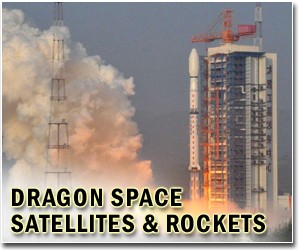
Bolden's visit came two weeks after China launched its second lunar probe — the next step in its ambitious programme to become the second country to put a man on the moon.
The Americans have achieved the only manned lunar missions, making six trips from 1969 to 1972.
Faced with budgetary constraints, the United States earlier this year abandoned its Constellation programme to return Americans to the moon as a prelude to the conquest of Mars.
China sees its space programme as a symbol of its global stature, growing technical expertise, and the Communist Party's success in turning around the fortunes of the formerly poverty-stricken nation.
It became the world's third nation to put a man in space independently — after the United States and Russia — when Yang Liwei piloted the one-man Shenzhou-5 space mission in 2003.
Share This Article With Planet Earth
