
Myanmar is facing the alarming prospect of an escalating civil war as an uprising against the military junta widens, the UN's human rights chief warned on Thursday.
Michelle Bachelet told the United Nations Human Rights Council that time was running out for other countries to step up efforts to restore democracy and prevent a broader conflict.
Myanmar has been in turmoil since Aung San Suu Kyi's government was ousted by the military in February, sparking a nationwide uprising that the junta has tried to crush.
Attacks on troops have increased since lawmakers ousted by the generals called for a "people's defensive war" earlier this month.
Bachelet said the human rights situation had deteriorated significantly as the effects of the coup "devastate lives and hopes across the country".
"Conflict, poverty and the effects of the pandemic are sharply increasing, and the country faces a vortex of repression, violence and economic collapse," she said.
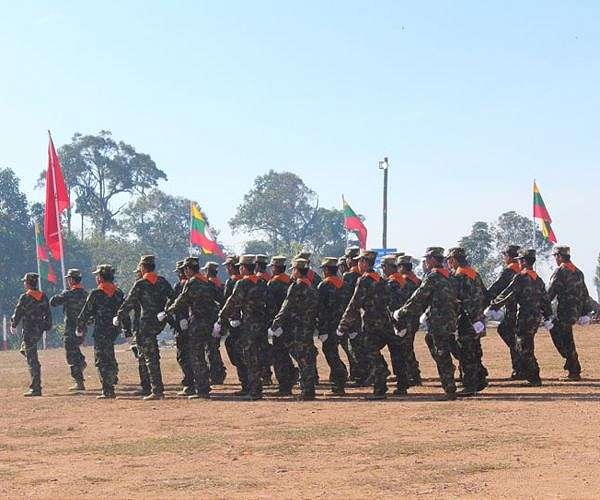
Faced with the "overwhelming repression of fundamental rights", the armed resistance movement was growing.
"These disturbing trends suggest the alarming possibility of an escalating civil war," she said.
Bachelet urged countries to support a political process that would engage all parties, saying the ASEAN regional bloc and influential powers should use incentives and disincentives "to reverse the military coup and desperate spiral of violence".
"Myanmar's stability and path to democracy and prosperity have been sacrificed over these last months to advance the ambitions of a privileged and entrenched military elite," she said.
"The national consequences are terrible and tragic — the regional consequences could also be profound. The international community must redouble its efforts to restore democracy and prevent wider conflict before it is too late."
Bachelet said more than 1,100 people had now reportedly died at the hands of the security forces since the coup, while over 8,000 others, including children, had been arrested and more than 4,700 still in detention.
The former Chilean president urged all parties — but especially the military — to allow unrestricted access to humanitarian aid, and called for the immediate release of all political prisoners.
She called for all armed forces to protect civilians and said the use of air strikes and artillery in residential areas must cease immediately.
Australian adviser to Myanmar's Suu Kyi appears in junta court
Yangon (AFP) Sept 23, 2021 –
An Australian adviser to Myanmar's ousted leader Aung San Suu Kyi appeared in a junta court to face immigration and official secrets charges, a lawyer involved in the case said Thursday.
Macquarie University professor Sean Turnell was the first foreign national arrested following the February 1 coup that ousted Suu Kyi's government and sparked huge protests.
Turnell has been held at Insein Prison in Yangon since his arrest and appeared "frail and tired" in court in the capital Naypyidaw, said lawyer Khin Maung Zaw, who is working on the case.
Turnell was wearing a "full Covid-19 protective outfit", the lawyer added, without giving precise details.
In July his wife pleaded for his release, citing worries about his health as the country endured a surge of Covid-19 cases.
Pictures of Turnell allegedly receiving a vaccine in Insein Prison later appeared in state-run media.
The exact details of his alleged offence have not been made public, though state television has said he had access to "secret state financial information" and had tried to flee the country.
The judge who will hear Turnell's case, Ye Lwin, presided over the trial of two Reuters journalists arrested while reporting on a September 2017 massacre of 10 Rohingya Muslims in conflict-hit Rakhine state.
Wa Lone and Kyaw Soe Oo were later sentenced to seven years in jail, sparking an international outcry.
The pair were freed 16 months later in an amnesty.
David Mathieson, an analyst formerly based in Myanmar, said the proceedings against Turnell would be little more than a "show trial".
Myanmar has been in turmoil since the military putsch, which sparked a mass uprising and a brutal crackdown on dissent.
Suu Kyi is on trial for a raft of offences, including illegally importing walkie-talkies, flouting coronavirus rules and incitement.
She faces decades in prison if found guilty.
Her National League for Democracy government was deposed by the military for alleged voter fraud during 2020 polls, in which it trounced a political party aligned with the generals.
Security forces have killed more than 1,100 civilians since the coup, according to a local monitoring group.
The military says the toll is much lower.
