
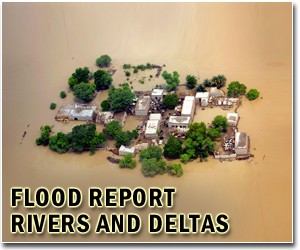
Two infant brothers swept away by rising waters in northern Thailand have become the latest victims of two months of heavy flooding that have left over 150 people dead, authorities said Saturday.
The boys, a nine-month-old and his sibling aged two, are thought to have drowned when a flash flood hit the mountainous Fang district in northern Chiang Mai province late Friday night, said an official from the disaster prevention and mitigation department.
Official departmental figures released Saturday, which do not include the brothers, put the number of dead at 152, with three people unaccounted for.
Flooding has engulfed 57 out of Thailand's 77 provinces in the north, northeast and central regions since it began in July with heavy rains generated by the tail end of the Nock Ten typhoon.
In total, seven million people have seen their homes or businesses inundated by the rising waters, which have damaged farmland, roads and bridges.
Water has receded in some areas but the department said 23 provinces remain flooded.
As seasonal rains continue to put pressure on drainage and irrigation systems, it also issued flash flood and landslide warnings in 47 provinces in north and northeastern parts for the weekend.
FAO seeks $18.9 million for Pakistan flood relief
Rome (AFP) Sept 18, 2011 –
A UN food agency launched an appeal for 18.9 million dollars Friday to help farmers in southern Pakistan hit by floods it said were even more disastrous than last year.
The Food and Agriculture Organisation said the money was needed "to address the most time-critical needs of millions of rural families in Sindh and Baluchistan provinces."
The call for funds is part of the latest UN appeal for Pakistan, and aims to provide emergency livestock support and critical agriculture packages to more than 300,000 needy families, it said in a statement.
Heavy monsoon rains that began in mid-August destroyed or damaged 73 percent of crops and 67 percent of food stocks in affected districts of Sindh province, and have killed nearly 78,000 head of livestock," the FAO said.
"Millions of people are destitute and face an uncertain and food-insecure future."
The agency said the disaster struck before families affected by last year's flooding were able to even start recovering, especially as Sindh did not receive as much assistance as other provinces in 2010.
"The floods and rain deepen the risk of losing more vital livestock assets and, for some, missing another opportunity to plant wheat and other essential crops," it said.
The FAO said a top priority was to prevent further losses among at least five million cattle and other livestock at risk, by supplying them with feed and treating them against diseases and worm infestations.
"Around 80 percent of people in the affected area depend on agriculture — including livestock — for a living," FAO senior emergency and rehabilitation coordinator Luigi Damiani said.
"These animals often represent a family's entire life savings."
In addition farmers needed critical seeds and fertilizer, in time for the upcoming winter planting season, along with repair of irrigation and drainage infrastructure.
"The destruction of crops has wiped out farmers' present and future sources of food and income, with spiralling humanitarian consequences unless immediate assistance is provided," the FAO warned.
"Delayed assistance will lead to heightened food insecurity, increased public health threats, loss of land tenure agreements due to farmers' inability to pay their debts, population displacement and longer-term dependence on food aid," Kevin Gallagher, the FAO representative in Pakistan was quoted as saying.
