
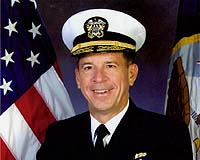
Diplomacy offers the best way to resolve tensions over Iran's nuclear program but the Pentagon must be ready with military options if needed, the top US military chief said on Monday.
"No resolution is yet in sight, but I fully support the effort to focus on diplomatic solutions to existing tensions" with Iran, Admiral Mike Mullen wrote in a memorandum setting out strategic priorities for the US armed forces in 2010.
"My belief remains that political means are the best tools to attain regional security and that military force will have limited results," said Mullen, chairman of the Joints Chiefs of Staff.
"However, should the president call for military options, we must have them ready."
The United States and its allies suspect Iran is developing technology to enrich uranium to highly refined levels that would allow it to build a nuclear bomb, a charge Tehran vehemently denies, saying its nuclear program serves peaceful purposes.
With a year-end deadline, President Barack Obama's administration has signaled that time is running out for Iran to seize its offer of diplomatic engagement for resolving nuclear and other issues.
Washington has raised the threat of a fourth round of UN sanctions, but will need to persuade Russia and China to drop their traditional reluctance to consider tougher measures.
earlier related report
Japan voices 'strong concerns' to Iran's nuclear envoy
Tokyo (AFP) Dec 21, 2009 –
Japan's foreign minister voiced "strong concerns" Monday about Iran's nuclear programme in talks with Tehran's top nuclear negotiator, warning that it was preventing broader cooperation.
"There are many fields in which we can cooperate, but the situation surrounding Iran won't easily allow us to go ahead with the cooperation," Katsuya Okada told visiting envoy Saeed Jalili, according to his ministry.
"I have strong concerns over the situation surrounding Iran's nuclear issue," Okada added.
He also urged Iran to accept an offer of dialogue with the United States, the official said.
"You should not miss this chance. If you miss this chance, the American door may be shut, which will make the situation worse," he was quoted as saying.
Japan is one of few major developed nations maintaining warm relations with Iran, in a rare break with the United States, its main ally.
Iran insists that its nuclear program is solely for civilian purposes and rejects Western suspicions that it is covertly trying to develop a bomb.
At a later press conference, Jalili defended Iran's position and said Iran wanted to strengthen the nuclear non-proliferation treaty (NPT) and the International Atomic Energy Agency (IAEA) to eradicate nuclear weapons.
When asked about a report that a planeload of weapons from North Korea seized in Bangkok this month was bound for Iran, he said only that Tehran was different from Pyongyang because it allows inspections by UN nuclear experts.
"Our approach toward this issue is completely different from that of North Korea. We seriously oppose massively destructive nuclear weapons," he said.
The Wall Street Journal, quoting a flight plan obtained by researchers, said the plane was due to make refuelling stops in Sri Lanka, the United Arab Emirates and Ukraine before unloading in Tehran.
Share This Article With Planet Earth
