
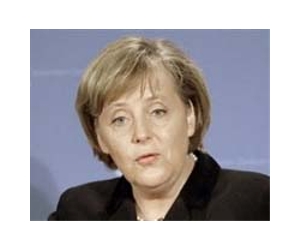
Chancellor Angela Merkel prepared Sunday to sell sceptical voters on bolstering the German presence in Afghanistan with a sharper focus on reconstruction and reconciliation.
Germany, the third biggest provider of foreign troops, would make training security forces its primary focus in Afghanistan, Merkel said as her ministers bombarded the Sunday papers with interviews on Berlin's fine-tuned strategy.
"We are going to focus our military mission principally on training security forces," the chancellor said in her weekly Internet podcast at the weekend.
"Germany is chiefly engaged in northern Afghanistan, and that is where we will fulfil our training commitment, in a speedier and more concentrated manner than hitherto."
Merkel said she would "discuss how best to coordinate Afghan and international efforts" during talks Tuesday and Wednesday in Berlin with Afghan President Hamid Karzai ahead of crunch international talks Thursday in London.
She made no mention of a US request for Germany to deploy more troops, having previously said she would take no decision on this score before the London conference.
But Defence Minister Karl-Theodor zu Guttenberg told the daily Frankfurter Allgemeine Zeitung that he would propose before London a "concrete figure for a possible increase of the participation of German troops".
The hike would however depend on the outcome of the London meeting, he said in an interview to be published Monday.
The remarks come ahead of a hectic diplomatic week for Merkel. After the Karzai talks, the chancellor is to address parliament Wednesday on Afghanistan.
Berlin's participation in the 110,000-strong international force fighting the Taliban insurgency, with its deployment of around 4,300 troops, is deeply unpopular among Germans.
Foreign Minister Guido Westerwelle, who is to represent Berlin in London, said Germany was still weighing whether to boost its force but would not go along without a change in strategy.
"I've never said that we would send no extra troops, for example to train Afghan forces," he told Sunday's Bild am Sonntag weekly. "But I'm not giving a blank cheque."
He also called for "using the current contingent in the best way".
Westerwelle, who leads the pro-business Free Democrats, junior partners in Merkel's ruling coalition, has been vocal in calls for a change in strategy in Afghanistan focused on rebuilding the country and dealing with former fighters.
"There are many hangers-on with the Taliban terrorists who do not share their fanatical beliefs but who, for economic reasons, are on the wrong path," he said.
"They need to be offered an economic and social way-out for themselves and their families. We will provide additional funds for that," he said, predicting a "completely new approach to reintegrating insurgents into society" at the London talks.
But the US envoy in Afghanistan and Pakistan, Richard Holbrooke, indicated there would be little time for a bottom-up debate, telling the German weekly Der Spiegel to appear Monday that the "strategy for Afghanistan is settled" and the London conference would be to implement it.
Since the horrors unleashed by the Nazis during World War II, Germany has remained reticent about military missions abroad.
Northern Afghanistan, where the bulk of Germany's troops are based, has seen a sharp rise in attacks on foreign forces in the last year.
In response to the mounting threat, a German commander on September 4 called in a raid near Kunduz that killed up to 142 people, including several civilians.
The bombing just weeks before the German general election prompted public outrage, forcing the defence minister at the time to resign and putting Merkel under pressure to clearly define Berlin's Afghan policy.
Share This Article With Planet Earth
