
Cutting-edge materials research sports a long history of helping to bring world-changing technological changes to broader industrial and consumer use. The principle is no less true today for metal alloy experts, who are tasked with unlocking the keys to making tomorrow's gadgets look, feel, and work as hoped.
At Furukawa Electric Co., Ltd., the mission involving copper research is to increase heat and stress resistance while improving reliability in connectors and sensors used in everything from USB drives to supercolliders.
With some 50,000 employees and 137 subsidiaries and affiliates spread across four continents, the 132-year old manufacturing conglomerate showcased some of its know-how at the recent International Laser and Photonics Expo in Tokyo in mid-April.
"In either the B2B or B2C space, there is a tendency to overlook what it takes to make ideas so cool," says Kuniteru Mihara, Ph.D., a manager at Furukawa's electronics component materials division. "The bar is set high, and keeps getting higher. There is no slowdown."
One of Mr. Mihara's responsibilities is to figure out which copper alloys are best for connectors used in computer boards, batteries, media cards, relays, wire harnesses and other devices. Recent discoveries show that titanium-copper and?beryllium-copper plating techniques are good for electrical conductivity while maintaining high resistance to heat, cracking and warping.
"Especially when it comes to products that customers manipulate with their own hands, like memory sticks and camera lenses, connectors must be hard enough and smooth enough to withstand the stress of repeated plug-ins and swap-outs while not becoming brittle and losing performance despite changes in temperature and moisture," says Mr. Mihara.
"The trick gets more challenging as customers come to demand more portability, more capacity, faster speeds, and lighter weight."
In the exploding world of IoT (internet of things) technology, in which devices are increasingly becoming more interconnected, rapid miniaturization poses its own challenges, particularly the ability to resist electromagnetic 'noise.'
Traditional electronic component manufacturing practices have held that using iron in varying amounts has been the best way to maintain strength and durability, but this is actually a detriment now, says Mr. Mihara.
For ultra-sensitive equipment being designed for gear connected to satellite global positioning systems (GPS) and MRI (magnetic resonance imaging) machines and other sophisticated medical equipment, shrinking component sizes come into direct conflict with electromagnetic forces that dramatically erode reliability.
"Efforts to overcome obstacles like this have led to the development of next-generation conductive and superconductive materials that show strong resistance to magnetic fields," Mr. Mihara says. "They are indispensable now."
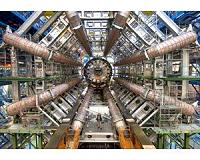
Advances in materials research helped Furukawa to grab some of the spotlight in 2012 when CERN (the European Organization for Nuclear Research) announced the discovery of the Higgs boson particle (also known as the elusive "God particle") using its Large Hadron Collider (LHC).
Superconducting cables supplied by the company where used extensively in the 27-kilometer long machine, in which gigantic superconducting magnets produced high-energy states mimicking conditions thought to exist just after the Big Bang explosion billions of years ago.
