
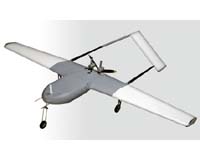
Three Manta UAVs received airworthiness certification from the Korean Civil Aviation Safety Authority (CASA) to fly from Jeongseok Airport at the beginning of the research project.
The Manta UAVs, manufactured by Advanced Ceramics Research (ACR) of Tucson, Arizona, were issued official consecutive Korean CASA tail numbers: S7049, S7050 and S7051. Under a program funded by the U.S. National Science Foundation (NSF) and the National Oceanic and Atmospheric Administration (NOAA) a two-man ACR flight team is operating the Manta UAVs for atmospheric research scientists to assess Beijing air pollution control efforts during the Olympics (CAPMEX).
The Manta UAV flights are the first ever UAV flights from Jeju Island.
Manta UAVs previously received certifications to fly in civil airspace in the Maldives in 2006 by that country's Civil Aviation Department to study the effects of air pollution above the Indian Ocean, and also from Denmark's Civil Aviation Administration to operate in civil airspace in Greenland in 2007 and 2008 in support of NOAA programs studying conditions on the Greenland Icecap (Greenland).
Manta UAVs are also currently operating in restricted airspace at NASA Dryden where atmospheric scientists are monitoring pollution levels in Southern California (Dryden) for the California Energy Commission (CEC).
The Manta UAV was initially designed and prototyped under funding from the Naval Air Systems Command (NAVAIR) in 2002, and the first three production units were funded by the Defense Advanced Research Projects Agency (DARPA) and the Office of Naval Research (ONR) for a research platform in early 2003.
The Manta has a maximum gross take-off weight of 24Kg with a 7Kg payload, a 3m wingspan, and will fly for 4-6 hours. The Manta UAV is equipped with fully autonomous rolling take-off and landing, or can be rail launched.
