
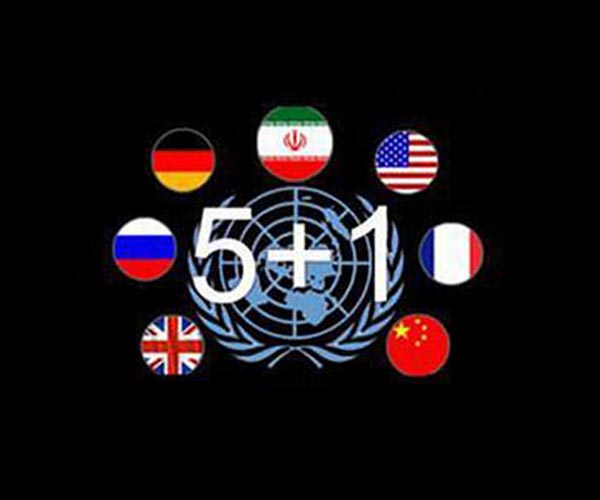
French President Emmanuel Macron on Saturday told his Iranian counterpart Ebrahim Raisi that reviving the landmark 2015 deal on Tehran's nuclear capabilities was "still possible" but must happen "as soon as possible".
Macron also "expressed his disappointment" at the absence of progress after the suspension of talks in Vienna and underlined the need for Iran to return to the accord and implement its nuclear commitments, according to a French presidency statement.
The French leader's telephone call with Raisi comes as negotiations in Vienna between Iran and world powers including the United States have stalled since March.
The 2015 deal aimed to prevent Iran from developing the capability to acquire an atomic bomb in exchange for lifting sanctions that have hobbled its economy.
But former president Donald Trump unilaterally withdrew the United States from the accord in 2018 and reimposed sanctions, leading Tehran to begin rolling back on its commitments.
In June, Qatar hosted indirect talks between the United States and Iran in a bid to restart the diplomatic efforts in Vienna, but discussions were interrupted after two days without a breakthrough.
The Iranian presidency said Raisi "condemned the unconstructive positions and actions of the United States and European countries" during his two-hour conversation with Macron on Saturday.
Last week, an Iranian official said Tehran had the technical capacity to make a nuclear bomb but clarified that it had not decided to make any.
The Iranian foreign ministry said there was "no change" in its nuclear policy, referring to an Islamic ruling that forbids "arms of mass destruction".
Macron also "reiterated his deep concern" about four French citizens "arbitrarily held" in Iran during his call with Raisi.
They include Benjamin Briere, sentenced to more than eight years in jail for spying, and French-Iranian researcher Fariba Adelkhah, who received a five-year prison term in May 2020 for endangering national security.
The two other detainees are trade unionists held since May 11 and accused of threatening Iranian security.
Iran seeks nuclear deal guarantees to avoid being 'stung twice'
Tehran (AFP) July 22, 2022 –
Iran is seeking economic guarantees from the US to revive a 2015 nuclear deal so as not to be "stung twice" the same way, its foreign minister said.
The agreement, formally known as the Joint Comprehensive Plan of Action (JCPOA), gave Iran sanctions relief in exchange for curbs on its atomic programme to guarantee that it could not develop a nuclear weapon — something it has always denied seeking.
But the US unilateral withdrawal from the accord in 2018 under then-president Donald Trump and the reimpositon of biting economic sanctions prompted Iran to begin rolling back on its own commitments.
"We do not want to be stung twice from the same spot. In order to enjoy the full economic benefits of the JCPOA, the Americans must accept some commitments and guarantees," Hossein Amir-Abdollahian told state television in an interview on Thursday night.
"We are now at a point where we have a text ready in front of us; we agree with all parties on 95% of its content," he said. "We are serious about reaching a good, strong and lasting agreement but we do not want an agreement at any price."
Talks in Vienna that started in April 2021 to restore the deal have stalled since March amid differences between Tehran and Washington on several issues.
The two sides negotiated indirectly through the European Union coordinator.
Qatar hosted indirect talks last month between the United States and Iran in a bid to get the process back on track, but those discussions broke up after two days without any breakthrough.
"The Americans have not yet assured us that we can enjoy the full economic benefits of the JCPOA," Amir-Abdollahian stressed, saying Iran will continue its indirect negotiations with the US through the European Union.
On Thursday, State Department spokesman Ned Price said Iran "doesn't seem to have made the political decision — or decisions, I should say — necessary to achieve a mutual return to compliance with the JCPOA."
"We have continued to engage in indirect diplomacy with Iran, courtesy of the efforts of the European Union and other partners, but Iran, to this point at least, has not displayed an inclination to seek that deal," according to a briefing on the Department's website.
On Friday, his Iranian counterpart said the United States was the main obstacle to reviving the deal.
"Indecision of the unfaithful US is the main hurdle for a deal," foreign ministry spokesman Nasser Kanani said on Twitter.
