
A team at Hanbat National University in the Republic of Korea, led by Professor Joonsik Park, has developed a two-step boron and silicon coating method for high-entropy alloys, producing a robust heat shield. Their technique creates stable nano-grain-sized layers on TiTaNbMoZr alloys, yielding superior resistance to oxidation at temperatures as high as 1300 degrees Celsius.
The study compared simple silicon pack cementation with a sequential boron-silicon application. While uncoated and simply Si-coated alloys both suffered significant oxidation and cracking, the dual-layer B-Si coating maintained a structurally stable surface of XB2, XSi2, and X5SiB2 compounds, sharply increasing oxidation resistance. In experiments, B-Si coated samples showed far less mass gain after 10 hours at 1300 degrees Celsius than other samples.
The process preserves the protective nanostructure even after extreme heat exposure, marking the first confirmation that such coatings can protect next-generation high-entropy alloys in these environments. "Currently, the Ni-based alloys used in missiles can operate at around 1100 C, but the results of our study show that the newly developed material can withstand temperatures far exceeding that limit," said Prof. Park.
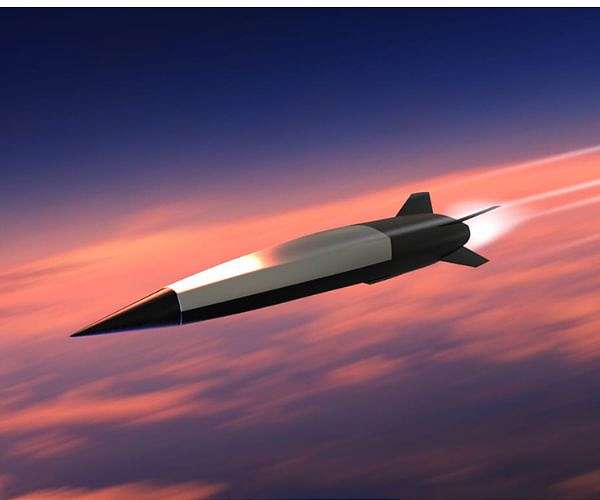
Researchers highlight possible uses for this material in fighter jet and missile components as well as other high-temperature defense and engineering applications. "Overall, our results confirm the potential of high-entropy alloys for use in high-temperature environments and emphasize the critical role of selecting suitable coating strategies tailored to the alloy composition," said Prof. Park.
