
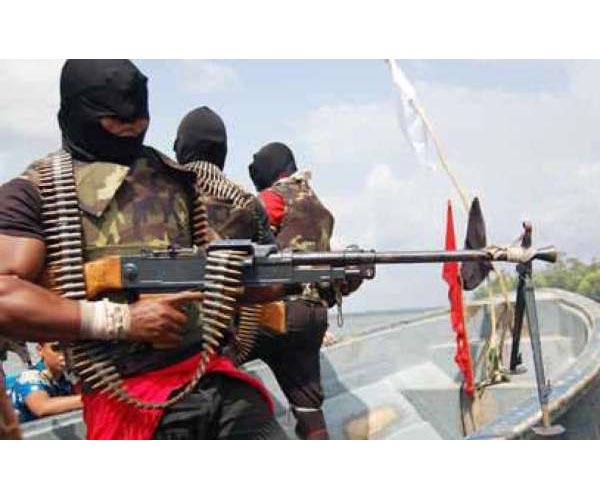
The United Nations on Tuesday said an attack by suspected jihadists on the northeastern Nigerian town of Dikwa had "directly targeted" aid facilities.
No group has claimed responsibility yet but the Islamic State West Africa Province (ISWAP) group, which split from mainstream Boko Haram in 2016, is suspected to be behind the attack.
"The attack started last night and, as information is still coming through, I am outraged to hear the premises of several aid agencies and a hospital were reportedly set ablaze or sustained damage," the UN's humanitarian coordinator in Nigeria, Edward Kallon, said in a statement.
Dikwa is home to nearly 114,000 people including 75,470 internally displaced persons (IDPs) and hosts one of Nigeria's nine humanitarian hubs — sites where humanitarians work and live.
"This violent attack will affect the support provided," Kallon added, without giving details.
The Nigerian army claims it foiled the attack on Dikwa.
"The terrorist groups who stormed the town in an unconfirmed number of gun trucks and motorcycles were visited with heavy bombardment and overwhelming firepower," army spokesman Mohammed Yerima said in a statement.
"The situation in Dikwa is normal," Yerima told AFP by phone Tuesday afternoon.
Dikwa hosts one of the military's large "super camps" but three sources who requested anonymity told AFP that the insurgents were able to overtake the town for several hours between Monday evening and mid-day Tuesday.
Damage or casualties from the attack are yet to be ascertained.
The Nigeria INGO Forum representing 54 international NGOs said it was "horrified" by the attack that "damaged humanitarian facilities, putting the lives of tens of thousands of civilians, including IDPs and aid workers at risk."
Since 2019, three humanitarian hubs – Banki, Ngala and Monguno — have been targeted in attacks by insurgents.
President Muhammadu Buhari reshuffled the military command this year, raising hopes of a shift in strategy to end a 12-year-old conflict that has killed 36,000 people and forced around two million to flee their homes.
Due to worsening security, humanitarians in Nigeria are struggling to provide aid.
The UN estimates that 8.7 million people will require urgent assistance this year.
Mozambique forces, jihadists committing 'war crimes': Amnesty
Johannesburg (AFP) March 2, 2021 –
Jihadists, government forces and a "private militia" backing the authorities have indiscriminately killed hundreds of civilians in troubled northeastern Mozambique, Amnesty International said in a report Tuesday.
Violence stoked by armed Islamists in gas-rich Cabo Delgado province has left at least 2,600 people dead since 2017, about half of them civilians, according to the NGO Armed Conflict Location and Event Data (ACLED).
Local people are "caught between the Mozambican security forces, the private militia fighting alongside the government and the armed opposition group locally known as 'Al-Shabaab' — none of which respect their right to life, or the rules of war", said Amnesty's regional chief, Deprose Muchena.
"All three have committed war crimes, causing the deaths of hundreds of civilians."
The watchdog said the government hired South African private military company Dyck Advisory Group (DAG) after it had "lost a number of battles" in its quest to regain control of the region.
The mercenaries have fired guns from helicopters and dropped hand grenades indiscriminately into crowds, according to Amnesty.
In a statement late on Tuesday, DAG said it would investigate the allegations, which were "of great concern" because it had detailed human rights policies and took its obligations seriously.
"To this end we have commissioned an investigation to be conducted under the aegis of our company lawyers," it said, adding the investigators would include experts with backgrounds in policing, anti-terrorism and human rights.
Government officials contacted by AFP refused to comment and Interior Minister Amade Miquidade did not answer calls.
The authorities have previously denied their soldiers had committed any atrocities in Cabo Delgado.
Amnesty said its analysis was based on interviews with dozens of people among almost 670,000 internally displaced people, as well as reviews of videos and pictures, including satellite imagery.
Amnesty said it had probed an attack by helicopter at a hospital in the port town of Mocimboa da Praia last June, and schools had come under fire in other incidents.
It said it had verified video of another incident in September, in which government troops beat a naked woman with a wooden stick, shooting her 36 times and leaving her body on the highway.
– 'Summarily executed' –
In another gruesome killing, security forces blindfolded and shot several men in Quissanga before dumping their bodies in a mass grave, Amnesty said.
After that attack, "government security forces took women to be raped at the nearby base they had set up, where they also detained, beat, and summarily executed more men", it said.
The jihadists are also accused of heinous acts of violence with machetes, including numerous beheadings and desecration of corpses.
Concerns have grown that the use of foreign private militia in the conflict is exacerbating the crisis.
Jasmine Opperman, a security expert and analyst for ACLED, said DAG's deployment was a "desperate attempt to get air support" by the government, as well as an attempt to dodge accountability.
"They have transgressed the laws on many fronts," she said, urging Maputo to secure "direct support that is accountable at all costs".
International Crisis Group consultant in Southern Africa Piers Pigou called for "credible investigations" into the allegations of atrocities.
It was vital that "every effort is made to minimise possibilities of transgression," he added.
