
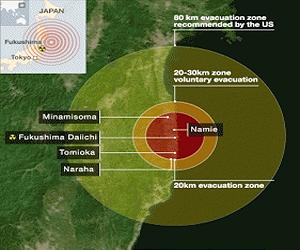
Japan on Thursday recommended 59 more households should evacuate from four areas considered radiation "hot spots" near the crippled Fukushima Daiichi nuclear plant, officials said.
The voluntary guidance, in areas where higher levels of radiation have been detected sporadically beyond the 20 kilometre (12 mile) no-go zone around the plant, will affect households in Fukushima prefecture's city of Minamisoma.
The move is the second such recommendation after authorities in June identified 113 households that should evacuate from four districts near the crippled Fukushima Daiichi nuclear plant.
Tens of thousands of people have moved to shelters from areas in and beyond the no-go zone around the plant, including from a wider 30-kilometre zone where people were first told to stay indoors and later urged to leave.
Higher levels of radiation have been detected in the newly designated locations, raising fears that residents' accumulated exposure may exceed 20 millisieverts per year — the government's limit for evacuation.
Since the March 11 disaster, Japan has raised the legal exposure limit for people, including children, from one to 20 millisieverts per year — matching the safety standard for nuclear industry workers in many countries.
Environmental groups and critics have slammed the government for the rule change and say the current evacuation zone around the plant is not wide enough and does not account for the irregular pattern of radiation exposure.
Radiation experts agree that children are at highest risk because they are still growing and will have more time to develop cancers and other health defects.
The latest evacuation recommendation comes amid a deepening scare over radiation-tainted Japanese beef with the number of cattle thought to have been contaminated and shipped around the country rising to nearly 1,500, reports said Thursday.
As many as 1,485 beef cattle in nine prefectures are thought to have been fed straw contaminated with radioactive caesium before being sent for slaughter and processing country-wide, the Yomiuri Shimbun said.
