
Iranian Foreign Minister Mohammad Javad Zarif on Friday urged China and Russia to take "concrete action" to safeguard the 2015 nuclear deal as he warned of a "dangerous" situation amid rising tensions with the US.
Tensions have ratcheted up with the US deploying an aircraft carrier group and B-52 bombers to the Gulf last week over alleged threats from Iran.
"Iran and China need to think together and work together about preserving a multilateral global order and avoiding a unilateral global order," Zarif said during a meeting with his Chinese counterpart Wang Yi Friday evening.
Talking to reporters earlier, Zarif said he would talk with Chinese officials about "bilateral ties and the very dangerous issues that are ongoing in our region today", according to a video published on the Iranian foreign ministry website.
Washington has deployed more troops in the Gulf, one of the world's most strategic waterways, in what US officials said was a reaction to photographs showing Iran had loaded missiles onto small traditional boats.
On Wednesday the US State Department ordered the evacuation of most personnel from the US embassy and consulate in Iraq, fearing an attack by Iranian-directed Shiite militias.
Iran on Thursday rejected negotiations with the US, but said it was showing "maximum restraint".
Amid escalating tensions in the region, Zarif has called on the international community to save the nuclear deal, known as the Joint Comprehensive Plan of Action, or JCPOA.
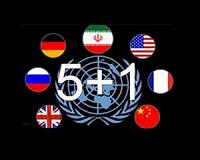
Iran signed the deal with China, Russia, Germany, Britain, France and the United States. International sanctions were eased in return for curbs on Tehran's nuclear programme.
But last year President Donald Trump walked away from the accord. The US has since then slapped sweeping sanctions on Iran.
"So far the international community has mostly released statements rather than taking action," Zarif said.
"If the international community and other JCPOA member countries and our friends in the JCPOA like China and Russia want to keep this achievement, it is required that they make sure the Iranian people enjoy the benefits of the JCPOA with concrete actions," he added.
– 'Maximum pressure' –
Zarif said last week that only Russia and China had supported Iran and helped it keep the nuclear deal going, and accused other parties to the agreement of letting Tehran down.
China was one of the eight global buyers — India, Turkey, Japan, South Korea, Taiwan, Italy and Greece — that was allowed to import Iranian crude oil before the US ended waivers in early May.
Zarif's China trip comes after visits to Turkmenistan, India and Japan in the past week.
Despite Washington's campaign of "maximum pressure" against Iran, the Islamic Republic has vowed to keep selling oil to its main customers, especially China, even if it requires using indirect means.
On May 8, Iranian President Hassan Rouhani said Iran would stop observing restrictions on stocks of enriched uranium and heavy water agreed under the nuclear deal in retaliation for the US withdrawal and the reimposition of sanctions.
In his announcement, Rouhani threatened to go further if the European members of the deal failed to start delivering on their promises to help Iran circumvent US sanctions within 60 days.
China in response called on all parties to uphold the nuclear deal in what it called a "shared responsibility".
European nations have also called on all partners to the deal to help salvage it while expressing frustration at Iran's demands for help in circumventing US sanctions.
One European diplomat called on China to buy Iranian oil as it is less exposed to the United States.
"They are now very exposed to the dollar but it is also a question of political choice," said the source, who spoke on condition of anonymity.
"The reality for the Chinese is that they are in a global trade war with the Americans, they are in the middle of negotiations and they are not quite so sure if they want to load the boat," the diplomat added.
Iran says no talks with the US as Gulf tensions soar
Washington (AFP) May 16, 2019 –
Amid rising tensions in the Gulf, Iran on Thursday rejected negotiations with the US and said it was showing "maximum restraint" after Washington sent extra military forces to the region against what it claimed was an imminent threat from Tehran.
US officials meanwhile said the deployment of an aircraft carrier strike group and B-52 bombers to the Gulf, one of the world's most strategic waterways, was in reaction to photographs showing that Iran had loaded missiles onto small traditional boats.
In Tokyo for talks with Japanese officials, Iranian Foreign Minister Mohammad Javad Zarif called the US escalation "unacceptable."
There was "no possibility" of negotiations with the United States, he told reporters. "I don't know why President Trump is confident."
"We exercise maximum restraint," he said, despite the Trump administration's unilateral move last year to withdraw from the international agreement on Iran's nuclear program.
On Wednesday, Trump predicted Iran would "soon" want to negotiate, even as the State Department ordered the evacuation of most personnel from the US embassy and consulate in Iraq, fearing an attack by Iranian-directed Shiite militias.
"I'm sure that Iran will want to talk soon," the president tweeted.
– Pressure to justify escalation –
The White House and Pentagon remained under pressure to demonstrate the reason for the huge buildup in forces and heightened rhetoric of the past 11 days.
Two major pro-Iran armed groups in Iraq rejected allegations that they were plotting an attack on US diplomatic installations in the country.
Nasr al-Shomari, a military commander for the Iran-backed Harakat al-Nujaba, told AFP the claim was "a pretext" by Washington to create "an uproar" in Iraq.
US coalition partners in Iraq had suggested earlier this week that the threat level there had not risen significantly, and members of Congress demanded to see the information behind the Trump administration's warlike rhetoric.
"I think they should tell us what the hell is going on," senior Republican Senator Lindsey Graham told CNN.
A US official said Thursday that Iranian missiles loaded on small, traditional dhow boats in the Gulf were among the new "threats" to US forces and allies in the region.
The official, who asked not to be named, confirmed a New York Times report that US intelligence had aerial photos of the vessels.
"The missiles on civilian boats are a concern," said the official.
– Anti-war Trump? –
The Trump administration meanwhile appeared divided on how hard of a line to take.
The deployment of the USS Abraham Lincoln strike group and the bombers was first announced on May 5 by White House National Security Advisor John Bolton.
The vocal hawk called the move "a clear and unmistakable message to the Iranian regime that any attack on United States interests or on those of our allies will be met with unrelenting force."
Secretary of State Mike Pompeo said days later that while the US does not seek a war with Iran, "if American interests are attacked, we will most certainly respond in an appropriate fashion."
But The New York Times reported that Trump himself was not entirely happy with the talk of war and told acting Secretary of Defense Patrick Shanahan early Thursday that he does not want to a military clash.
Brookings Institution foreign policy analyst Tom Wright said Trump does not agree with Bolton's hard line and advocacy of regime change in Tehran.
"Trump has always distrusted Bolton on military intervention," Wright said.
Intelligence officials were scheduled to brief congressional leaders Thursday on the information they have that spurred the new deployments to the Gulf, after House Speaker Nancy Pelosi warned Trump that the legislature, and not the president, has the constitutional power to declare war.
"I like what I hear from the president, that he has no appetite for this," Pelosi said.
"One of the places that I agree with the president is in both of our opposition to the war in Iraq, and I hope that that same attitude will prevail with (Trump), even though some of his supporters are rattling sabers."
